Your dog is fine. Eating, playing, tail wagging.
Except that a dog acting completely normal can be in the early stages of kidney disease, or thyroid dysfunction, or diabetes, and you would have no way of knowing from the outside. Not because you are inattentive. Because the animal is built to hide it.
This is the single most important thing to understand about pet health, and it is the thing that makes early screening not a luxury but the core of good veterinary care.
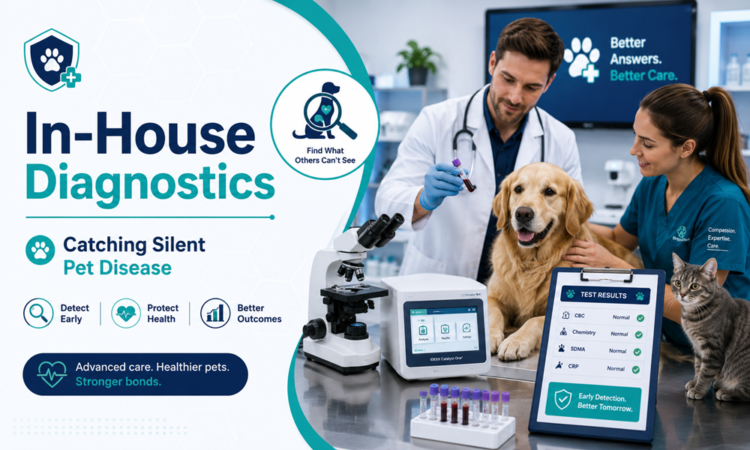
Neighborhood Veterinary Centers in Houston Heights, a family-owned clinic, built its internal medicine service around exactly this capability: fast, accurate testing done in-house, including bloodwork and imaging, to uncover the root of a pet’s symptoms. As an animal hospital in Houston Heights, TX with this diagnostic depth on site, the practical result is the ability to find problems before they announce themselves.
Why pets hide illness
It is not stubbornness or stoicism in the human sense. It is instinct.
In the wild, an animal that visibly limps, weakens, or looks sick becomes a target for predators and a low-status member of the group. Natural selection favored animals that masked their symptoms. Your cat on the couch still runs that ancient software.
The consequences for a pet owner:
- By the time symptoms are obvious, the disease is often advanced. The pet held the line as long as it could, and when it finally shows signs, the condition has usually progressed.
- Subtle changes are the real early warnings, and they are easy to dismiss. Drinking a little more water. Sleeping a little more. A slightly smaller appetite. These are often the only clues, and they are quiet.
- Cats are especially good at hiding illness, which is part of why feline disease is so often caught late.
This instinct is exactly why “he seems fine” is not the same as “he is healthy,” and why waiting for symptoms is a losing strategy.
The clearest example: kidney disease in cats
Chronic kidney disease is one of the most common and most consequential conditions in older cats, and it is the textbook case for why early screening matters.
The numbers are stark:
- Chronic kidney disease is estimated to affect a large share of cats over roughly 10 to 12 years of age, with prevalence rising steeply with age.
- It is a leading cause of death in older cats.
- Here is the killer detail: the standard blood marker, creatinine, often does not rise above the normal range until roughly 75% of kidney function is already lost.
Read that again. By the time the traditional test flags a problem, three quarters of the kidney is gone. Cats compensate so well that they look normal almost the entire way down.
This is why newer screening tools matter. A biomarker called SDMA can detect declining kidney function earlier than creatinine, in some cats months to a couple of years earlier. Combined with urinalysis and blood pressure measurement, it lets a vet catch kidney disease in a window where diet changes and management can meaningfully extend a cat’s life and comfort.
But none of that helps if the cat never gets tested, because it looks fine. The whole value depends on screening a healthy-seeming animal.
The other silent conditions
Kidney disease is the clearest example, not the only one. Internal medicine covers a whole category of conditions that develop quietly and require testing to find.
| Condition | Why it hides | What screening catches |
|---|---|---|
| Chronic kidney disease | Cats compensate until ~75% function lost | Early biomarkers, urine changes, blood pressure |
| Hyperthyroidism (cats) | Gradual; owners attribute changes to aging | Thyroid hormone on bloodwork |
| Diabetes | Early signs subtle: more drinking, more urinating | Blood glucose, urine glucose |
| Cushing’s disease | Slow onset, mistaken for aging | Bloodwork and specific hormone tests |
| Liver disease | Liver has large reserve capacity | Liver enzymes on bloodwork |
| Early heart disease | Pets rest more, easy to miss | Exam, imaging, sometimes cardiac testing |
The common thread: every one of these can be present in a pet that looks and acts normal, and every one is easier to manage when caught early.
Why “in-house” is not just a convenience
Plenty of clinics can order these tests. What changes when a clinic runs them in-house, on site, rather than sending samples to an outside lab?
Speed. In-house bloodwork can return results during the same visit, sometimes within the hour. When a pet is genuinely sick, the difference between results today and results in three days can matter. It means the vet can start treatment or make a decision while you are still there.
The sick-visit advantage. When a pet comes in vomiting, lethargic, or off its food, in-house testing lets the vet find the cause fast. Is this a simple upset or the first sign of kidney failure? On-site bloodwork answers that immediately rather than after an anxious wait.
Fewer trips. Results in one visit can mean the whole workup happens in one appointment instead of several.
Better emergencies. When something is time-sensitive, a lab three days away is not helpful. On-site diagnostics support faster decisions when they count most.
The capability itself is what unlocks early detection. A clinic that can test quickly and easily is a clinic where testing a healthy-seeming senior pet is routine rather than a hassle.
Building a medical baseline: the underrated concept
Here is a concept that quietly powers all of early detection: the baseline.
When your vet knows what normal looks like for your specific pet, spotting a meaningful change becomes far easier. Your dog’s normal kidney values, your cat’s normal weight, the normal appearance of their bloodwork, all of it forms a reference point.
Then, when something shifts, the vet is comparing against your pet, not against a generic average. A value that is technically within the normal range but has moved significantly from your pet’s own baseline can be an early warning that a one-time test would miss entirely.
This is why:
- Wellness screening on healthy pets matters. You are not testing because something is wrong. You are building the baseline that lets you detect when something goes wrong later.
- Consistency matters. A pet seen regularly by the same team accumulates a richer history.
- Age changes the schedule. Senior pets, generally cats over about 7 and dogs entering their senior years by size and breed, benefit from more frequent screening, because this is when silent disease becomes more likely.
The life-stage screening logic
Testing should scale with risk, and risk scales with age.
Puppies and kittens. Establishing a baseline, confirming they are healthy, screening for congenital issues, and getting parasite and vaccine protection started.
Adults. Periodic wellness exams and screening to maintain the baseline and catch anything emerging.
Seniors. This is where screening earns its keep. More frequent bloodwork, urine testing, and blood pressure checks, because the silent chronic conditions cluster here. For a senior cat especially, annual or twice-yearly screening is how kidney disease and hyperthyroidism get caught in a treatable window.
The pattern to internalize: the healthier and older your pet seems, the more valuable screening becomes, because that is exactly the profile of a pet hiding early disease.
What you can watch for at home
Screening is the backbone, but you are the early-warning system between visits. The subtle changes that matter:
- Drinking noticeably more or less water. One of the most important early signs, and easy to miss.
- Urinating more, or larger clumps in the litter box.
- Gradual weight loss, even with a normal appetite.
- Eating less, or being pickier.
- More sleeping, less interest in play.
- A duller coat.
- Bad breath, which can signal dental disease or, sometimes, internal problems.
- Any change in litter box or bathroom habits.
None of these is a diagnosis. All of them are reasons to call. When you notice a change, in-house diagnostics let a vet quickly sort “minor” from “the first visible sign of something the pet was hiding.”
A Houston note
Two local realities worth folding in:
- Heat. Houston summers are brutal, and heat stress compounds any underlying condition. A pet with early heart or kidney disease has less reserve to handle extreme heat. Another reason to know what is going on internally before summer, not during a crisis.
- After-hours support. Some clinics, including this one, offer after-hours phone support so you can get guidance on whether a symptom needs immediate attention. When your pet is built to hide illness, having someone to call about a subtle change is genuinely useful.
Frequently asked questions
My pet seems totally healthy. Why would I pay for bloodwork? Because “seems healthy” is exactly the state in which early, silent disease exists. Screening a healthy-seeming pet builds a baseline and can catch conditions like kidney disease before symptoms appear, when there is still something to do about it.
How early can kidney disease be caught? Earlier than most people realize, but only with testing. Standard creatinine often does not rise until about 75% of kidney function is gone. Newer biomarkers like SDMA, plus urine and blood pressure testing, can catch it considerably earlier, sometimes months to a couple of years sooner.
What is the benefit of in-house testing over a lab? Speed, mainly. Results during the same visit mean faster answers and faster decisions, which matters most when a pet is actually sick or in an emergency. It also makes routine screening easy enough to actually do.
How often should a senior pet be screened? More often than a young adult. For senior cats especially, annual or twice-yearly screening is a common recommendation, because the silent chronic diseases become far more likely with age.
What subtle signs should make me call the vet? Changes in water intake, urination, appetite, weight, energy, or coat quality. Individually minor, but often the only early clue a pet gives before a hidden condition becomes obvious.
Can these silent diseases be cured? It varies. Some can be resolved, others are managed long-term. But nearly all of them are handled better when caught early, which is the entire argument for screening before symptoms appear.
Does my pet need to be hospitalized for internal medicine testing? Usually not. Much testing is outpatient. Some complex cases need short-term hospitalization for monitoring or multiple procedures, but a routine screening panel does not.