You might be sitting with a surgery estimate in your hand at an animal hospital in Alexandria, VA, staring at the word “anesthesia,” and feeling your stomach drop. You know your pet needs help, yet the idea of them being “put under” can feel frightening. You may be asking yourself whether the risks are worth it, whether they will wake up, and how anyone can truly keep them safe when they cannot speak for themselves.end
If that is where you are, you are not alone. Many careful, loving pet owners feel the same knot of worry before a procedure. The good news is that modern veterinary anesthesia and monitoring are far more advanced and controlled than most people realize. Animal hospitals use detailed safety checklists, specialized equipment, and trained teams whose only job during a procedure is to watch your pet and respond to the smallest change.
In simple terms, here is the big picture. Before anesthesia, your pet is evaluated, and a plan is tailored to their health. During anesthesia, a dedicated team uses monitors to track heart, lungs, blood pressure, and more, and they adjust drugs and fluids minute by minute. After anesthesia, your pet is kept warm, monitored closely, and only goes home when they are stable and awake enough. Each step is designed to lower risk and keep your pet as safe as possible.
So, how do animal hospitals actually make this happen in real life, and what should you look for to feel more at peace with your decision?
Why does anesthesia for pets feel so scary, and what really happens behind the scenes?
Part of the fear is that anesthesia feels like handing over complete control. Your pet is asleep, you are in the waiting room, and you cannot see what is going on. Add in stories you might have heard from others, and your imagination can quickly go to the worst place.
There is also the emotional weight. This is not an abstract medical case. This is the dog that sleeps at your feet or the cat who curls on your pillow. The idea that something could go wrong at the table is almost unbearable. On top of that, anesthesia adds cost, which can feel stressful when you are already trying to manage a medical bill.
Because of this tension, you might wonder whether the surgery is truly necessary, or whether “just skipping anesthesia” is safer. For many procedures, though, there is no safe way to treat pain, clean infected teeth, repair injuries, or remove tumors without your pet being unconscious and pain-free. The real question is not “anesthesia or no anesthesia.” The real question is “how is anesthesia made as safe as possible for my pet’s unique health and age?”
Modern animal hospitals follow strict anesthesia and monitoring guidelines, such as those outlined by veterinary anesthesiology specialists. If you want to see what that looks like from a professional standpoint. These standards shape how hospitals design their protocols and what equipment they use.
How do animal hospitals make anesthesia safer for different pets and different procedures?
Not every pet receives the same anesthetic plan. A healthy young dog coming in for a routine spay has different needs than a senior cat with kidney disease needing a dental cleaning. Good hospitals adjust their approach to match the patient in front of them.
Before anesthesia, the team will usually perform a physical exam and often blood work. They are looking for heart murmurs, breathing problems, anemia, or organ issues that could affect how your pet handles drugs. The goal is not to cancel surgery without reason. The goal is to choose medications and doses that your pet can process safely and to prepare for any higher risk areas in advance.
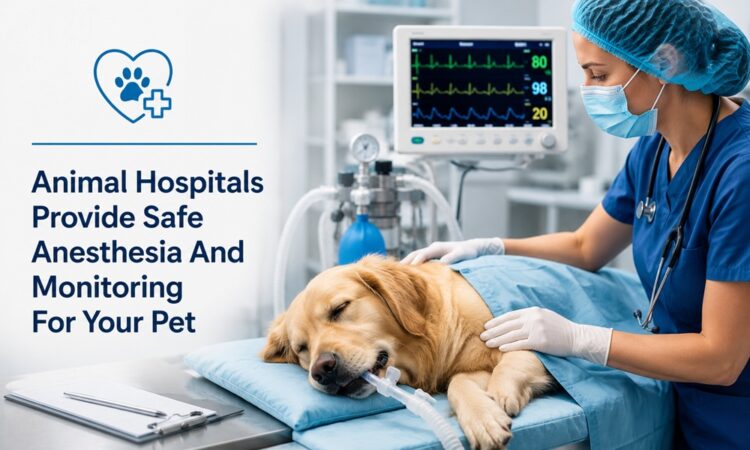
During anesthesia, your pet is not simply “put to sleep” and left alone. An IV catheter is often placed so that fluids and emerhigher-risk can be given quickly. Your pet is connected to monitors that track heart rhythm, oxygen levels, breathing rate, temperature, and blood pressure. A trained technician or even a specialist anesthesiologist keeps their eyes on those readings and on your pet’s body itself, watching gum color, chest movement, and muscle tone.
Many teaching hospitals offer specialized anesthesia services with board certified anesthesiologists who handle very fragile or complex cases. For example, the University of Minnesota Veterinary Medical Center describes how their veterinary anesthesia service manages pain control and monitoring for high risk patients. Facilities like this often support local veterinarians with guidance for unusual or complicated situations.
After anesthesia, the focus is on high-risk recovery. This stage can be overlooked in people’s minds, yet it is critical. Pets are kept warm, watched closely as they wake up, and their pain control is adjusted as needed. Only when they can swallow, move safely, and maintain normal vital signs are they cleared to go home.
So, where does that leave you when you are trying to decide whether to move forward with a procedure your pet needs?
What should you compare when you think about anesthesia risks and benefits?
It can help to put your fears and the medical facts side by side. You are not choosing between “perfect safety” and “terrible risk.” You are choosing between treating a problem under controlled anesthesia and living with a condition that can cause pain, infection, or sudden crisis later.
The simple comparison below can give you a starting point for questions to ask your veterinarian.
| Question | Without Anesthesia & Treatment | With Safe Anesthesia & Monitoring |
|---|---|---|
| Pain and comfort | Ongoing or worsening pain from dental disease, injuries, tumors, or chronic issues. | Short-term discomfort from surgery, managed with pain relief, for a chance at long-term comfort. |
| Health risks | Higher risk of infection, organ damage, sudden emergency, or shortened life. | Low but real anesthesia risk, reduced by monitoring and tailored drugs. |
| Cost over time | Possible repeated urgent visits, medications, and crises that add up. | Planned cost now, often lower than repeated emergency care later. |
| Emotional impact | Worry about watching a condition worsen or facing an emergency at night or on a weekend. | Anxious waiting on surgery day, then relief of having addressed the problem. |
| Monitoring and control | Little control over when problems flare up or how severe they become. | High level of control. Continuous monitoring during pet anesthesia allows fast response to changes. |
Seeing it laid out in this way can make it easier to ask yourself what feels like the kinder option for your pet in the long run.
Three practical steps to feel more confident about anesthesia at an animal hospital
- Ask specific questions about how your pet will be monitored
You are not being “difficult” if you ask detailed questions. You are advocating for your family member. You might ask.
- Who will be watching my pet during anesthesia. Is there a dedicated person at the side of the table at all times?
- What monitors do you use? Do you track blood pressure, oxygen, heart rhythm, and temprature?
- How do you keep my pet warm? How do you manage pain during and after surgery?
The answers should be calm, clear, and specific. If anything feels vague, it is okay to ask for clarification or examples.
- Share every detail about your pet’s health and medications
Even small details can matter when designing a safe anesthetic plan. Before anesthesia, be sure to mention.
- Any coughing, breathing changes, or exercise intolerance you have noticed.
- Previous reactions to medications, vaccines, or sedation.
- All supplements, flea and tick products, and over the counter medicines your pet receives.
- Changes in thirst, urination, appetite, or weight.
This information helps your veterinarian choose the safest drugs, decide whether more testing is wise, and anticipate challenges. It turns a generic plan into a truly customized animal hospital anesthesia approach.
- Consider a second opinion or specialty referral for high risk pets
If your pet is very senior or has heart, lung, kidney, or liver disease, it is reasonable to ask whether a consultation with an anesthesia specialist could help. Many referral hospitals, like the Tufts Foster Hospital Anesthesia service, focus on complex cases and describe how they handle them. You can read more about this type of support through the Tufts anesthesia service for small animals.
A second opinion does not mean your primary veterinarian is not skilled. It can simply add another layer of planning and reassurance for especially fragile patients. Sometimes the referral team will work with your regular vet to design a plan that fits your pet and your situation.
Moving forward with more clarity and less fear
You may still feel nervous, and that is normal. Loving an animal means you worry when they are out of your sight. The goal is not to erase all fear. The goal is to replace some of that fear with understanding and a sense that you are making a thoughtful choice.
Safe anesthesia in an animal hospital is not about one magic drug. It is about a careful process. Pre-anesthetic evaluation to understand your pet. Monitoring during anesthesia to catch changes early. Attentive recovery and pain control afterward. When these pieces are in place, the risks of anesthesia usually become smaller than the risks of leaving painful or dangerous conditions untreated.
Take your questions to your veterinary team. Ask how they keep pets safe, what their protocol would be for your individual animal, and what signs they watch for during surgery. You are not just “agreeing to anesthesia.” You are partnering with a team that wants your pet to come home to you, comfortable and healing.
Your concern is a sign of how deeply you care. With the right information and the right team, that concern can guide you toward safe, thoughtful decisions about anesthesia and monitoring for your pet.