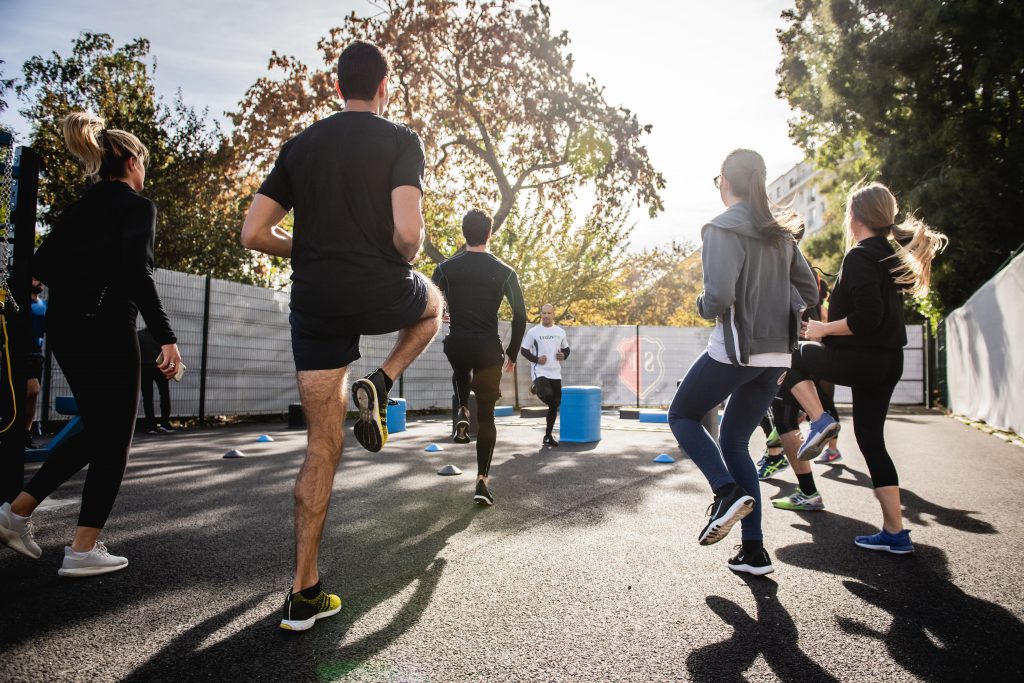
The name splits in two. The spoon is fuel. The athletic is capacity. Together they describe training and eating simple enough to repeat for years.
Six numbers run the entire system:
- 59 to 66 days is the median time for a health habit to become automatic. Individual range: 4 to 335 days.
- 10 hard sets per muscle per week is the evidence-based benchmark. Past that, returns collapse.
- 1.4 to 2.0 g of protein per kg of bodyweight daily covers most people who train.
- 1.7x the injury risk for athletes sleeping under 8 hours.
- 7,000 steps daily is linked to 47% lower all-cause mortality versus 2,000.
- 1 in 10 sports supplements is contaminated with a substance banned in sport.
What Does “Advice Thespoonathletic” Actually Mean?
It is a decision framework for people who want athletic capability without organising their life around it. It assumes you have a job, a commute and finite willpower. It optimises for the plan you are still running in month eighteen.
| Pillar | Governs | The Question It Answers |
|---|---|---|
| Train | Movement quality, load, weekly volume | Am I forcing adaptation without outrunning recovery? |
| Fuel | Calories, protein, hydration | Am I supplying the material to repair what training broke? |
| Recover | Sleep, deloads, stress | Am I letting adaptation happen? |
| Repeat | Habits, environment, tracking | Will I still be doing this in twelve months? |
Most content obsesses over Pillar 1. Almost all failure happens in Pillar 4.
Why Do Most Fitness Plans Fail Within 90 Days?
Because people plan for motivation, and motivation is weather, not foundation.
A systematic review and meta-analysis in Healthcare pooled 20 studies and 2,601 participants. Median time to form a health habit: 59 to 66 days. Mean: 106 to 154 days. Individual range: 4 to 335 days.
Four findings rarely make it into fitness blogs:
- Behavioural complexity predicted habit formation time better than motivation, personality or willpower. Simple behaviours automate faster.
- Morning habits formed more strongly than evening habits.
- Self-chosen behaviours beat assigned ones. A workout you picked outperforms one prescribed to you.
- Missing a single day did not meaningfully damage habit formation. Occasional skippers showed the same automaticity curve as perfect-streak participants.
That fourth point kills all-or-nothing thinking. A missed session is a missed session, not a relapse.
Most people quit between days 15 and 42, when novelty dies and results are still invisible. They quit because they built a routine sized for Day 3 enthusiasm, not Day 33 energy.
How Should a Complete Beginner Start?
Smaller than your ego wants.
The r/Fitness community wiki is blunt about why its beginner routine is deliberately bare-bones: “Consistency over time is the biggest point of failure in making progress.” Three days, five movements, short sessions. The goal is not to challenge you. It is to lower the barrier to showing up.
| Weeks | Frequency | Focus | Progression Rule |
|---|---|---|---|
| 1 to 3 | 3 days, 30 to 40 min | Learn the patterns | Add reps, not weight |
| 4 to 6 | 3 days, 40 to 45 min | Build work capacity | Small load increments |
| 7 to 9 | 3 to 4 days, 45 min | Increase weekly sets | One extra set per muscle per week |
| 10 to 12 | 4 days, 45 to 50 min | Consolidate | Week 12 is a planned deload |
Five patterns cover almost everything: squat, hinge, push, pull, carry.
Expect progress to decay. A survey of ~1,800 lifters found women in their first three months added roughly 3.6 kg per month to their squat. At one to two years, that fell to about 0.3 kg per month. Beyond two years, average monthly gains flattened. This is arithmetic, not failure.
How Many Sets Per Week Do You Actually Need?
Schoenfeld’s dose-response meta-analysis found more weekly sets generally produced more growth. Under 5 sets worked, especially for beginners, but was not optimal. Ten or more produced the best results. That is where the “10 sets” benchmark comes from.
A newer multi-level meta-regression in Sports Medicine (Pelland et al., 67 studies, 2,058 participants) found what popular summaries never mention: at an average weekly volume of about 12.25 fractional sets, each additional set was associated with only a 0.24% increase in hypertrophy.
One extra set. A quarter of one percent.
| Weekly Sets per Muscle | Evidence | Who It Suits |
|---|---|---|
| Under 5 | Produces growth, below optimal | Time-poor beginners, deloads, in-season athletes |
| 5 to 9 | Solid minimum effective range | Busy adults, strength-focused lifters |
| 10 to 15 | The hypertrophy sweet spot | Most intermediates chasing size |
| 16 to 20+ | Marginal return, recovery becomes the ceiling | Advanced lifters with excellent sleep and nutrition |
The difference between 0 and 10 sets is transformative. The difference between 15 and 25 is a rounding error that costs three hours a week. Train each muscle at least twice weekly.
How Much Protein Do You Really Need?
Food first. Supplements fill gaps, they do not build foundations.
The ISSN position stand on protein and exercise sets the reference numbers:
- 1.4 to 2.0 g/kg/day builds and maintains muscle for most exercising individuals.
- 2.3 to 3.1 g/kg/day preserves lean mass during a calorie deficit.
- Per serving: 0.25 g/kg, or 20 to 40 g, containing 700 to 3,000 mg of leucine.
- Distribute doses every 3 to 4 hours.
- 30 to 40 g of casein before sleep raises overnight muscle protein synthesis.
The general-population figure of 0.8 g/kg is the minimum to avoid deficiency. It was never an optimum for people who train.
| Bodyweight | Maintain (1.4 g/kg) | Build (1.6 to 2.0) | Cut (2.3 to 3.1) |
|---|---|---|---|
| 55 kg | 77 g | 88 to 110 g | 127 to 171 g |
| 65 kg | 91 g | 104 to 130 g | 150 to 202 g |
| 75 kg | 105 g | 120 to 150 g | 173 to 233 g |
| 85 kg | 119 g | 136 to 170 g | 196 to 264 g |
| 95 kg | 133 g | 152 to 190 g | 219 to 295 g |
Carbohydrates fuel training, and endurance athletes especially should prioritise adequate intake. Fats support hormone production, so do not drive them to zero.
The Spoon Test
Before any meal, ask three questions: Is there a palm of protein? A fist of vegetables or fruit? Did I choose this, or did convenience choose it for me?
Two out of three is a good meal. Zero out of three, twice a day, for a month, is why your training is not working.
What Does Smart Supplement Management Thespoonathletic Look Like?
Start with the risk, because nobody else does.
Informed Sport reports that as many as one in ten supplements is contaminated with ingredients prohibited in sport. An Anti-Doping Knowledge Centre study attributed 8% of all anti-doping violations between 2005 and 2022 to product contamination.
The fix: buy third-party certified products. NSF Certified for Sport screens for around 280 banned substances and is the programme recognised by USADA. Informed Sport tests every batch against 285-plus substances. No anti-doping body approves supplements directly, so “WADA approved” on a label is meaningless.
| Tier | Supplement | Dose | Evidence |
|---|---|---|---|
| Strong | Creatine monohydrate | 3 to 5 g daily | 680+ trials, 12,800+ participants, FDA GRAS status |
| Strong | Whey or casein protein | 20 to 40 g | Convenience tool for hitting protein targets |
| Strong | Caffeine | 3 to 6 mg/kg pre-training | Reliable performance effect |
| Strong | Vitamin D | Only if deficient | Test first |
| Situational | Beta-alanine | 3.2 to 6.4 g daily | Useful for 1 to 4 minute efforts |
| Situational | Omega-3, electrolytes | Varies | Modest recovery and hydration support |
| Skip | Fat burners, “test boosters”, proprietary blends | — | Weak evidence, high contamination risk |
| Skip | BCAAs when protein is adequate | — | Redundant above 1.6 g/kg |
On creatine: saturate stores fast with ~0.3 g/kg/day for 3 days, then 3 to 5 g daily. Or skip loading and let 3 g daily saturate over 3 to 4 weeks. Either works. NHANES analysis also found adults over 60 with dietary creatine intake below 0.95 g/day performed worse on cognitive tests, and around 70% of adults over 65 fall below that threshold.
None of this is medical advice. Consult a doctor or dietitian first, particularly with kidney conditions, pregnancy or prescription medication.
Why Is Sleep the Most Underrated Performance Tool?
Because you cannot post it on Instagram.
A study of 112 adolescent athletes in the Journal of Pediatric Orthopaedics matched sleep against 21 months of injury records. Those averaging under 8 hours were 1.7 times more likely to be injured. The raw split: 65% of the under-8-hours group were injured, versus 31% of those sleeping 8 or more.
The finding that should stop you cold: sleep duration predicted injury risk more strongly than hours spent training.
Supporting evidence:
- In a cohort of 340 adolescent elite athletes, those sleeping over 8 hours on weekdays had roughly 61% lower odds of a new injury.
- Among male NCAA Division I basketball players, each additional hour of sleep was associated with a 43% drop in next-day injury risk.
- Stanford’s women’s tennis team extended sleep to 10 hours nightly for five weeks and recorded faster sprints and a 42% improvement in hitting accuracy.
These are observational studies, so correlation is not causation. But the mechanism is established: short sleep raises cortisol, drives muscle protein breakdown, impairs glycogen repletion and slows reaction time.
Target: 7 to 9 hours generally, 8 to 10 in heavy training. Consistent bed and wake times beat any single long night.
How Do You Check Your Body Fitness Thespoonathletic Style?
No lab needed. Run these, record the numbers, repeat every 8 to 12 weeks.
| Test | Rough Benchmark | What It Reveals |
|---|---|---|
| Resting heart rate (on waking) | 60 to 70 bpm typical | Cardiovascular efficiency |
| 1-minute HR recovery after hard effort | Drop of 12+ bpm | Autonomic recovery |
| Push-ups to technical failure | Track the trend, not the number | Upper body endurance |
| Wall sit | 60 seconds is a fair intermediate mark | Isometric endurance |
| Single-leg balance, eyes closed | 10 to 20 sec under age 50 | Proprioception, fall risk |
| Waist-to-height ratio | Under 0.5 | Central adiposity, beats BMI |
| Grip strength | Compare to age and sex norms | Whole-body strength proxy |
| Daily step count | 7,000+ | Baseline activity |
| Peak 30-minute cadence | Large cohorts median near 64 steps/min | Walking intensity, an ignored metric |
The Step Count Nobody Told You About
A dose-response meta-analysis in The Lancet Public Health (57 studies, 160,000+ adults) found that compared with 2,000 steps daily, 7,000 steps was associated with:
| Outcome | Risk Reduction |
|---|---|
| All-cause mortality | 47% |
| Dementia | 38% |
| Falls | 28% |
| Cardiovascular disease incidence | 25% |
| Depressive symptoms | 22% |
| Type 2 diabetes | 14% |
| Cancer incidence | 6% |
Inflection points for several outcomes sat between 5,000 and 7,000 steps. Risk kept falling with each extra 1,000 steps up to roughly 12,000. Moving from 2,000 to 4,000 produced meaningful benefit on its own.
Ten thousand was never a scientific threshold. It came from a Japanese pedometer marketing campaign.
What Mindset Habits Make It Stick?
Design the environment, not the willpower.
- Anchor it. “After my morning coffee, I walk 20 minutes.”
- Write an implementation intention. Specify when, where, how. Vague plans lose.
- Reduce friction. Clothes out the night before.
- Choose it yourself. Self-selected behaviours build stronger habits. If you hate running, do not run.
- Train in the morning where possible. Morning behaviours showed greater habit strength.
The Two-Minute Floor. Set a minimum session so small it is embarrassing to skip. Five push-ups. One walk around the block. The point is not the stimulus. The point is that you never break the identity.
Track two metrics only. One process metric (sessions per week) and one outcome metric (weight lifted, waist measurement). Ignore the rest for 12 weeks. Data you never review is anxiety with a timestamp.
What Mistakes Should You Avoid?
| Mistake | Why It Backfires | Fix |
|---|---|---|
| Starting at six days a week | Recovery debt, adherence collapse | Start at three. Earn the fourth. |
| Program hopping every four weeks | Nothing runs long enough to work | Commit for 12 weeks minimum |
| Chasing volume past the return point | An extra set buys ~0.24% more growth | Cap at 10 to 15 hard sets per muscle |
| Supplements as the foundation | The last 5% cannot fix the first 95% | Fix sleep and protein first |
| Skipping warm-ups | Cold tissue, poor motor control | Five minutes, non-negotiable |
| Training to failure every set | Fatigue outruns adaptation | Leave 1 to 3 reps in reserve |
| Six hours of sleep, called discipline | Sleep predicted injury better than training hours | Protect the 8 hours first |
| Comparing your month 4 to someone’s year 6 | Progress rates decay predictably | Compare to your own last cycle |
| Buying uncertified supplements | Roughly 1 in 10 contaminated | Look for NSF Certified for Sport or Informed Sport |
| All-or-nothing after a missed day | One skipped session becomes a skipped month | Missing one day does not derail habit formation |
What Trends Are Worth Paying Attention To?
The American College of Sports Medicine surveys around 2,000 clinicians, researchers and exercise professionals annually. Its latest Worldwide Fitness Trends report marks the survey’s twentieth year.
Wearable technology holds the top spot. Also in the top ten: fitness programmes for older adults, exercise for weight management (third, its highest ever, renamed from “weight loss” to include maintenance and gain), mobile exercise apps (fourth), data-driven technology (eighth) and functional fitness training (tenth).
Two under-reported data points:
- HIIT fell to twelfth, down from sixth the previous year. The industry’s love affair with maximum intensity is cooling as adherence data accumulates.
- Adult Recreation and Sport Clubs entered the top twenty for the first time, driven by pickleball and demand for social connection during exercise.
Both point where Thespoonathletic advice always pointed: the best modality is the one you will still be doing next year.
Worth noting: as GLP-1 receptor agonist use rises, structured exercise becomes more important, not less. Medication alone does not consistently preserve lean mass or physical function.
How Does This Change With Age?
| Life Stage | Priority | What Changes |
|---|---|---|
| Teens (13 to 18) | Movement quality, no early specialisation | Sleep 8 to 10 hours. Low volume. Supplements largely unnecessary. |
| 20s to 30s | Building the strength base | Highest volume tolerance. Best hypertrophy window. |
| 40s to 50s | Preserving muscle, protecting joints | Protein toward the upper end. Longer warm-ups. More rest days. |
| 60s+ | Strength, balance, power, independence | Resistance training becomes non-optional. Adults over 65 now visit gyms more often than any other age group. |
Two things never change: protein stays high, sleep stays protected.
What Does a Realistic Week Look Like?
For four hours a week and a real job:
- Mon: Full-body strength A, 45 min (squat, push, pull, carry)
- Tue: Walk or easy cycle, 30 min, conversational pace
- Wed: Rest. Hit your step target.
- Thu: Full-body strength B, 45 min (hinge, push, pull, core)
- Fri: Walk or easy cycle, 30 min
- Sat: Full-body strength C, or a sport you enjoy. Pickleball counts.
- Sun: Rest, mobility, meal prep
Three and a half hours. Every muscle group two to three times weekly. Comfortably inside the 10-to-15 set range. Three genuinely restful days. Run it twelve weeks, deload, reassess.
Frequently Asked Questions
What is advice thespoonathletic in one sentence?
A sustainable approach to fitness that prioritises consistency, whole-food nutrition, adequate sleep and progressive training over extreme workouts and quick fixes.
How long until I see results?
Strength gains in 2 to 4 weeks. Visible changes after 8 to 12 weeks. Habit automaticity typically arrives between days 59 and 66, though the individual range spans 4 to 335 days.
How many days a week should a beginner train?
Three full-body sessions plus daily walking. Three days beats six you cannot sustain.
Is 10,000 steps necessary?
No. Research in The Lancet Public Health found 7,000 delivers clinically meaningful benefit, with inflection points between 5,000 and 7,000.
Do I need supplements?
No. Creatine monohydrate and protein powder have the strongest evidence. Both should carry NSF Certified for Sport or Informed Sport certification.
How much protein if I lift?
1.4 to 2.0 g per kg of bodyweight daily, in 20 to 40 g servings every three to four hours.
Is training to failure necessary?
No. Leaving one to three reps in reserve produces comparable growth with far less fatigue, letting you train more often.
What if I miss a workout?
Miss it. Occasional missed days do not meaningfully affect habit formation. Resume the next session.
How do I know if I am overtraining?
Elevated resting heart rate, disrupted sleep, soreness beyond 72 hours, declining performance, lost appetite or motivation. Deload before you break.