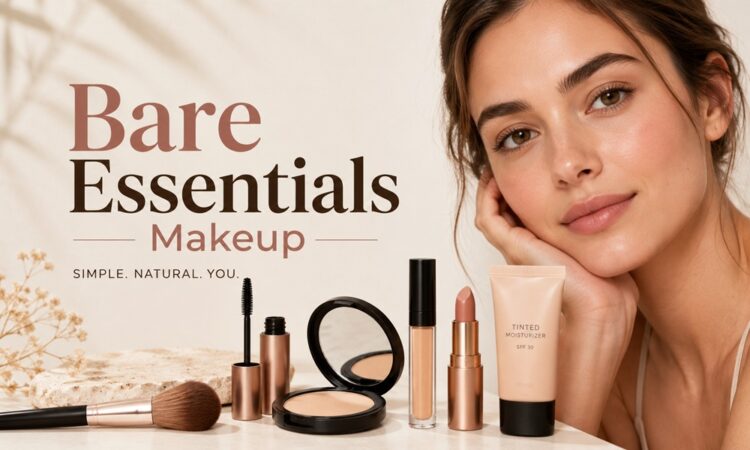
Most people own far more makeup than they use. Half-empty tubes, that one bold eyeshadow palette, three concealers that never matched. Bare essentials makeup is the antidote. It is a small, hard-working set of products that lets your skin look like skin, only fresher.
This guide breaks down exactly what belongs in a bare essentials kit, the order to apply it, and how to adapt it to your skin type. You will also learn where the trend is heading and how to avoid the mistakes that make “minimal” look tired instead of effortless.
Quick answer: Bare essentials makeup is a stripped-back routine built around a few multitasking products, usually a light base, concealer, cream blush, brow product, mascara, and a tinted lip balm. The goal is a natural, “no-makeup makeup” finish that enhances your features instead of covering them. Most people can build a complete everyday look with five to six items.
What does “bare essentials makeup” actually mean?
The phrase points to two different things, and it helps to know which one you are after.
The first is a concept: the minimum set of makeup you need for a polished, natural look. Think fewer, better products. This is the idea most beauty editors mean when they talk about a minimal or capsule makeup kit.
The second is a brand. Many shoppers type “bare essentials makeup” when they are actually looking for bareMinerals (originally launched as Bare Escentuals), one of the pioneers of mineral makeup. If that is what brought you here, jump to the mineral makeup section below.
Most of this guide covers the concept, because that is what turns any product, from a drugstore find to a luxury brand, into a routine that works. We will cover the brand angle too, since the two overlap more than you would expect.
What products do you actually need for a minimal makeup routine?
You need less than the beauty aisle wants you to believe. The core of a bare essentials kit is six products, each chosen because it does more than one job.
| Product | What it does | Why it earns a spot |
|---|---|---|
| Tinted moisturizer or skin tint | Evens tone with sheer, breathable coverage | Replaces heavy foundation; many include SPF and skincare actives |
| Concealer | Brightens under-eyes, hides blemishes and redness | Targeted coverage means you skip full-face foundation entirely |
| Cream blush | Adds a natural flush to the cheeks | Brings life back to the face; blends with fingers, no brush needed |
| Brow gel or pencil | Frames and fills the brows | Groomed brows make you look “done” even with nothing else on |
| Mascara | Defines and opens the eyes | The single biggest impact for the least effort |
| Tinted lip balm or lip tint | Adds soft color and hydration | Finishes the face without the fuss of lipstick |
The 60-second version
Short on time or products? A true bare minimum is just three items: concealer, brow product, and a tinted lip balm. Spot-conceal where you need it, brush up your brows, and swipe on lip color. That alone reads as “put together” in under a minute.
Nice-to-have add-ons
These are optional. Add them only if you will actually use them.
- Cream bronzer for warmth and a sun-kissed look
- Setting powder for the T-zone only, if you get shiny
- Cream highlighter for a soft glow on the high points
- A hydrating primer or mist if your makeup slides off by midday
A small, curated kit is the whole point. Do not let “nice-to-haves” quietly rebuild the clutter you were trying to escape.
What is the correct order to apply bare essentials makeup?
Order matters because each layer sits better on the one beneath it. Creams go before powders, always. Here is a simple sequence for a natural look.
- Prep your skin. Cleanse, moisturize, and apply SPF. Well-hydrated skin makes every product blend better, and it means you need less of everything.
- Base. Press on a thin layer of tinted moisturizer or skin tint with fingers or a damp sponge. Start in the center of your face and blend outward.
- Conceal. Dot concealer only where you need it, under the eyes, over blemishes, or around the nose. Tap in with a ring finger.
- Add color with creams. Cream blush on the apples of the cheeks, cream bronzer along the cheekbones and hairline if you use it. Blend while it is still tacky.
- Set lightly, if at all. A dusting of powder on the T-zone keeps shine down without killing your glow. Skip it everywhere else.
- Brows. Brush up and fill sparse spots with a gel or pencil.
- Mascara. One or two coats. Curl first if you like an open-eyed look.
- Lips. Tinted balm or lip tint to finish.
- Optional setting mist for hold and a fresh, dewy finish.
A quick tip from working makeup artists: layering cream products first, then setting only where needed, gives a glow that survives the whole day. Powder over the entire face is what makes minimal makeup look flat and aged.
Why is everyone talking about skinimalism and no-makeup makeup?
The bare essentials approach is riding a much bigger cultural shift. The buzzword is skinimalism, a blend of “skin” and “minimalism.” It has grown from a passing trend into a lasting beauty philosophy: use fewer, smarter products to enhance your natural skin rather than mask it.
A few things define the current version of this look.
- Skin-first, not coverage-first. Heavy full-coverage foundation is fading. Skin tints, serum foundations, and lightweight bases that “let skin look like skin” have taken over.
- A satin finish is the sweet spot. The ultra-dewy “glazed” look and the flat matte look are both softening into a satin, velvet-with-a-hint-of-sheen finish that reads as naturally healthy.
- One standout feature. Instead of full glam, the modern approach picks a single focus, glossy lips or soft smoky eyes, and keeps everything else clean.
- Blush over contour. Soft, high-placed blush is replacing harsh sculpting. It lifts the face without obvious lines.
- Multitasking formulas rule. Tinted moisturizers with niacinamide, serum foundations with peptides, blurring balms with ceramides. Makeup and skincare are merging into one step.
This is not a niche idea. The skinimalism market is projected to grow at a compound annual rate of roughly 9.8% over the coming decade, and beauty forecasters report that shoppers increasingly want products that prove they support skin health over the long term, not just cover it up. Even the industry language is changing, moving away from “anti-aging” and “flaws” toward “healthy,” “rested,” and “real.”
The takeaway for your kit: you are not behind by owning less. You are ahead of it.
Is bareMinerals (bare essentials) mineral makeup better for your skin?
If you came here for the brand, here is the honest picture. Mineral makeup is made from finely milled minerals such as zinc oxide, titanium dioxide, mica, and iron oxides, usually without the oils, waxes, fragrances, and preservatives found in many conventional formulas. bareMinerals helped popularize the category, which is why so many people call it “bare essentials makeup.”
The upsides, often noted by dermatologists:
- Lightweight and breathable, which suits sensitive, oily, or acne-prone skin
- Frequently non-comedogenic, so pure formulas are less likely to clog pores
- Built-in physical sun protection from zinc oxide and titanium dioxide
- Zinc oxide can be calming, which helps with redness and rosacea
The trade-offs worth knowing:
- It can look powdery or “sit on top” of skin if you apply too much. With mineral makeup, less really is more.
- Not every product labeled “mineral” is pure. Some contain bismuth oxychloride or talc, which can irritate or clog. Always read the ingredient list rather than the front label.
- The SPF in makeup is not enough on its own. Wear a dedicated sunscreen underneath.
- Patch test first if you react easily, since mica or bismuth can bother some people.
Bottom line: high-quality mineral makeup is a genuinely good fit for the bare essentials philosophy, especially for reactive or breakout-prone skin. Just buy fewer products, apply with a light hand, and check the label.
How do you build a bare essentials kit for your skin type?
The products stay the same. The formulas change. Match your base and finish to what your skin does.
| Skin type | Best base | Finish tip |
|---|---|---|
| Oily / acne-prone | Oil-free skin tint or a light mineral powder | Set only the T-zone; choose non-comedogenic formulas |
| Dry | Hydrating tinted moisturizer or serum foundation | Skip heavy powder; use a cream blush and a mist to finish |
| Combination | Lightweight tint all over | Spot-set shiny areas with translucent powder |
| Sensitive / rosacea-prone | Fragrance-free mineral or clean formula | Green-tinted concealer calms redness; patch test new items |
| Mature | Dewy or satin base, never flat matte | Cream products only; powder settles into fine lines |
The single most reliable upgrade for any skin type is not a makeup product at all. Dermatologists point out that a basic routine of cleanser, moisturizer, and sunscreen improves the canvas so much that you need far less makeup on top.
What are the most common minimal makeup mistakes?
Real-world feedback from beauty forums and communities like Reddit and Quora keeps surfacing the same handful of slip-ups. Avoid these and your bare essentials look will land every time.
- Shopping without a plan. Beauty writers call the result the “makeup graveyard,” a drawer of impulse buys you never touch. Buy for the routine you actually do, not the one you imagine.
- Wearing too much base. Minimal makeup fails the moment it looks like makeup. Build coverage only where you need it.
- Powdering everything. This is the fastest way to lose that fresh, skin-like glow. Spot-set instead.
- The wrong foundation shade. Swatch along the jawline in natural light. The right match disappears without blending.
- Skipping skin prep. Dry, flaky skin makes even the best products look patchy. Hydration first, always.
- Treating concealer as foundation. It is thicker and more concentrated, so a full face of it looks heavy and creases fast.
- Dirty brushes and sponges. They sabotage clear skin and smooth application. Wash them weekly.
- Relying on makeup for sun protection. Always layer a real SPF underneath.
Does spending less on products really cost you less?
Here is a counterintuitive point that most listicles skip. Buying fewer, better products usually saves money over time. One quality tinted moisturizer you finish costs less than a graveyard of cheap half-used tubes. It is also gentler on the planet, since overconsumption drives most beauty waste.
That said, skinimalism is not automatically cheap. The philosophy spends down on quantity while often spending up on a few hero multitaskers. You are trading fifteen mediocre products for six great ones. For most people, that math works out in favor of both the wallet and the skin.
Unique insights: what the top guides usually miss
A few things rarely make it into standard “minimal makeup” roundups, but they change your results.
- Sequence cream, then set, for all-day glow. Applying cream blush and bronzer before any powder, then setting only the T-zone, is what keeps a natural finish from fading by lunch. Most beginners powder first and wonder why the color disappears.
- Satin beats dewy right now. Plenty of minimal makeup content still pushes a wet, dewy look. The current direction is a satin, in-between finish. Too much shine reads as trying hard; too matte reads as a mask.
- Pick one feature and stop. The most modern version of bare essentials is not “a little of everything.” It is a clean base plus one focal point, either the eyes or the lips, and nothing competing with it.
- The term itself is split. Because “bare essentials makeup” points to both a routine and the bareMinerals brand, knowing which you want saves you from buying the wrong thing. Few articles even mention this.
- Tiered kits beat one fixed kit. Keep a three-product “60-second” version for rushed mornings and a six-product version for when you have time. One flexible system beats an all-or-nothing routine you abandon.
Frequently asked questions
What is bare essentials makeup? It is a minimalist routine built around a few multitasking products, typically a light base, concealer, cream blush, brow product, mascara, and a tinted lip balm, that creates a natural, no-makeup makeup look. The term is also commonly used to mean the mineral makeup brand bareMinerals.
What are the essential makeup products every beginner needs? A complete starter kit is six items: tinted moisturizer or skin tint, concealer, cream blush, brow gel or pencil, mascara, and a tinted lip balm. You can go even lighter with just concealer, brows, and lip color.
Is “bare essentials” the same as bareMinerals? Not exactly. bareMinerals (formerly Bare Escentuals) is a specific mineral makeup brand people often call “bare essentials.” A bare essentials routine is the broader idea of a minimal kit, and it works with any brand.
How do you do a no-makeup makeup look? Prep skin well, apply a sheer base, conceal only where needed, add cream blush, groom the brows, coat the lashes with mascara, and finish with a tinted lip balm. Keep coverage light and let your skin show through.
Is mineral makeup better for acne-prone skin? Pure mineral makeup is often non-comedogenic and free of common irritants, which can help. But some “mineral” products contain talc or bismuth oxychloride that may clog or irritate, so always check the ingredient list and patch test.
What order should I apply minimal makeup in? Skincare and SPF, then base, concealer, cream color products, a light setting powder if needed, brows, mascara, and lips last. Creams before powders keeps everything looking natural.
How much does a bare essentials makeup kit cost? It varies widely. You can build a full six-product kit at the drugstore for a modest sum, or invest in a few premium multitaskers. Because you buy fewer items, quality picks often pay off over time.