Why Do Volleyball Players Tape Their Fingers? The Real Reasons Behind Those White Strips

Watch any match and you will spot them fast. Neat white strips wrapped around fingers, thumbs, and knuckles. Setters have them. Blockers have them. So do liberos and outside hitters.
It looks like a pro habit. Most of the time, it is smart hand protection.
This guide breaks down every reason players tape up, which fingers they target, the tape types they trust, and the exact techniques they use. It also covers what the science actually proves and where it falls short, so you get the full picture, not just the usual list.
Quick Answer: Why Do Volleyball Players Tape Their Fingers?
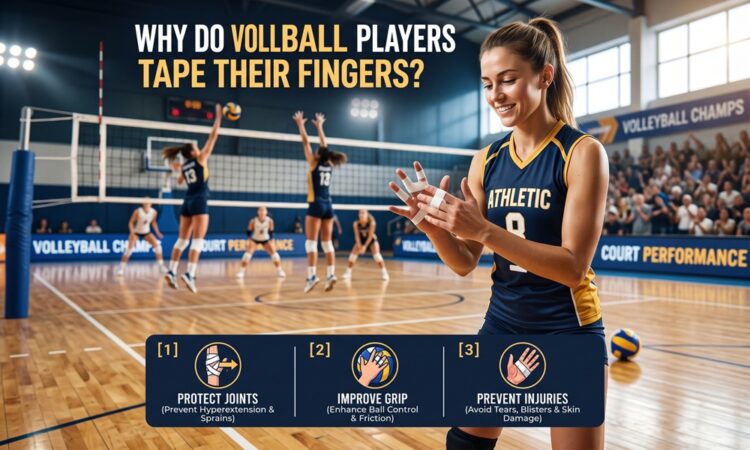
Volleyball players tape their fingers to protect the joints from jams, sprains, and dislocations during blocks, sets, and digs. Tape also supports a healing finger, improves grip on a sweaty ball, guards skin from cracking, and adds a confidence boost. The hands make at least two of the three contacts in a rally, so finger injuries are common and can end a season.
Why Are Fingers So Vulnerable in Volleyball?
Your hands do most of the work. Passing, setting, spiking, blocking. The ball comes off a hard swing at high speed, and the contact is rarely clean.
The injury data backs this up.
- Finger injuries make up about 13.4% of all acute volleyball injuries. That ranks them third, behind ankles (around 31.9%) and knees (around 17.4%).
- Upper body injuries to the wrist, hand, and shoulder account for 20% to 30% of all volleyball injuries.
- In a large youth study of players aged 18 and under, 43% of upper-limb volleyball injuries were to the fingers. Of those finger injuries, about 42.6% were sprains or strains and 19.5% were fractures.
Blocking and setting drive most of this. A ball hitting a stiff, extended finger at the wrong angle bends the joint sideways or backward in a split second. That is how jams, sprains, and dislocations happen.
Tape does not stop the ball. It limits how far a joint can travel when things go wrong.
What Are the Real Reasons Volleyball Players Tape Their Fingers?
Players tape for more than one reason, and often for several at once. Here are the main ones.
1. Injury prevention and joint support
This is the top reason. Tape reinforces the finger joint and limits extreme sideways or backward bending. It cannot make a finger rigid like a splint, but it adds a small “stop” that reduces painful jams. Fingers that have been hurt before, or that feel naturally weak, benefit most.
2. Supporting an existing injury
A jammed or sprained finger heals slowly. Buddy taping it to a healthy neighbor lets a player keep competing while limiting strain on the sore joint. The healthy finger acts as a natural splint. This is the go-to method for getting back on the court sooner.
3. Grip and ball control
Sweat and court moisture make the ball slippery. A snug tape wrap can add friction on the fingertips and pads, which helps with clean touches on serves, sets, and passes. Setters and defensive players notice this most.
4. Skin and nail protection
This reason gets overlooked. The leather ball dries out the hands over hundreds of contacts. Skin cracks, splits, and calluses form. Nails chip. A light wrap protects the skin and nails during long tournament days. Players with dry skin or eczema rely on it heavily.
5. Confidence, feel, and ritual
Many players tape even when nothing hurts. The tape makes the hands feel steady and consistent. It becomes part of a pre-game routine that gets the head right before the first serve. That mental steadiness is a real benefit, even if it is hard to measure.
6. Style and team identity
Some taping is simply for looks. Players use distinct wrap patterns to stand out or show team spirit. It is a small way to express personality, and it is a genuine part of volleyball culture at every level.
Does Taping Fingers Actually Work? What the Science Says
Here is the honest answer that most volleyball blogs skip. The evidence is mixed, and the reason is worth understanding.
Mechanical support fades fast. Athletic trainers point out that rigid tape loosens within minutes of hard movement and sweat. So the raw “brace” effect is smaller than people assume, especially deep into a match.
The bigger benefit may be neural, not mechanical. Tape stimulates skin receptors around the joint. This can sharpen proprioception, which is your sense of where the joint sits in space. A large systematic review of 91 studies covering more than 2,700 people found that taping reduced joint repositioning errors compared with no tape and with fake placebo tape. Better joint awareness can mean better positioning and fewer awkward contacts.
But the effect depends on who you are. A randomized trial found that kinesiology tape did not improve wrist joint position sense in already-healthy subjects. Translation: tape seems to help people with weaker or previously injured joints more than it helps a healthy joint that already tracks well.
For actual finger injuries, tape holds up well. A recent comparative study of 175 patients tested kinesiology taping against buddy taping and rigid splinting for finger sprains and fractures. The taping group showed lower re-displacement of the joint than splinting, plus easier movement during healing. That is a strong signal for taping as a real recovery tool, not just a placebo.
The takeaway: part of tape’s value is physical support, part is improved joint feel, and part is confidence. All three matter on the court. If it helps you play looser and more aggressively, that alone can change how you compete.
Which Fingers Do Volleyball Players Tape Most?
The ring finger and the index (pointer) finger are the most common targets. Both take heavy load during setting and blocking.
The pinky gets taped often too, usually buddy-taped to the ring finger, because it is thin and easy to jam on a block. The thumb gets its own treatment for stability and blister control.
How Do Different Positions Tape Their Fingers?
Taping needs shift by role. Here is a quick comparison.
| Position | Main concern | Common approach |
|---|---|---|
| Setter | Repetitive fingertip load, friction, blisters | Light elastic or kinesiology wrap; spiral from base to just below the nail |
| Outside / middle hitter | Joint “folding” on hard blocks and swings | Rigid zinc-oxide tape for maximum stability |
| Blocker | Fingers bending back at the net | Rigid tape or buddy taping to limit hyperextension |
| Libero / defensive specialist | Blisters and friction from constant digs | Elastic “second skin” spiral wrap; buddy tape for control |
Setters chase feel and skin protection. Hitters and blockers chase joint stability. Liberos live in the friction-and-blister zone during long matches.
What Kind of Tape Do Volleyball Players Use?
Not all tape is the same. Choosing the right one matters more than most beginners think.
| Tape type | Stretch | Best for | Notes |
|---|---|---|---|
| Rigid zinc-oxide (athletic) tape | None | Joint stability, buddy taping, blocking | The classic white strip. Strong support. Usually 1.25 cm or 2.5 cm wide, easy to tear by hand |
| Elastic athletic tape | Some | Grip, blister prevention, snug wraps | Moves with the finger while still adding light support |
| Kinesiology (KT) tape | High | Proprioception, friction, mild support | Stimulates skin receptors; allows full range of motion |
| Cohesive wrap (self-stick) | Some | Sensitive skin, multi-match days | Sticks to itself, not to skin or hair; breathable and easy to remove |
Zinc-oxide tape is the reliable default for support. Many players keep both rigid and elastic tape in the bag to handle different situations in a single tournament.
Unique tip most guides miss: cohesive wrap is a quiet favorite for tournament weekends. Because it never pulls on skin or hair, it saves a lot of pain at removal after back-to-back matches, and it breathes better when hands sweat all day.
How Do You Tape Your Fingers for Volleyball?
Start clean. Wash and fully dry your hands so the tape grips. Then pick a method based on your goal.
Buddy taping (best for a jammed or sprained finger)
- Cut two short strips, each about two to three inches long.
- Place a small piece of gauze or foam between the injured finger and its healthy neighbor.
- Wrap the first strip above the middle joint, firm but not tight.
- Wrap the second strip below the joint, leaving the knuckle free so you can still bend and close your hand.
- Test with a block or dig motion. If it shifts, reapply.
X taping (support with some movement)
- Start on the outside of the finger, just above the first knuckle.
- Cross the tape diagonally over the joint to form an “X.”
- This supports the joint while still letting you bend the finger slightly.
H taping (targeted joint support for liberos and setters)
- Cut four short strips of one-inch tape.
- Run one strip down the front from knuckle to tip, and one down the back.
- Connect them with two horizontal strips across the joint to form an “H.”
- Anchor the edges at the base and tip.
Golden rule for every method: never tape so tight that the finger changes color or goes numb. That means circulation is cut off. You should always be able to bend the finger a little.
What Do Players Say on Forums Like Reddit and Quora?
Real-player opinion adds useful nuance that product pages leave out.
On Reddit, the common view is blunt: finger tape is about support and protection, not looks. Most players started taping after a jammed pinky or a weak joint made playing uncomfortable. The consensus is that it does not need to be fancy or expensive, since basic athletic tape does the job.
On coaching message boards, a recurring theme is skin, not joints. One long-running thread on a prep volleyball board describes coaches taping so their hands do not split from all the reps against dry leather. A parent in that thread shared that their daughter tapes because eczema cracks her fingertips by the end of a tournament day, using a bandage under a light tape strip rather than tape on the raw skin.
Another honest thread admits a chunk of the benefit is mental. Hitters said they felt they could swing harder and block more aggressively with tape on, even if the physical change was small. That confidence effect keeps showing up, and it is real in its own way.
The overall forum message: tape when your fingers actually need help, not just to copy the pros.
Common Finger Taping Mistakes to Avoid
Even experienced players get these wrong.
- Taping too tight. Cuts circulation and kills feel. If the finger changes color, redo it.
- Covering the knuckle you need to bend. Leave working joints free unless you are deliberately splinting.
- Taping over dirty or wet skin. It slips off mid-rally.
- Using the wrong tape. Rigid tape for a spiral grip wrap feels stiff and awkward; elastic tape for a hard block gives too little support.
- Taping onto raw, cracked skin. Protect the split first, then tape around it.
- Never letting the joint recover. Tape supports a finger; it does not fix the underlying weakness. Strength work still matters.
When Should You Not Tape Your Fingers?
Tape is not always the answer.
- If a finger is badly swollen, crooked, or you cannot move it, that may be a fracture or dislocation. See a professional before taping over it.
- If taping makes an injury feel worse or numb, stop.
- If your fingers are healthy and you feel no benefit, you do not need it. Feel and control are personal.
Tape is a support tool. It is not a substitute for proper diagnosis of a real injury.
Are There Alternatives to Finger Tape?
Yes, and some players prefer them.
- Finger sleeves. Slip-on compression sleeves give support without the wrapping ritual.
- Liquid skin or skin adhesive. Popular for sealing cracked, split fingertips, especially for players with dry skin or eczema.
- Grip strengthening and mobility work. The long-term fix. Stronger, more stable joints jam less often in the first place.
- Technique correction. Many jams come from poor blocking hand position. Fixing the technique prevents the injury better than any tape.
The smartest players combine tape for match-day protection with off-court strength work for lasting resilience.
Is It Legal to Tape Fingers in Volleyball?
Yes. Taping fingers is allowed at every level of play, from school gyms to international competition. Athletic tape, kinesiology tape, and finger sleeves are all standard equipment. There is no rule against protective taping, which is why you see it across every team and position.
A Quick Note on the Rise of Athletic Tape
Colorful kinesiology tape went mainstream after a beach volleyball star wore a striking web pattern of it while winning gold at the Beijing Olympics on a repaired shoulder. That single visible moment turned a clinical product into a consumer trend, and interest spikes every Olympic cycle. Finger taping in volleyball sits inside that larger movement.
Frequently Asked Questions
Does taping fingers actually help in volleyball? Yes, in three ways. It adds joint support, sharpens your sense of finger position, and boosts confidence. The mechanical support fades as tape loosens, but the joint-awareness and confidence effects hold up, and tape performs well for supporting real finger injuries during recovery.
Which fingers do volleyball players tape most? The ring finger and the index finger, because they take the most load in setting and blocking. The pinky is often buddy-taped to the ring finger, and the thumb gets taped for stability.
What tape do volleyball players use? Rigid zinc-oxide athletic tape for joint support, elastic or kinesiology tape for grip and flexibility, and cohesive self-stick wrap for sensitive skin and multi-match days.
How do you tape a jammed finger for volleyball? Buddy tape it. Place padding between the sore finger and a healthy neighbor, then wrap firm strips above and below the middle joint, leaving the knuckle free so you can still bend and close your hand.
Do setters tape their fingers? Many do. Setters use light elastic or kinesiology tape to reduce friction, protect the fingertip pads, and prevent blisters during heavy repetitive setting reps.
Can taping fingers improve grip? Yes. A snug wrap adds friction on the fingertips, which helps control a ball made slippery by sweat or humidity.
Is finger taping only for injured players? No. Plenty of healthy players tape as prevention, for skin protection, or as a pre-game routine that makes the hands feel steady and consistent.
Can taping be too tight? Yes, and it is a common mistake. If the finger changes color, loses feeling, or you cannot bend it at all, the tape is too tight. Remove and reapply.