West Suburban Hospital: A 110-Year Legacy, a Financial Crisis, and an Uncertain Future (2026)

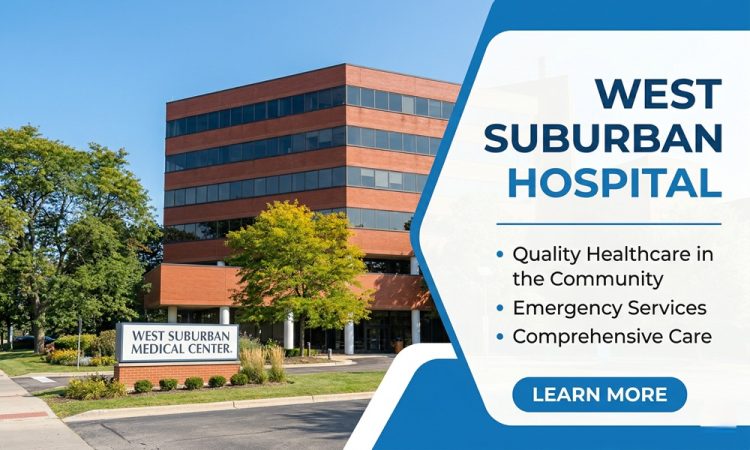
West Suburban Medical Center has been one of the Chicago region’s most enduring community hospitals — serving Oak Park and the West Side of Chicago since 1914. But in March 2026, after years of financial strain, ownership disputes, and operational failures, the hospital abruptly suspended all patient care services. For a community that depends on it as a safety-net facility, the closure has raised urgent questions about healthcare access, accountability, and what comes next.
This article provides a comprehensive overview of West Suburban Hospital — its history, the services it offered, the chain of events that led to its closure, the debt crisis, and the ongoing efforts to reopen it.
What Is West Suburban Medical Center?
West Suburban Medical Center, located at 3 Erie Court, Oak Park, Illinois, is a community hospital that has served the western Chicago suburbs and Chicago’s West Side for over a century. It functions as a safety-net hospital, meaning it provides services to a high proportion of patients who are uninsured or covered by Medicaid and Medicare — populations that often have no other affordable healthcare option nearby.
| Detail | Information |
|---|---|
| Full Name | West Suburban Medical Center |
| Address | 3 Erie Court, Oak Park, IL |
| Phone | (708) 383-6200 |
| Founded | 1914 |
| Current Operator | Resilience Healthcare (Manoj Prasad, CEO) |
| Current Status | Suspended operations (as of March 27, 2026) |
| Projected Reopening | Early July 2026 (unconfirmed) |
| Full-Time Staff | ~600 (per CMS data) |
| Medicaid Patient Share | ~67% |
A Brief History: 110 Years of Community Healthcare
West Suburban Hospital’s roots go back to 1914, making it one of the oldest healthcare institutions in the Chicago metropolitan area. For most of its history, it operated as a nonprofit community hospital, building a reputation for quality care and deep community ties.
Over the decades, the hospital adapted to the evolving needs of its service area. It established a well-regarded physician residency training program, offered labor and delivery services with a neonatal unit, and built partnerships with community wellness providers. It also developed relationships with practices like PCC Community Wellness Center, whose midwives and family medicine physicians delivered babies at West Suburban for at least 20 years.
In 2022, the hospital was sold to Resilience Healthcare, a New Jersey-based for-profit management company led by CEO Dr. Manoj Prasad and co-owned by Reddy Rathnaker Patlola. The acquisition price was reported at approximately $92 million, funded partly by a $22 million loan from First Credit Bank and a $67 million loan note from the previous owner, Pipeline Health, due in December 2024.
Services Offered (Prior to Closure)
Before its suspension of services, West Suburban Medical Center offered a broad range of inpatient and outpatient care. The hospital was particularly significant for West Side Chicago residents who lacked easy access to other major medical facilities.
Clinical Services
- Emergency Department — 24/7 emergency care for the Oak Park and Austin communities
- Labor & Delivery / Neonatal Care — Birthing services, later closed prior to the full shutdown
- Inpatient Medical & Surgical Services
- Oncology Services
- Diagnostic Imaging — Including MRI, CT scans, and X-rays
- Outpatient Clinics — For ongoing patient management and follow-up care
- Physician Residency Program — Training program for medical residents (accreditation later lost)
Patient Demographics
A critical aspect of West Suburban’s role in the community is the population it serves. Around 67% of its patients rely on Medicaid, and a significant portion are covered by Medicare. Many patients come from Chicago’s West Side neighborhoods like Austin — one of the city’s most underserved areas — where the hospital is one of the closest and most accessible acute care facilities.
The Downward Spiral: What Went Wrong?
The story of West Suburban’s decline under Resilience Healthcare is one of cascading failures — financial, operational, and administrative — that compounded over several years.
1. The Billing System Failure
The most direct cause cited for the March 2026 closure was a failed electronic medical records (EMR) system. CEO Manoj Prasad blamed a new billing platform — provided by Altera Digital Health, which began working with the hospital in mid-2025 — for failing to accurately generate and submit patient bills for over a year. Without billing, the hospital could not collect revenue, eventually running out of cash to pay employees.
2. Growing Debt to the State of Illinois
Well before the closure, West Suburban’s financial troubles were a matter of public record. By October 2025, Resilience Healthcare reportedly owed $41.6 million to the Illinois state hospital assessment system — separate from the $27.7 million owed by its sister facility, Weiss Memorial Hospital, bringing the combined state debt to approximately $69–71 million.
3. Unpaid Property Taxes
As of April 2026, ownership had failed to pay any property taxes over the prior year. The outstanding balance reached nearly $5 million — including over $3 million in 2024 taxes, over $1.6 million in 2025 installments, and more than $200,000 in late fees. This amounts to nearly 2% of Oak Park’s entire annual tax burden.
4. Lawsuit from Previous Owners
In December 2025, affiliates of Pipeline Health — the hospital’s former owner — filed a lawsuit against Resilience Healthcare for allegedly failing to repay the $67 million loan note that was due in December 2024. That default further deepened the financial hole and raised questions about the hospital’s long-term viability.
5. Operational Failures and Safety Concerns
The hospital had accumulated a troubling track record of operational failures:
| Issue | Details |
|---|---|
| Resident doctors’ open letter | In November 2024, more than half of West Suburban’s 29 resident doctors described the hospital as being in “critical condition,” citing shortages of epidural kits and nonnarcotic pain medications |
| Loss of residency accreditation | The hospital lost accreditation for its physician training program in 2025 |
| Closure of birthing unit | Labor, delivery, and neonatal services were abruptly shut down before the full closure |
| Midwife partnership severed | In November 2024, the hospital cut ties with midwives and family medicine doctors at PCC Community Wellness Center — citing liability insurance concerns — ending a 20-year partnership |
| Fire safety & elevator inspections | The hospital failed more than two dozen Oak Park elevator inspections since early 2023, and failed a fire safety inspection in August 2025 |
| Basic operational failures | Staff reported non-working phone lines, uncollected trash, and disrupted linen deliveries in the weeks before closure |
The Closure: March 25–27, 2026
On Wednesday, March 25, 2026, CEO Manoj Prasad notified staff via email that the hospital would be suspending operations. The emergency room stopped accepting ambulances that same afternoon. Walk-in patients were turned away after 4 p.m. The hospital worked with roughly 70 inpatients to arrange discharge or transfer by the end of the week.
By March 27, 2026, West Suburban Medical Center had formally suspended all patient care services. Over 500 employees were furloughed, many with less than a week’s notice.
The Illinois Department of Public Health (IDPH) confirmed the closure on social media and issued a statement saying it was “disappointed by the lack of advance notice and clear communication from hospital leadership.” The IDPH pledged to work with local hospitals and healthcare providers to minimize disruption to patient care.
State Representative La Shawn Ford, whose district includes the hospital, called the closure “a devastating blow” to an already underserved community, adding: “There has to be some type of infusion of money to reopen this hospital.”
Who Is Most Affected?
The closure of West Suburban has had a disproportionate impact on some of the most vulnerable people in the region.
Patients who relied on the hospital’s emergency room and outpatient clinics — many of whom are low-income, elderly, or chronically ill — were suddenly left without their primary acute care option. One patient’s family member, Linda Hennis, described her husband Alan’s situation after the closure: Alan is battling Stage 4 lung and bone cancer and needed imaging from West Suburban to assess treatment effectiveness. Unable to get records or even a callback, the family faced critical delays in cancer care.
Employees — roughly 600 full-time workers — were left in financial uncertainty. Many did not know whether they had jobs beyond the week of the closure. Workers described the shock, grief, and financial pressure caused by the abrupt announcement.
The Austin neighborhood on Chicago’s West Side is particularly vulnerable. State Rep. Ford noted that while the hospital is physically in Oak Park, it is the Austin community — predominantly low-income and minority — that is most devastated by the loss of access.
Community and religious leaders held town halls, with pastors warning that the closure would create a “health care desert” for the surrounding neighborhoods.
Ownership Dispute and the Path Forward
The situation has been further complicated by a rift between West Suburban’s two main owners.
Manoj Prasad, the majority owner and CEO of Resilience Healthcare, held a press conference on April 1, 2026, where he maintained that the hospital would reopen but offered no concrete new plans. He reiterated that staff overseas were working to recoup billing losses and expressed confidence in a July 2026 reopening target.
Reddy Rathnaker Patlola, the minority owner (40%) who owns the hospital property itself, publicly distanced himself from Prasad’s management, saying he had grown “increasingly concerned about the trajectory of hospital operations.” He began exploring an alternative path: bringing in Insight Hospital and Medical Center — the Chicago-based nonprofit that took over operations of the former Mercy Hospital in Bronzeville — to help reopen West Suburban.
Insight’s CEO, Atif Bawahab, expressed willingness to engage, stating: “Our mission is to step into complex situations and maintain continuity of care for the sake of the community.”
However, Prasad publicly dismissed the nonprofit takeover proposal. The disagreement between the two owners has slowed down resolution and left the hospital’s future unclear.
Meanwhile, Dr. Chidinma Osineme, president of West Suburban’s medical staff, said Prasad had kept key financial and patient safety information from staff. She expressed hope for a reopening but said she was not confident it would happen under Prasad’s leadership.
What Patients Should Know Right Now
If you are a former patient of West Suburban Medical Center and need assistance, here is the key information:
| Need | Contact |
|---|---|
| Medical Records | Call (708) 763-2619 |
| Records by Email | medrecords@westsubmc.com |
| Expected Wait Time | 7–10 days after submitting request |
| Emergency Care | Call 911 or visit the nearest open ER |
| State Oversight | Illinois Department of Public Health (IDPH) |
The IDPH has mandated that Resilience Healthcare file a status report every 30 days. If the suspension is not lifted within one year, the owner must either file for an extension or discontinue operations permanently.
The Bigger Picture: Safety-Net Hospital Crisis in Illinois
West Suburban’s collapse is not an isolated event — it mirrors a broader national and statewide crisis affecting safety-net hospitals. These facilities, which serve predominantly Medicaid and Medicare populations, often operate on razor-thin margins and are deeply vulnerable to billing disruptions, debt, and under-investment.
West Suburban’s sister facility under Resilience Healthcare, Weiss Memorial Hospital in Chicago’s Uptown neighborhood, closed its emergency department in August 2025 after losing Medicare and Medicaid funding following an HVAC failure that led state inspectors to uncover safety violations. This left West Suburban as the last Resilience-operated hospital still open — until its own closure in March 2026.
The closures have reignited debates about:
- For-profit management of safety-net hospitals: Critics argue that private equity and for-profit operators are ill-suited to manage hospitals that serve vulnerable populations with low reimbursement rates.
- State oversight: Illinois officials acknowledged that more monitoring and earlier intervention could have helped prevent the crisis from escalating.
- Healthcare access equity: Both Weiss and West Suburban primarily served Black and low-income communities, raising questions about structural inequities in who loses healthcare access when hospitals fail.
Key Timeline of Events
| Date | Event |
|---|---|
| 1914 | West Suburban Hospital founded in Oak Park, IL |
| 2022 | Resilience Healthcare (Prasad & Patlola) acquires West Sub and Weiss Memorial for ~$92M |
| November 2024 | Resident doctors issue open letter calling hospital “in critical condition” |
| November 2024 | West Sub severs ties with midwives and family medicine doctors |
| December 2024 | Pipeline Health sues Resilience Healthcare for $67M unpaid loan |
| 2025 | Hospital loses residency program accreditation; birthing unit closes |
| August 2025 | Weiss Memorial Hospital closes after losing Medicare/Medicaid funding |
| October 2025 | Reports emerge that Resilience owes ~$69M to state of Illinois |
| March 25, 2026 | West Suburban ER stops accepting patients; staff notified of closure |
| March 27, 2026 | All patient care services suspended; 500+ employees furloughed |
| April 1, 2026 | Prasad holds press conference; no concrete reopening plan announced |
| April 7, 2026 | Community leaders hold town hall, call for reopening under new management |
| April 2026 | Ownership owes nearly $5M in unpaid Oak Park property taxes |
| Target (unconfirmed) | Prasad aims to reopen by early July 2026 |
Conclusion: Will West Suburban Reopen?
The future of West Suburban Medical Center remains genuinely uncertain as of April 2026. The owner has stated a goal of reopening by July, but as of now there is no confirmed funding source, no finalized management plan, and deep skepticism from community leaders, medical staff, and state officials alike.
What is certain is that the closure has left a gaping hole in healthcare access for tens of thousands of people in Oak Park and Chicago’s West Side. The hospital’s story is both a local tragedy and a national cautionary tale about the fragility of safety-net hospitals, the consequences of financial mismanagement, and the communities left behind when institutions fail.
Community members, pastors, and advocates continue to press for a reopening — ideally under new, accountable leadership — that would restore West Suburban to its century-long role as a cornerstone of community health.