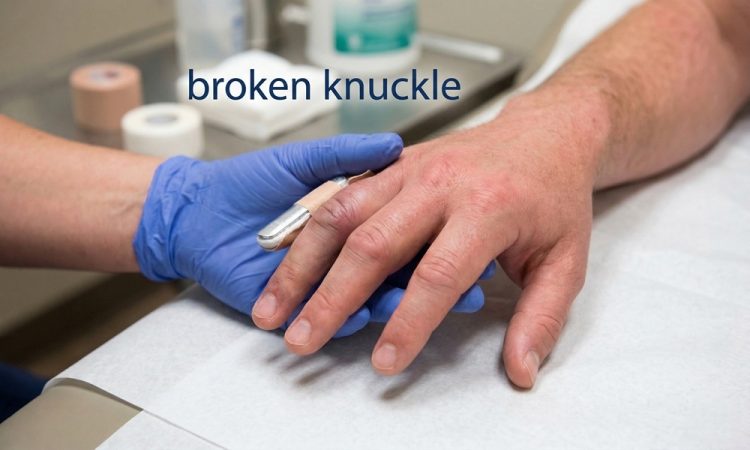
Knuckle injuries happen more often than most people realize — during a fall, a sports collision, or even an accidental knock against a hard surface. The challenge is that a broken knuckle and a bruised knuckle can look and feel similar in the early hours after an injury. Knowing what to look for can make the difference between getting timely treatment and risking long-term damage to your hand.
As health and wellness advisors, we want to help you understand the clear visual and physical signs of a broken knuckle, how it differs from a bruise, and what steps you should take if you suspect a fracture.
What Is a Broken Knuckle?
Knuckles are the joints formed where the finger bones (phalanges) meet the long bones of the palm (metacarpals). A broken knuckle — medically known as a metacarpal fracture — occurs when one of these bones cracks or breaks under forceful impact.
One of the most common types is the “boxer’s fracture,” which happens when a person punches a hard surface and fractures the fifth metacarpal bone — the one just below the pinkie finger. However, any knuckle on any finger can break. The second metacarpal, below the index finger, and others are also vulnerable, depending on the nature of the impact.
Broken knuckles are among the most frequently seen hand injuries in orthopedic clinics, often resulting from punching, falls, contact sports, or direct trauma.
What Does a Broken Knuckle Look Like? Visual Signs to Know
The appearance of a broken knuckle can vary based on the severity and location of the fracture, but there are distinct visual cues that set it apart from a simple bruise or sprain.
1. Swelling
Swelling is often the first and most visible sign. Fluid leaks from small blood vessels surrounding the fracture site, causing the knuckle and surrounding tissue to puff up noticeably. Many people report that their hand begins to swell within just 10 minutes of the injury. In some cases, the swelling spreads to adjacent fingers, not just the injured one.
2. Bruising
Bruising appears when blood pools under the skin near the injury site. With a fracture, bruising tends to be more extensive and rapid — sometimes visible almost immediately after the impact. The discoloration can spread over a broader area of the hand compared to a simple bruise.
Note for darker skin tones: Bruising and redness may be less visually obvious on darker complexions. In such cases, physical symptoms like pain, warmth, and loss of movement — along with imaging — are especially important for diagnosis.
3. Sunken or Depressed Knuckle
This is one of the most telling visual signs of a broken knuckle. When you make a fist, one knuckle may appear lower or “sunken in” compared to the others. This is particularly common in a boxer’s fracture, where the knuckle looks concave or flattened rather than protruding normally. If you notice this when forming a fist, consider it a strong indicator of a fracture.
4. Deformity or Misalignment
In more severe fractures, the finger or knuckle may visibly look out of place — bent at an unusual angle or appearing shorter than normal. There may also be an abnormal bony prominence where the bone has shifted out of alignment. This kind of deformity is a clear sign that medical attention is needed immediately.
5. Redness and Warmth
Inflammation from the fracture causes increased blood flow to the site, making the skin over the knuckle appear red and feel noticeably warm to the touch. This is part of the body’s natural healing response but also an indicator of significant injury.
6. Broken Skin or Open Wound
In compound (open) fractures, the broken bone may pierce through the skin. The presence of a wound or cut near the knuckle after impact may indicate an open fracture, which carries a higher risk of infection and requires urgent medical care.
Broken Knuckle vs. Bruised Knuckle: How to Tell the Difference
It can be genuinely difficult to distinguish between the two without an X-ray. The table below outlines the key differences to help guide your decision.
Also READ : Bruised Knuckle Vs Broken Knuckle
| Feature | Broken Knuckle | Bruised Knuckle |
|---|---|---|
| Pain Severity | Severe, persistent, worsens with movement | Sharp initially, fades relatively quickly |
| Swelling | Significant, may spread to adjacent fingers | Moderate, localized |
| Bruising | Extensive, may appear rapidly | Present but less severe |
| Deformity | Possible — sunken, bent, or misaligned knuckle | Absent |
| Finger Movement | Very limited or impossible without intense pain | Slightly restricted |
| Sensation | Possible numbness if nerves are compressed | Usually normal |
| Crepitus (grating) | May be present | Absent |
| Healing Time | 4–6 weeks (or longer) | 1–2 weeks |
| Medical Imaging Needed | Yes — X-ray essential | Usually not required |
Important: Even if you can still move a broken knuckle, that does not rule out a fracture. Some people are able to bend a fractured knuckle with limited additional pain. Always seek medical evaluation if you are uncertain.
Other Symptoms That Accompany a Broken Knuckle
Beyond the visual signs, a broken knuckle typically comes with a range of physical symptoms that together paint a clearer picture of the injury.
- Severe and persistent pain — The pain is usually sharp at the site of the fracture and worsens when you try to move your finger or apply pressure to the area.
- Numbness — As swelling increases, it can compress the nerves in your fingers, causing a loss of sensation. This is your body’s natural response to trauma.
- Crepitus — A grating, popping, or cracking sensation when you try to move the finger is a notable symptom of bone damage.
- Inability to make a fist — Loss of the ability to grip or fully close your hand is a functional red flag.
- Stiffness — Even after the acute pain subsides, significant stiffness in the affected joint may persist.
Common Causes of a Broken Knuckle
Understanding how broken knuckles happen can help in both prevention and recognition.
- Punching a hard surface (wall, door, floor)
- Direct impact during contact sports (boxing, MMA, football, basketball)
- Accidental falls where the hand takes the impact
- Being struck by a hard object (ball, bat, or another person’s fist)
- Motor vehicle accidents
How Is a Broken Knuckle Diagnosed?
A visual assessment alone is not sufficient to confirm a fracture. Here is how healthcare professionals typically diagnose the injury:
Physical Examination
The doctor will examine the knuckle for deformity, swelling, bruising, warmth, and tenderness. They will also check for wounds or cuts that could indicate an open fracture, assess range of motion, and test for crepitus.
Imaging
- X-ray: The primary and standard diagnostic tool. X-rays are taken from multiple angles (posterior-anterior, lateral, and oblique) to get a complete picture of the fracture.
- CT Scan: Used for more complex injuries, particularly if there is a suspected fracture-dislocation or if the X-ray results are inconclusive.
- MRI: Less common for knuckle fractures, but may be used to assess associated soft tissue damage such as ligament or tendon injuries.
Treatment Options for a Broken Knuckle
Treatment depends on the severity, type, and location of the fracture.
Immediate First Aid: The RICE Method
| Step | Action |
|---|---|
| R – Rest | Avoid using the injured hand; keep it still |
| I – Ice | Apply a cloth-covered ice pack for 10–20 minutes every hour |
| C – Compression | Wrap the hand gently with a soft bandage to reduce swelling |
| E – Elevation | Keep the hand raised above heart level to minimize swelling |
Non-Surgical Treatment
Most knuckle fractures do not require surgery. Non-surgical options include:
- Buddy taping — Taping the injured finger to an adjacent finger for support
- Splinting — A splint immobilizes the knuckle and allows proper bone alignment during healing
- Casting — More severe fractures may require a full cast over the hand and wrist
- Over-the-counter pain relief — Ibuprofen (Advil) or acetaminophen (Tylenol) to manage pain and reduce inflammation
Surgical Treatment
Surgery is considered when:
- The bone is severely misaligned and cannot be repositioned manually
- There is an open (compound) fracture with a risk of infection
- Multiple fractures are present
- A closed reduction has failed
Surgical options include:
- Internal fixation — Using pins, screws, or plates to hold bones in place
- External fixation — A metal frame secured outside the hand to stabilize the fracture while healing occurs
Physical Therapy
After the bone has healed, physical therapy is often recommended to restore strength, flexibility, and full range of motion. Exercises may include squeezing a soft rubber ball, using rubber bands to stretch the fingers, and guided grip-strengthening routines.
Recovery Timeline
| Stage | Timeframe |
|---|---|
| Initial pain and swelling | First 48–72 hours |
| Bone healing | 4–6 weeks (general estimate) |
| Full recovery with therapy | Several months, depending on severity |
| Return to activity | Cleared by doctor after imaging confirms healing |
Complex fractures, those requiring surgery, or individuals with underlying health conditions (such as osteoporosis or diabetes) may require a longer recovery period.
When Should You See a Doctor?
Do not delay seeking medical attention if you notice any of the following:
- A visibly sunken, misshapen, or angulated knuckle
- Severe pain that does not improve with rest or ice
- Inability to move the finger or make a fist
- Numbness, tingling, or loss of sensation in the fingers
- A wound or open cut near the site of injury
- Symptoms that worsen rather than improve over 24–48 hours
- A popping or cracking sound at the time of injury
Even if you are unsure whether the knuckle is broken or bruised, it is always safer to get it evaluated. An X-ray is the only reliable way to confirm or rule out a fracture. Leaving a fracture untreated can lead to the bone healing incorrectly, resulting in long-term deformity, chronic stiffness, reduced grip strength, or the development of arthritis in the affected joint.
Possible Complications of an Untreated Broken Knuckle
Ignoring a broken knuckle or delaying treatment can have serious consequences:
- Malunion — The bone heals in the wrong position, causing permanent deformity
- Stiffness and limited range of motion — The joint may never fully recover its flexibility
- Chronic pain — Ongoing discomfort that persists long after the initial injury
- Post-traumatic arthritis — Damage to the joint surface can lead to early-onset arthritis
- Infection — Particularly in open fractures, if the wound is not properly cleaned and treated
Key Takeaways
A broken knuckle typically presents with a combination of severe pain, rapid swelling, extensive bruising, and — most distinctively — a sunken or depressed appearance of the knuckle when you attempt to make a fist. Other signs include visible deformity, warmth, redness, numbness, and a grating sensation when moving the finger.
While some of these signs overlap with a bruised knuckle, the intensity, persistence, and presence of deformity are the most reliable indicators of a fracture. The only way to confirm a broken knuckle is through medical imaging, specifically an X-ray.
If you suspect a broken knuckle, apply basic first aid, immobilize the hand, and seek medical evaluation as soon as possible. Early diagnosis and appropriate treatment are the best ways to ensure proper healing and protect the long-term function of your hand.