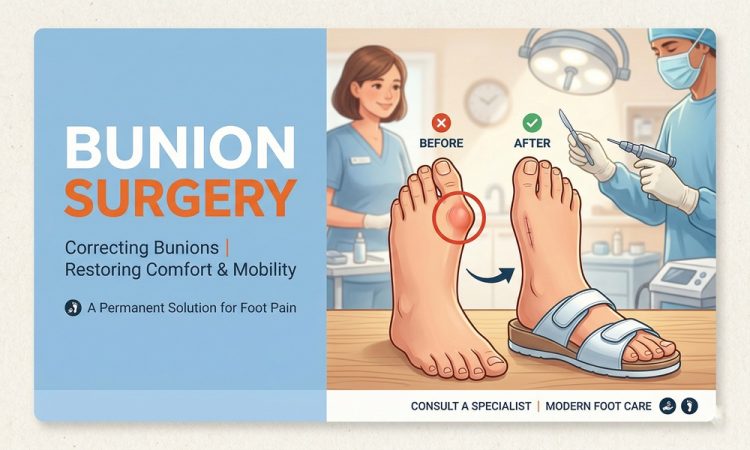
Bunions — those bony bumps at the base of your big toe — affect millions of Americans and worsen progressively without treatment. When orthotics, wider shoes, and pain medication stop providing relief, surgery often becomes the most effective path forward. But before scheduling a consultation, most patients have one very pressing question: How much is this actually going to cost me?
The honest answer is: it depends. Bunion surgery costs vary widely based on the type of procedure, where you live, the facility you choose, and whether your insurance considers it medically necessary. This guide cuts through the confusion with current 2026 data, real cost ranges, and practical strategies to reduce what you pay out of pocket.
What Is the Average Cost of Bunion Surgery in 2026?
Bunion correction surgery typically costs about $6,000 or more per foot in the United States, though the full range spans considerably wider. The average procedure in the U.S. ranges between $3,500 and $12,000, depending on location, insurance coverage, and procedure type.
The type of facility you choose has a measurable impact on your bill. According to a large-scale study of over 100,000 bunion repairs:
| Surgical Setting | Average Cost |
|---|---|
| Ambulatory Surgery Center (ASC) | ~$5,616 |
| Hospital Outpatient Department | ~$8,139 |
| Major Urban Market (NYC, LA, SF) | $10,000–$15,000+ |
| Minimally Invasive Procedure | $5,000–$8,000 |
| Complex Reconstruction / Arthrodesis | $10,000–$15,000+ |
The wide variation observed in prices suggests that a very determined patient may be able to spend substantially less on an elective surgery if they are willing to select a provider carefully.
Types of Bunion Surgery and Their Costs
Over 100 different surgical procedures exist to correct bunions, with each addressing the specific bone structure and deformity causing pain. Your surgeon will recommend a technique based on the severity of your bunion and your overall foot anatomy.
Osteotomy (Bone Cutting and Realignment)
The most commonly performed bunion procedure. The surgeon cuts the metatarsal bone and repositions it, securing it with screws, pins, or plates. Suited for mild-to-moderate bunions.
Estimated Cost: $7,000–$12,000
Exostectomy (Bump Shaving)
The bony protrusion is shaved down without correcting the underlying joint alignment. Rarely performed alone — usually combined with an osteotomy. While this addresses the bump, it doesn’t fix the underlying alignment issue.
Estimated Cost: $5,000–$9,000
Arthrodesis (Joint Fusion)
Reserved for severe or arthritic cases. The surgeon removes the damaged joint and fuses the bones with metal plates and screws. It eliminates joint movement but dramatically reduces pain and provides long-term stability.
Estimated Cost: $9,000–$15,000+
Minimally Invasive Bunionectomy
A rapidly growing technique using incisions just a few millimeters wide. When the procedure is minimally invasive, it costs considerably less, as there is no need to pay for a hospital stay or the medications to put you under. Clients actually walk out of minimally invasive bunion removal surgery.
Estimated Cost: $5,000–$8,000
Lapiplasty® 3D Bunion Correction
One of the most talked-about advances in bunion care. Rather than simply shaving the bump, Lapiplasty uses patented instruments to realign the entire metatarsal bone in three dimensions. Some argue that Lapiplasty’s benefits — including faster recovery time and greater stability — could outweigh the initial cost. Insurance and Medicare typically cover bunionectomy and joint fusion procedures that utilize the Lapiplasty® System when the procedures are medically necessary.
Estimated Cost: $5,000–$15,000+
Lapidus Bunionectomy
Used for severe or recurring bunions. The surgeon stabilizes the joint at the base of the first metatarsal for a more permanent correction. Involves a longer recovery period than standard osteotomy.
Estimated Cost: $5,000–$10,000
What Drives the Cost Up?
Several variables determine where your final bill lands within those wide ranges.
Procedure Complexity: More severe bunions require longer operating times, specialized hardware, and more experienced surgical teams — all of which raise costs.
Geographic Location: Where you live also matters. While MDsave estimates the national average cost for bunion removal at around $11,000, it reports an average price of about $6,000 for the Houston region. Expect to pay a premium in high cost-of-living metros.
Facility Type: The average cost at an ambulatory surgery center was $5,616 — rising to $8,139 when the procedure was performed in a hospital outpatient department. Opting for an ASC, when clinically appropriate, is one of the most effective ways to reduce your bill.
Surgeon Experience: Specialists with advanced foot and ankle training command higher fees, though their expertise often reduces the likelihood of complications or revision surgery.
Anesthesia: Minimally invasive procedures typically use local anesthesia. Traditional open surgery usually requires general anesthesia, adding a separate anesthesiologist fee.
Simultaneous Procedures: Correcting hammertoes during bunion surgery, for instance, could affect the total cost.
The Hidden Costs Most Patients Overlook
The surgeon’s fee is just the starting point. Many patients are surprised by the additional expenses that accumulate before and after their procedure.
| Additional Cost | Estimated Range |
|---|---|
| Pre-surgical X-rays or MRI | $200–$700 |
| Anesthesiologist fee | $500–$1,500 |
| Surgical hardware (screws, plates) | Varies; often billed separately |
| Follow-up office visits | $100–$300 per visit |
| Physical therapy (per session) | $50–$150 |
| Prescription pain medications | $30–$150 |
| Walking boot, crutches, or knee scooter | $50–$200 |
| Compression sleeves, toe spreaders, splints | Under $100 |
| Custom orthotics (post-recovery) | $200–$600 |
There is also an indirect financial cost that rarely appears on a billing statement: lost income. Traditional open bunion surgery can sideline patients for 6–12 weeks. Minimally invasive procedures dramatically compress that timeline, with many desk-job patients returning to work within two weeks.
Insurance Coverage: What to Expect in 2026
Most private health insurance plans cover bunion surgery when it is deemed medically necessary. To qualify, your provider typically needs to document:
- Chronic, significant pain that limits daily activities like walking or standing
- Evidence that conservative treatments (orthotics, footwear changes, anti-inflammatories) have failed
- Imaging evidence showing joint misalignment or structural damage
For patients with health insurance, the typical out-of-pocket cost consists of a copay or coinsurance of 10%–50%. The exact amount depends on your deductible, your coinsurance rate, and whether your chosen surgeon and facility are in-network.
Medicare Coverage in 2026 — Updated Figures
Medicare Part B covers 80% of medically necessary bunion surgical procedures, including surgery performed in an outpatient setting, podiatrist visits, and any necessary medical supplies. Patients must pay the remaining 20% of the approved cost, plus any applicable copayments and deductibles.
The 2026 Medicare figures have been updated by CMS:
| Medicare Cost Item | 2025 Amount | 2026 Amount |
|---|---|---|
| Part B Monthly Premium (standard) | $185.00 | $202.90 |
| Part B Annual Deductible | $257 | $283 |
| Patient Coinsurance (after deductible) | 20% | 20% |
The annual deductible for all Medicare Part B beneficiaries will be $283 in 2026, an increase of $26 from the annual deductible of $257 in 2025.
With the most popular Medigap plan (Medigap Plan G), you wouldn’t owe anything for your bunion surgery once you’ve met your Part B deductible. For Medicare Advantage (Part C) enrollees, plans must provide the same basic coverage as Original Medicare, including bunion surgery, but they often have their own rules — including requiring pre-authorization before surgery.
Without Insurance
Uninsured patients face the full cost out of pocket. However, options exist. Some surgeons have standard cash-pay rates similar to insurance-based care, and anesthesia and facility fees can often be negotiated into payment plans. Platforms like MDsave allow patients to browse and purchase pre-negotiated procedure rates in their region.
7 Smart Ways to Lower Your Bunion Surgery Bill
- Choose an in-network surgeon and facility. Staying in-network is the single biggest lever most patients can pull to reduce costs.
- Opt for an ambulatory surgery center over a hospital. The data is clear — ASCs cost thousands less than hospital outpatient departments for the same procedure.
- Ask about bundled or cash-pay pricing. Many practices offer package rates that cover surgery, follow-up visits, and basic aftercare supplies.
- Request an itemized estimate before surgery. Price transparency regulations now require most facilities to provide upfront estimates — use them.
- Consider minimally invasive techniques. Beyond lower direct fees, faster recovery reduces indirect costs like lost wages and post-op care expenses.
- Use your HSA or FSA. Bunion surgery typically qualifies as a medically necessary expense. Pre-tax dollars from a Health Savings Account or Flexible Spending Account can be applied toward deductibles, copays, prescriptions, and recovery supplies.
- Get multiple consultations. A very determined patient may be able to spend substantially less on an elective surgery if they are willing to select a provider carefully. Price variation between surgeons and facilities for the same procedure is significant.
Recovery Timeline and What It Costs You
Recovery directly affects your financial planning, particularly if you have a physical job or are self-employed. Here is what a typical timeline looks like:
| Timeframe | Recovery Milestone |
|---|---|
| Week 1–2 | Foot elevated; minimal weight-bearing; stitches removed around Week 2 |
| Week 3–6 | Walking boot or brace; desk workers may return to work |
| Week 6–8 | Boot removed; light activity resumes; physical therapy begins |
| Month 3–6 | Full recovery for most patients; return to physical activities |
General recovery occurs within six to eight weeks, with full healing taking up to six months. Physical therapy is often recommended to restore strength and mobility. Minimally invasive procedures significantly compress the active recovery phase, often halving the time away from normal activity.
Is Bunion Surgery Worth the Cost?
For patients who have exhausted conservative treatments, bunion surgery typically delivers a strong return — both in quality of life and long-term economics. Left untreated, bunions worsen progressively, eventually affecting knee and hip alignment due to compensatory gait changes. The cumulative cost of ongoing orthotics, pain management, and specialist visits often exceeds the one-time cost of a well-chosen surgical intervention.
Once your bunion is corrected, wearing properly fitted shoes, avoiding high heels, and maintaining foot health can reduce the risk of recurrence. Most patients who follow post-surgical guidance report lasting pain relief and a meaningful improvement in daily mobility.
Frequently Asked Questions
Does health insurance always cover bunion surgery? Most major plans cover it when medically necessary, but coverage varies by policy. Always verify your deductible, coinsurance rate, and network status before scheduling.
Can I have both feet done at the same time? Surgeons typically advise against operating on both feet simultaneously. Treating one foot at a time allows safer mobility throughout recovery.
Is minimally invasive surgery always the cheapest option? Not always by sticker price, but it often results in the lowest total cost when you factor in reduced facility fees, local anesthesia, and faster return to work.
Does Lapiplasty cost more than traditional bunion surgery? It may cost more upfront, but insurance and Medicare typically cover it when deemed medically necessary, and many patients find the added stability and faster recovery justify any cost difference.
What happens if I don’t have surgery? Bunions do not resolve on their own and worsen over time, potentially leading to irreversible joint damage, chronic pain, and impaired mobility.
Always consult a board-certified podiatrist or orthopedic foot and ankle surgeon for a personalized cost estimate and treatment plan tailored to your specific condition.