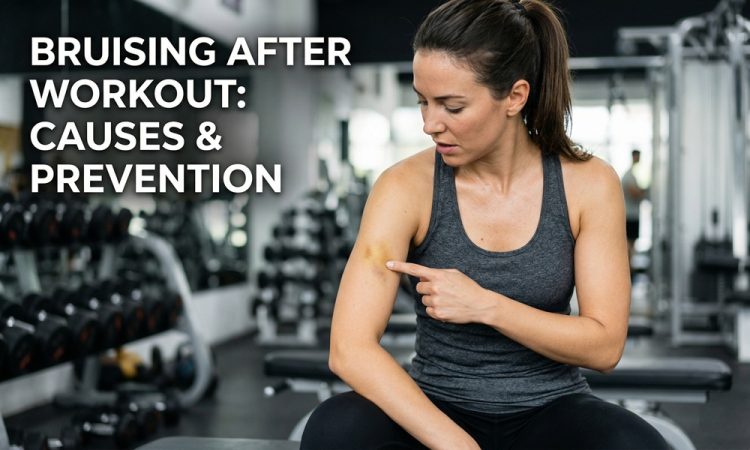
You crush a tough workout, feel great about it — then notice a suspicious purple patch on your thigh the next morning. Sound familiar? Bruising after exercise is more common than most gym-goers realize, and in many cases, it’s a completely normal part of intense physical training.
That said, not all workout bruises are created equal. Some are minor badges of effort; others can be a signal worth paying attention to. This guide breaks down exactly what causes exercise-induced bruising, who is most at risk, how to treat it, and — critically — when to stop self-diagnosing and see a doctor.
What Is a Bruise, Scientifically Speaking?
A bruise (medically called an ecchymosis or contusion) forms when small blood vessels called capillaries rupture beneath the skin. Because the skin itself remains intact, the leaked blood gets trapped in surrounding tissues, producing that familiar red, purple, or bluish discoloration. Over the following days, your body breaks down the pooled blood, and the bruise shifts from purple → green → yellow before fading entirely.
In the context of exercise, this process can be triggered in more than one way — not always through direct impact, which surprises many people.
Common Causes of Bruising After a Workout
1. Muscle Microtrauma
During intense strength training — particularly eccentric movements (where the muscle lengthens under load, such as lowering a barbell or the downward phase of a squat) — microscopic tears form in muscle fibers. This is normal and is actually the mechanism behind muscle growth. However, when this microtrauma is severe enough, the inflammation it produces can rupture nearby capillaries, resulting in visible bruising even without any external impact.
2. Direct Impact from Equipment
Barbells, kettlebells, resistance machines, or even gym floors can cause blunt-force trauma to the skin and underlying tissue. This is especially common during:
- Deadlifts (shins against the bar)
- Box jumps (shin-to-box contact)
- Kneeling or floor exercises (repeated pressure on knees)
- Barbell squats (bar resting on upper back/traps)
3. Overexertion and Prolonged Exercise
Long-duration activity — marathon running, endurance cycling, or extended HIIT sessions — places continuous mechanical stress on muscles and blood vessels. The cumulative strain can lead to what’s known as exercise-induced purpura (EIP), which appears as purplish-red patches, typically on the lower legs after prolonged activity.
4. Nutritional Deficiencies
Your blood vessels depend on specific nutrients to maintain their integrity. Deficiencies in key vitamins can make them more prone to rupture:
| Nutrient | Role in Bruising Prevention | Food Sources |
|---|---|---|
| Vitamin C | Builds collagen, which strengthens blood vessel walls | Citrus fruits, bell peppers, broccoli |
| Vitamin K | Essential for proper blood clotting | Leafy greens, spinach, kale |
| Vitamin B12 | Supports red blood cell production | Eggs, dairy, meat, fortified foods |
| Iron | Prevents anemia-related fragility | Red meat, lentils, spinach |
| Zinc | Aids tissue repair and healing | Nuts, seeds, whole grains |
5. Medications and Supplements
Certain drugs and supplements interfere with normal clotting and make bruising more likely — even from minimal physical stress. These include:
- Blood thinners — warfarin, clopidogrel, heparin
- NSAIDs and aspirin — reduce platelet effectiveness
- Corticosteroids — thin the skin and weaken capillaries with prolonged use
- Fish oil, vitamin E, and ginkgo biloba — mild blood-thinning properties
If you’re on any of these, check with your prescribing physician before increasing workout intensity.
Who Is More Prone to Workout Bruising?
Not everyone bruises equally after the same workout. Several individual factors raise your susceptibility:
- Age — As we get older, skin becomes thinner and blood vessels grow more fragile, making bruising easier and more visible.
- Fitness level — Beginners or those returning after a break tend to bruise more, since their muscles and vessels aren’t conditioned to heavy loads.
- Genetics — Some people naturally have more delicate capillaries due to their genetic makeup.
- Sex — Research suggests women bruise more easily than men, partly due to hormonal influences on skin thickness and vessel fragility.
- Underlying health conditions — Conditions like Ehlers-Danlos Syndrome, hemophilia, or liver disease can significantly increase bruising tendency.
Where Do Workout Bruises Typically Appear?
The location of a bruise often tells you exactly what caused it. Here’s a quick reference:
| Location | Likely Cause |
|---|---|
| Shins | Deadlifts, box jumps, barbell contact |
| Thighs and hips | Barbell squats, leg presses, resistance band friction |
| Upper arms and shoulders | Heavy overhead pressing, barbell placement |
| Hands and wrists | Gripping too tightly, improper bar positioning |
| Knees | Lunges, kneeling exercises, floor contact |
| Lower legs | Distance running, prolonged cardio (exercise-induced purpura) |
How Long Do Workout Bruises Last?
Most exercise-related bruises follow a predictable color timeline as the body reabsorbs the pooled blood:
- Day 1–2: Red or dark purple (fresh blood under skin)
- Day 3–4: Dark blue or purple (blood begins deoxygenating)
- Day 5–7: Green or yellow-green (hemoglobin breaking down)
- Day 7–10: Yellow or light brown (almost healed)
- Day 10–14: Fully faded in most cases
Note: Bone bruises (bone contusions from high-impact trauma) take significantly longer — sometimes weeks to months — and require medical evaluation.
How to Treat Bruising After a Workout
Immediate Care (First 24–48 Hours)
The classic RICE method is your first line of response:
- Rest — Avoid further stress on the bruised area.
- Ice — Apply an ice pack for 15–20 minutes every 2–3 hours to reduce swelling and constrict capillaries.
- Compression — A light pressure wrap can help limit blood pooling.
- Elevation — Raise the bruised limb above heart level when possible to reduce fluid accumulation.
After 48 Hours
Once the initial swelling has settled, you can switch to gentle heat to improve circulation and speed up the reabsorption of blood. Light massage around (not directly on) the bruise can also help promote lymphatic drainage.
Nutritional Support for Faster Healing
- Increase vitamin C intake through food or supplementation — it accelerates collagen repair.
- Consider bromelain (found in pineapple or as a supplement) — evidence suggests it may reduce bruise-related swelling and inflammation.
- Ensure adequate protein intake — your muscles and vessels need amino acids to rebuild.
Pain Relief
Over-the-counter options like acetaminophen (paracetamol) are generally safe. Avoid ibuprofen and aspirin immediately after bruising, as they thin the blood further and can worsen discoloration.
Prevention: How to Reduce Bruising from Exercise
Taking a proactive approach significantly reduces the frequency and severity of workout bruises.
Warm Up Properly
A 5–10 minute warm-up increases blood flow, raises muscle temperature, and improves elasticity — all of which reduce the chance of vessel rupture during intense effort.
Use Correct Form
Poor technique places uneven load on muscles and causes unnecessary equipment contact. Working with a qualified trainer, especially when learning new lifts, is one of the most effective ways to prevent bruising.
Progress Load Gradually
Dramatically increasing workout intensity or volume is a major trigger. Follow the 10% rule — avoid increasing your weekly training load by more than 10% at a time.
Wear Protective Gear
For contact-prone exercises, use appropriate gear: shin guards for box jumps, padded knee sleeves for floor work, lifting gloves for grip-heavy movements.
Optimise Your Nutrition
A diet consistently rich in vitamins C and K, zinc, and iron supports the structural integrity of your blood vessels year-round — not just after bruises appear.
Stay Hydrated
Dehydration reduces skin elasticity and blood volume, making capillaries more vulnerable to rupture under exercise stress.
When to See a Doctor
Most workout bruises are benign and self-resolve within two weeks. However, certain warning signs warrant prompt medical attention:
- Bruises that are unusually large or appear without any identifiable cause
- Bruising accompanied by significant swelling, rapid expansion, or severe pain
- Bruises that don’t fade after two to three weeks
- Frequent, unexplained bruising across the body, especially in areas like the abdomen or torso
- Bruising alongside other symptoms like fatigue, joint pain, or unexplained weight loss
These patterns can sometimes indicate underlying conditions such as:
| Condition | Key Indicator |
|---|---|
| Hemophilia | Excessive bleeding, deep joint bruising |
| Ehlers-Danlos Syndrome | Hypermobile joints, very fragile skin |
| Leukemia or blood disorders | Widespread spontaneous bruising |
| Liver disease | Impaired clotting factor production |
| Severe anemia | Easy bruising with fatigue and pallor |
Can You Keep Working Out With Bruises?
Generally, yes — but with caveats. Light to moderate exercise on unaffected body parts is safe and even beneficial for circulation. However:
- Avoid direct stress on the bruised area until tenderness resolves.
- Do not exercise through significant pain — pain is your body’s signal, not something to override.
- If the bruise is on a joint or is a suspected bone bruise, rest completely and consult a physician before resuming that movement pattern.
Final Takeaway
Bruising after a workout is often nothing more than evidence that your body took on a serious challenge. Microtrauma, equipment contact, and circulatory demands of intense exercise all play a role — and for most people, these bruises heal quickly and without intervention.
What matters is understanding the difference between normal exercise bruising and bruising that signals a deeper issue. Stay consistent with your warm-ups, dial in your nutrition, progress load intelligently, and listen to what your body tells you. If something feels off — persistent, unexplained, or disproportionate to what you did — a quick medical check is always the smart call.
Your body is a high-performance machine. Treat it like one.