The Real Value of a Dental Checkup (Beyond a Clean Smile)

Here is a fact that surprises most people: nearly 90% of dental problems are preventable with timely care. And yet dental trouble rarely announces itself with pain. By the time a tooth actually hurts, the problem is usually well advanced.
That single insight explains the entire value of preventive dentistry. Regular visits catch problems while they are small, cheap, and simple to fix, long before they become painful or expensive.
What Preventive Care Actually Includes
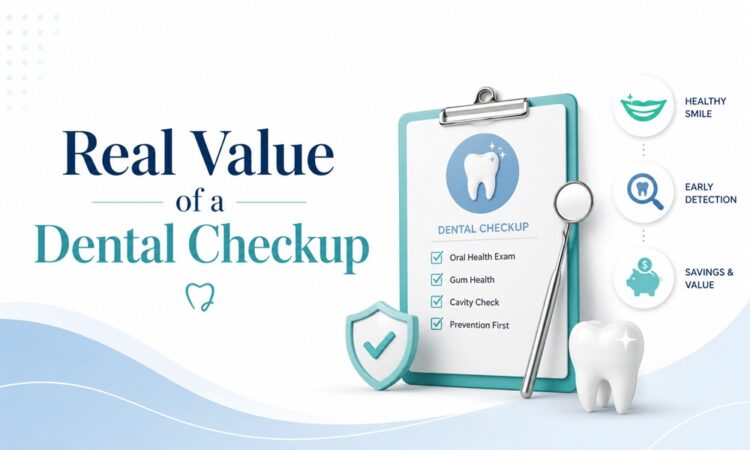
A routine visit is far more than a polish. A typical checkup covers:
- A professional cleaning to remove plaque and hardened tartar.
- An exam for cavities, cracks, and worn or failing fillings.
- A gum health assessment.
- Digital X-rays when needed to see below the surface.
- An oral cancer screening.
- Personalized advice based on your habits and risk factors.
What Happens at a Checkup
Most visits take under an hour. A hygienist cleans and polishes your teeth, removing buildup you can’t reach at home. The dentist then examines each tooth and your gums, checks your bite, and reviews any X-rays. You leave with a clear picture of your oral health, and a plan if anything needs attention.
Building this routine with a trusted dentist in Floral Park, NY is the simplest, most reliable way to keep small issues from turning into big ones.
How Often Should You Go?
The standard advice is every six months. Some people benefit from more frequent visits.
| Your situation | Suggested frequency |
|---|---|
| Healthy mouth, low risk | Every 6 months |
| Gum disease or high risk | Every 3–4 months |
| Children | By age 1, then every 6 months |
| Smokers or diabetics | More frequent monitoring |
Warning Signs You Shouldn’t Ignore
Don’t wait for your next scheduled visit if you notice any of these:
- Bleeding or swollen gums.
- Persistent bad breath.
- Tooth sensitivity to hot or cold.
- A loose tooth or receding gums.
- Jaw pain or clicking.
- A sore, lump, or patch that doesn’t heal.
- An ongoing toothache.
Any of these deserves a prompt call. Early attention almost always means simpler treatment.
Your Mouth and Your Whole Body
Oral health isn’t separate from the rest of your health. Research links gum disease to heart disease, diabetes, and other conditions. People with diabetes are about twice as likely to develop gum disease, and the relationship runs both ways. It is telling that today, roughly 90% of adults consider a dental exam as essential as an annual physical.
Care Between Visits Matters Too
Checkups do the heavy lifting, but daily habits keep you healthy in between. Brush twice a day, floss daily, and replace your toothbrush every three months. These small routines prevent most of the problems a dentist would otherwise have to treat. Think of professional visits and home care as two halves of the same plan.
Prevention Costs Less Than Repair
The math is simple and convincing. A routine cleaning is a small, predictable expense. A single root canal or crown costs far more.
| Service | Rough cost |
|---|---|
| Routine cleaning & exam | $75–$200 |
| Filling | $150–$450 |
| Root canal | ~$1,000+ |
| Single implant | $3,000–$5,000 |
Fluoridated water and dental sealants prevent a large share of cavities before they ever start. Skipping prevention almost always costs more, in money and discomfort, down the line.
Getting Past the Usual Barriers
Three things keep people out of the dentist’s chair: fear, cost, and time. Each has a solution.
- Anxiety. Modern practices offer sedation and gentle techniques designed for nervous patients.
- Cost. Most insurance plans cover preventive visits fully, and many offices offer membership or financing options.
- Time. A routine visit is quick, often under an hour, twice a year.
None of these is a good reason to let a small problem grow.
Why Prevention Wins Over Time
Consider two patients with the same starting point. One visits every six months; the other only when something hurts. Ten years later, the first has had a series of quick, low-cost cleanings and a few small fillings. The second has faced root canals, crowns, and maybe an extraction or implant. Same teeth, very different outcomes, and a very different total bill. Prevention isn’t just healthier. It is the cheaper path by a wide margin.
Frequently Asked Questions
How often should I really see a dentist?
Every six months for most people. Higher-risk patients may need visits every three to four months.
What if I have no pain?
That is the best time to go. Many problems are completely painless until they become serious.
Are dental X-rays safe?
Yes. Modern digital X-rays use very low radiation and are taken only when clinically needed.
Does preventive care really save money?
Almost always. Catching a problem early avoids the far more expensive procedures that come later.
What’s the youngest a child should visit?
By their first birthday, or within six months of their first tooth. Early visits build good habits and catch issues early.