Losing a tooth is more than a cosmetic setback. The jawbone beneath the gap begins to shrink within the first year. Neighboring teeth drift. Chewing shifts to one side. A dental implant addresses all of this at the source, by replacing the root, not just the visible tooth.
Implants are among the most reliable procedures in modern dentistry. Large studies put success rates at 95–98% over five to ten years. Here is a clear walk-through of the entire journey, from first consultation to finished smile.
What Is a Dental Implant?
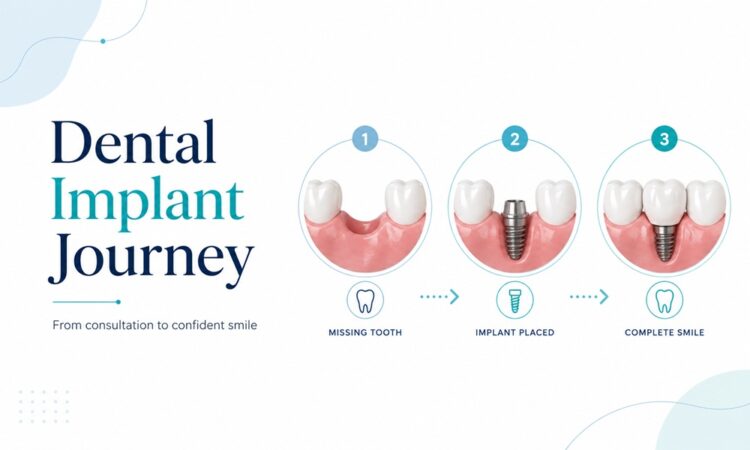
An implant is a small titanium post placed into the jawbone, where it acts as an artificial tooth root. Over a few months, bone grows around and bonds to it, a process called osseointegration. Once the post is stable, a custom crown is attached on top.
Titanium is used in roughly 93% of implants placed in the US. The post itself can last a lifetime. The crown on top may need replacing every 10–15 years from normal wear.
Why Replacing a Missing Tooth Matters
It is tempting to leave a gap alone, especially if it is not visible. But the consequences add up. Once a tooth is gone, the bone that supported it is no longer stimulated by chewing and starts to shrink. Adjacent teeth tilt into the space. Opposing teeth can drift too. Over time this affects your bite, your face shape, and your ability to eat comfortably. Acting sooner keeps the process simpler.
Are You a Candidate?
Most healthy adults are. Your dentist checks bone volume and gum health first, then plans around a few key factors.
- Bone loss. If the jaw is too thin, a bone graft rebuilds it. Grafted sites still succeed nearly 98% of the time.
- Smoking. It slows healing and raises the risk of failure.
- Diabetes. Well-controlled diabetes usually poses no problem.
- Gum disease. This is treated first to give the implant the best foundation.
The Step-by-Step Process
Every case is unique, but most follow the same path.
- Step 1 — Consultation. 3D imaging maps your bone and nerves. You receive a written treatment plan and cost estimate.
- Step 2 — Preparation. Any extraction, bone graft, or sinus lift happens now. Healing may take a few months.
- Step 3 — Implant placement. The titanium post is placed in a short surgery. Most patients report far less discomfort than they expected.
- Step 4 — Osseointegration. The post fuses with the bone over three to six months.
- Step 5 — Abutment. A small connector is attached to the post.
- Step 6 — Crown. Your custom tooth is placed. The finished result looks and functions like a natural tooth.
For anyone weighing dental implants in Carmel Hamlet, understanding this timeline upfront makes the whole journey feel far more predictable and far less intimidating.
Healing Timeline at a Glance
| Stage | Typical duration | What’s happening |
|---|---|---|
| Consultation & planning | 1–2 visits | Imaging, medical review, treatment plan |
| Preparation (if needed) | 1–4 months | Extraction, bone graft, or sinus lift heals |
| Implant placement | 1 visit | Titanium post placed in the jaw |
| Osseointegration | 3–6 months | Bone fuses to the implant |
| Abutment & crown | 2–3 visits | Connector and final tooth attached |
One Tooth or Many? Your Options
Implants aren’t only for single teeth. They can anchor a range of restorations:
- Single implant. Replaces one missing tooth without touching the neighbors.
- Implant bridge. Two implants support several replacement teeth in a row.
- Full-arch solutions (like All-on-4). Just four to six implants can anchor an entire arch of fixed teeth, a popular option for people replacing many teeth at once.
How Reliable Are Implants?
Very. A large national study of more than 158,000 implants reported a survival rate near 98%. Long-term data shows over 90% still functioning after a decade. Encouragingly, implants placed with bone grafting perform just as well as those in natural bone.
Failure is uncommon, around 2–5%. When it does occur, it is usually within the first year and often linked to smoking, infection, or poor healing.
What Affects the Cost?
Implant pricing varies with several factors: the number of implants, the materials used, and whether preparatory work like grafting is needed. Watch for “implant-only” quotes that exclude the crown, abutment, or imaging. Always ask for an itemized, all-in estimate so you are comparing like with like.
Caring for Your Implant
Treat it like a natural tooth, and it will reward you.
- Brush twice a day and floss daily.
- Keep your regular checkups.
- Avoid smoking.
- Watch for any gum inflammation around the implant.
Good hygiene is the single biggest factor in long-term success. Inflammation around the implant is the main long-term threat, and it is largely preventable with consistent care.
Frequently Asked Questions
How long does the whole process take?
Usually three to nine months, depending on healing and whether grafting is required. The result is designed to last decades.
Is implant surgery painful?
Most patients manage with over-the-counter pain relief. Local anesthesia keeps the procedure itself comfortable.
How long do implants last?
The post can last a lifetime. The crown typically lasts 10–15 years before it may need replacing.
Can I get an implant years after losing a tooth?
Often, yes. But bone loss may mean you will need a graft first to rebuild the foundation.
Are implants better than a bridge or denture?
They are the most durable option and the only one that preserves the jawbone. The best choice still depends on your budget, bone health, and goals.