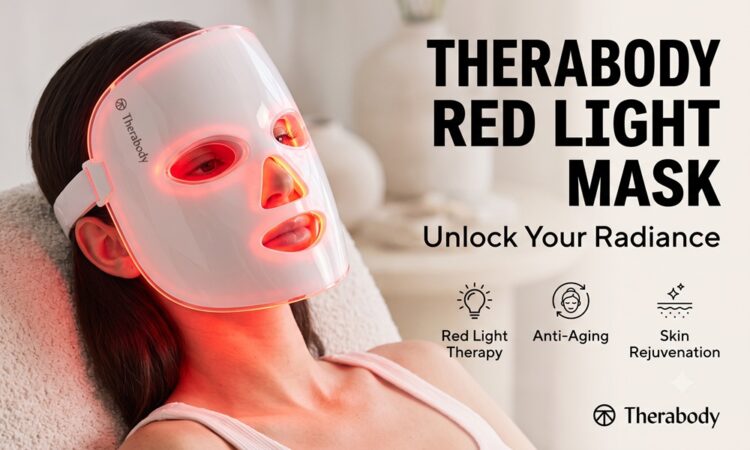
Quick answer: The Therabody red light mask, sold as the TheraFace Mask and the newer TheraFace Mask Glo, is an FDA-cleared, hands-free LED device. It delivers three types of light therapy, red, red + infrared, and blue, to firm skin, soften fine lines, fade dark spots, and calm acne. The original packs 648 LEDs with a 9-minute session. The Glo uses 504 LEDs and a 12-minute session, at a lower price. Both are clinically tested and add gentle massage.
What is the Therabody red light mask?
The Therabody red light mask is an at-home LED light therapy device worn over the face. Its official name is the TheraFace Mask. Therabody, the brand behind Theragun massage guns, makes it.
It is a Class II medical device with FDA clearance. That matters, because clearance signals the device met safety and marketing standards in the United States.
The mask sits over your face like a rigid shell. Medical-grade LEDs line the inside. You strap it on, press a button, and let it run hands-free while you do other things.
There are two versions:
- TheraFace Mask (the original): 648 LEDs, 9-minute session, face and scalp massage.
- TheraFace Mask Glo: 504 LEDs, 12-minute session, scalp massage only, lower price.
Both target the same core goals: firmer skin, fewer fine lines, an even tone, and calmer breakouts.
Therabody red light mask: quick specs
| Feature | TheraFace Mask | TheraFace Mask Glo |
|---|---|---|
| LED count | 648 | 504 |
| Light modes | Red, Red + Infrared, Blue | Red, Red + Infrared, Blue |
| Session length | ~9 minutes | ~12 minutes |
| Massage | Face + scalp (temples, brow, eyes) | Scalp only |
| Weight | ~576 g (device) | ~514 g |
| Battery (LED mode) | ~120 minutes | ~60 minutes |
| Cordless | Yes | Yes |
| Eye shields | Yes, removable | Built-in coverage |
| FDA-cleared | Yes | Yes |
| Warranty | 1-year limited | 1-year limited |
Both masks are wireless, so you can move around during a treatment.
How does the Therabody red light mask work?
The mask uses photobiomodulation. In plain terms, specific light wavelengths reach your skin cells. Your cells’ mitochondria absorb that light and use it to boost energy and repair. No heat damage. No UV.
Each color does a different job. Here is the breakdown.
Red light (around 633 nm)
Red light is the anti-aging workhorse. It reaches below the surface and supports collagen production. More collagen means firmer skin, softer fine lines, and a more even tone.
Red + infrared light (633 and 830 nm combined)
Infrared light has a longer wavelength. It goes deeper, reaching muscle and connective tissue. This mode adds a gentle warming feeling. It supports circulation, healing, and skin firmness. Because red and infrared work at different depths, combining them gives broader coverage.
Blue light (around 415 nm)
Blue light stays on the surface. Acne-causing bacteria absorb it, which helps kill them. This mode suits anyone prone to breakouts. It can reduce mild to moderate inflammatory acne without harsh actives.
The preset cycle runs through all three. The original spends about 3 minutes per mode. The Glo spends about 4 minutes per mode. You can also run a single mode if you want to target one concern.
TheraFace Mask vs TheraFace Mask Glo: which should you buy?
This is the most common question buyers ask. The short version:
- Choose the original if you want the most LEDs, the shortest session, and full-face massage.
- Choose the Glo if you want a lighter, cheaper mask and don’t mind a slightly longer session.
Here is a side-by-side.
| Deciding factor | TheraFace Mask | TheraFace Mask Glo |
|---|---|---|
| Best for | Power users, faster sessions | Beginners, budget buyers |
| LED density | Higher (648) | Lower (504) |
| Session time | Shorter (~9 min) | Longer (~12 min) |
| Massage coverage | Face and scalp | Scalp only |
| Mouth opening | Yes | No |
| Comfort | Heavier, bulkier | Lighter, redesigned for comfort |
| Price | Higher | Lower |
One trade-off to note. Reviewers of the Glo mention it has no mouth cut-out. The original leaves the mouth area open. Some users prefer that.
The Glo delivers the same total light dose as the original. It just takes a bit longer, since it has fewer bulbs.
What results can you expect?
Therabody backs the masks with clinical testing. In its 12-week study, participants used the preset treatment once a day. The reported outcomes:
- Around 80% saw improvement in fine lines.
- Around 87% felt their skin looked and felt tighter.
- Around 86% reported more radiant, rejuvenated skin.
Visible change can start in as little as 8 weeks with daily use.
Here is a realistic timeline based on clinical data and long-term user reports:
| Timeframe | What people typically notice |
|---|---|
| Week 1–2 | Brighter, more “rested” look; calmer redness |
| Week 4 | Smoother texture; early breakout control |
| Week 8 | Visible reduction in fine lines; firmer feel |
| Week 12+ | More even tone; lasting firmness with routine use |
A one-year hands-on test by a beauty editor lined up with these findings. She reported softer wrinkles, a more even tone, and a more luminous complexion over time. She also noted the mask eased facial tension she hadn’t realized she carried.
Important: results depend on consistency, not luck. Skipping sessions is the fastest way to see nothing.
What do real users say? (Reddit, editor tests, and forums)
Marketing claims are one thing. Here is what the wider community reports across Reddit, long-form editor reviews, and retailer feedback.
The consistent praise:
- The massage feature is a standout. Users like the wind-down ritual, not just the skincare.
- Sessions are short and hands-free, so people actually stick with them.
- Full-face coverage reaches tricky zones like the eyes and jawline.
- Many report visible glow and smoother skin within a few weeks.
The honest complaints:
- The original mask is heavy. Several users say it is hard to keep on while upright and works better lying down.
- Strap fit is a recurring issue. People with long hair or larger heads struggle to secure it snugly.
- The vibration can feel loud to some.
- Glo users miss the mouth opening.
A wider theme runs through Reddit skincare threads about LED masks in general. Users who commit to 4 to 5 sessions a week for months are the ones who report real change. Those chasing dramatic overnight results are usually disappointed. As many Redditors put it, consistency beats hype, and professional in-office treatments still win for fast, dramatic change.
That community consensus is the single most useful takeaway. An LED mask is a maintenance tool, not a magic wand.
How to use the Therabody red light mask
Getting the most from the mask is simple. Follow these steps.
- Charge it fully before first use.
- Cleanse your face and pat dry. Apply light therapy to bare skin.
- Position the mask and fit the eye shields.
- Run the preset cycle, or pick a single light mode for a target concern.
- Stay still or multitask hands-free for the session.
- Follow with serum and moisturizer to lock in the boost.
- Wipe the mask clean per the instructions after use.
Frequency tip: aim for near-daily use for the fastest results, then settle into a maintenance rhythm. Skincare experts stress that a mask you use often beats a fancier one you skip.
Is the Therabody red light mask safe?
For most people, yes. LED light therapy is non-invasive, drug-free, and generally well tolerated when used as directed. Dermatologists widely regard red light therapy as a safe, gentle option.
Still, follow these safety rules:
- Always use eye protection. At least one case of retinal damage has been linked to a blue-light mask used without proper eye shields. Therabody includes shields; use them.
- Skip it if a condition may react to light. If you take photosensitizing medication or have a light-sensitive condition, check with a doctor first.
- Don’t use it while sleeping or lying in a way that traps the device against water or heat.
- Pregnancy: there is limited specific research, so ask your provider.
One expert nuance worth repeating. Some dermatologists argue that ultra-high-power masks are not automatically better. Light therapy follows a biphasic dose response, meaning too little light does nothing, but too much can be less effective and more irritating. This is why wavelength and dose matter more than raw LED count. Therabody’s masks use the well-studied wavelengths (633 nm red, 830 nm infrared, 415 nm blue), which is the more important detail.
Therabody red light mask price and where to buy
Pricing sits at the premium end of the LED mask market. The Glo brought the entry price down.
| Model | Typical price range |
|---|---|
| TheraFace Mask (original) | Highest tier; often discounted with rebates |
| TheraFace Mask Glo | Roughly half the original’s list price |
| Certified refurbished | Lower, when available |
| Travel case | Sold separately |
You can buy direct from Therabody or through major retailers such as Best Buy, Amazon, and other electronics and department stores. In the UK, it is stocked at Boots, John Lewis, and Argos. Prices drop around seasonal sales, so timing a purchase can save a meaningful amount.
Tip: the mask is FSA/HSA eligible in some cases, which can offset the cost.
How does it compare to Omnilux, CurrentBody and others?
Therabody is not the only serious LED mask. Here is how it stacks up against the most-discussed rivals.
| Mask | Standout trait | Notes |
|---|---|---|
| Therabody TheraFace | Most LEDs + built-in massage | Premium price, heavier build |
| Omnilux Contour Face | Reddit’s most-recommended | Flexible silicone, strong clinical backing |
| CurrentBody Series 2 | Build quality favorite | More popular in the UK |
| Dr. Dennis Gross SpectraLite | Well-known name | Mask gets less forum love than its pads |
| Shark CryoGlow | Under-eye cooling | Adds a cooling feature |
| Solawave | Budget, quick sessions | Handheld; mixed consistency reports |
The pattern from expert and forum reviews:
- Silicone masks (Omnilux, CurrentBody) mold to the face and feel lighter. Some derms prefer them for even light delivery.
- Therabody wins on features, coverage, and the massage extra.
- All clinical-grade masks need consistent use to work. The brand matters less than the routine.
If you value comfort and a proven wavelength profile above all, silicone rivals are strong. If you want the most bells and whistles in one device, Therabody leads.
Who should (and shouldn’t) buy it
Good fit if you:
- Want a premium, feature-rich mask and will use it often.
- Like the idea of light therapy plus massage in one session.
- Have combined concerns: aging, tone, and occasional breakouts.
- Prefer a hands-free device you can wear while multitasking.
Think twice if you:
- Want dramatic results fast. In-office treatments do that better.
- Have a very large head or long hair and need a snug, upright fit.
- Are on a tight budget. Silicone rivals can cost less.
- Won’t commit to a regular routine. Then no mask is worth it.
Frequently asked questions
Does the Therabody red light mask really work? Clinical testing and long-term user reports point to real, gradual improvements in fine lines, firmness, tone, and radiance with consistent use. It is a maintenance tool, not an instant fix.
How often should you use it? Near-daily use gives the fastest results. Most experts and users agree that 4 to 5 sessions a week, minimum, is where change happens. Then you can shift to maintenance.
How long until you see results? Many people notice brighter skin within a couple of weeks. Firmer skin and softer lines usually appear around the 8-week mark and build from there.
Is it safe for the eyes? Yes, when used with the included eye shields. Never run the mask without eye protection, since blue light can pose a risk to unprotected eyes.
TheraFace Mask vs Glo, which is better? The original has more LEDs, a shorter session, and full-face massage. The Glo is lighter, cheaper, and easier for beginners. Both deliver the same light dose.
Can it treat acne? The blue light mode targets acne-causing bacteria and can help with mild to moderate breakouts. It works best alongside a full skincare routine.
Is it worth the money? If you’ll use it consistently and want premium features, many owners say yes. If you want the same wavelengths for less, silicone rivals like Omnilux are worth comparing.
Can you wear makeup or serum during a session? Apply light therapy to clean, bare skin for best absorption. Add serum and moisturizer after the session.