Here is a small thing that almost nobody notices about a dental appointment.
You spend forty-five minutes with the hygienist. Then the dentist comes in for four, looks around, says something reassuring, and leaves.
That is the standard model. It is efficient, it is nearly universal, and it works. It is also not the only model.
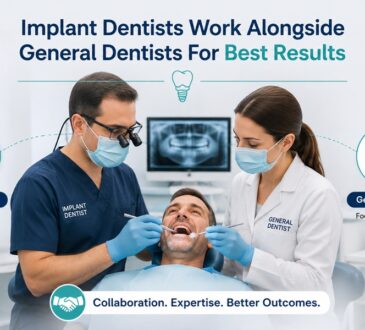
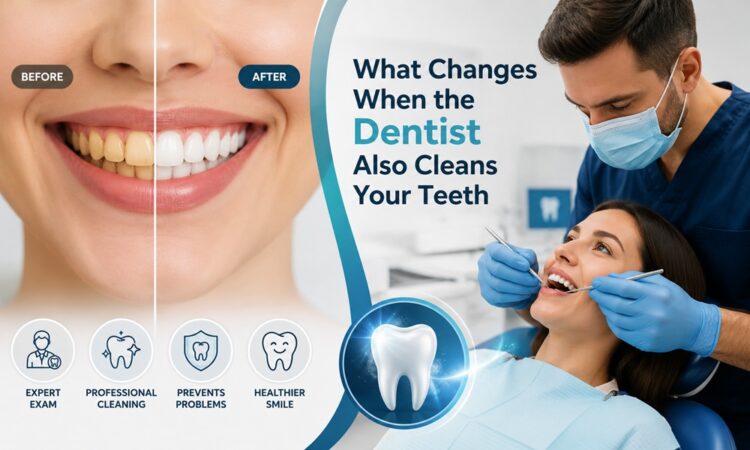
A small and shrinking number of practices still do it the old way: the dentist takes the history, takes the radiographs, does the exam, and does the cleaning. Same person, start to finish.
That is worth thinking about, because the difference is not sentimental. It is diagnostic.
What the numbers say about who your dentist is
The structure of American dentistry has changed enormously in one generation, and most patients have no idea.
| Measure | Then | Now |
|---|---|---|
| Dentists in solo practice | 67% (early 2000s) | Roughly 35% to 36% |
| Practice ownership | 85% (mid 2000s) | About 73% |
| DSO affiliation | 8.8% (2017) | About 16% (2024) |
| DSO affiliation, dentists under 10 years out | Lower | About 27% |
| Inflation-adjusted general dentist income | $267,000 (2010) | Just over $207,000 (2024) |
Those figures come from the ADA Health Policy Institute’s workforce reporting. The chief economist’s assessment has been blunt: these trends are not reversible, and dentistry is heading down the same path as every other healthcare occupation that has moved from solo ownership to group employment.
There is a nuance worth reporting fairly. Solo practice has not vanished, and it remains stronger in some regions than others, with California leading at roughly 44% of dentists in independent practice. Later-career dentists are far more likely to remain solo. Early-career dentists are far more likely to join a group.
So when you find a dentist who has been in one chair for three decades, you are not looking at a common thing. You are looking at a survivor of a structural shift.
The case for the one-clinician model
Longitudinal pattern recognition.
This is the real argument, and it is underrated.
Dental disease is a slow trend, not an event. Recession creeps a fraction of a millimeter a year. A crack propagates over a decade. A crown margin fails gradually. Wear facets deepen imperceptibly.
The person best positioned to notice a trend is the person who has seen every point on the curve. When the same clinician does the cleaning and the exam, they are physically touching every surface of every tooth twice a year, with the previous visit in their own memory rather than in someone else’s chart note.
A hygienist does that too, of course, and skilled hygienists catch enormous amounts. But the handoff is real. Something noticed while scaling gets summarized, and summaries lose information.
No translation loss.
In the split model, the chain is: hygienist observes, hygienist charts, hygienist verbally briefs the dentist, dentist confirms in four minutes. Three transfers, each with attenuation.
In the single-clinician model, there are zero transfers.
Time under the same hands.
A four-minute exam is enough to catch what you are looking for. It is not always enough to notice what you were not looking for. Forty-five minutes of contact produces a different kind of attention.
Relationship continuity.
Patients tell things to people they know. Medical history changes, new medications, a new grinding habit, financial pressure that is about to affect treatment decisions. These come out in conversation, not on a form.
The honest case against
This article would be worthless if it pretended the trade-offs did not exist.
| Consideration | Reality |
|---|---|
| Capacity | One clinician doing both sees fewer patients. Appointments can be harder to get. |
| Specialization | Hygienists are specifically trained in periodontal therapy and prevention education. That is their entire scope. |
| Deep periodontal work | Quadrant scaling and root planing is time-intensive and often better handled by a dedicated hygiene program. |
| Multi-provider access | A group practice can have a periodontist and an endodontist in the building. |
| Coverage | A solo practice has one clinician. Vacations and illness are real. |
| Succession | A solo dentist eventually retires. Group practices persist. |
| Technology investment | Large groups can amortize expensive equipment across locations. |
Neither model is wrong. They optimize for different things. The split model optimizes for throughput and specialization. The single-clinician model optimizes for continuity and pattern recognition.
Which one is better depends entirely on which of those you need.
A practice built on the old model
John A. Bobinski, DDS has been practicing for over thirty-two years from an office on Bronx River Road serving both Bronxville and Yonkers. The practice describes the arrangement without much ceremony: from beginning to end, Dr. Bobinski takes care of you, giving the exam, taking the X-rays, and cleaning the teeth himself.
As a Yonkers, NY dentist operating right on the city line, the practice offers general dentistry, implant dentistry, cosmetic work, veneers, and whitening, works with most insurance providers and PPO plans including Aetna, MetLife, Delta, Guardian, Cigna, United Healthcare, Anthem Blue Cross Blue Shield, and Assurant, and offers private parking, which in this part of Westchester is not a trivial feature.
The practice also does something small that matters more than it sounds: it recommends printing and completing new patient forms in advance, so the first visit is about getting to know you rather than about paperwork.
Twenty minutes of clipboard versus twenty minutes of conversation is a real clinical difference, not a hospitality one.
Who is each model right for?
The single-clinician model suits you if:
- You have a complex restorative history that benefits from one person tracking it
- You have significant dental anxiety and need to trust one face
- You value continuity over convenience
- You want the person who diagnoses to also be the person with their hands in your mouth
- You are willing to work around a narrower schedule
The split or group model suits you if:
- You need active periodontal therapy with a dedicated hygiene program
- You need frequent, easy scheduling
- You want specialists under one roof
- You are early in your dental life with a simple history
- You move often and need a practice with depth of coverage
What continuity actually buys you: three concrete examples
The failing crown. A crown placed twenty years ago develops a marginal gap. Radiographically it is subtle for years. The clinician who placed it, and has watched it every six months since, sees the change against their own memory of the original. A new clinician sees a crown with a slightly odd margin and no baseline.
The vertical root fracture. Notoriously difficult to diagnose. The presentation is a narrow, deep, isolated periodontal pocket next to an otherwise healthy site. If someone has probed that tooth twice a year for a decade and it was always 3 mm, a sudden 8 mm reading is a diagnosis. Without the history it is a mystery.
The anesthesia responder. Some patients metabolize local anesthetic unusually fast, or have anatomy that makes standard blocks unreliable. A clinician who has anesthetized you thirty times knows this. It is rarely written down properly.
What to ask before you switch practices
- Who performs the cleaning, and who performs the exam?
- How long has the practice been at this location?
- What is done in house, and what gets referred out?
- Which plans are in network versus filed out of network?
- What happens if I have an emergency?
- Can I get my full radiograph history transferred, digitally?
- What is the parking situation, honestly?
That last one is not a joke in lower Westchester.
What to bring to a first visit
- Completed new patient forms, filled out in advance
- Full medication list, including supplements
- Prior radiographs as digital files, not printouts
- Periodontal charting history if you can get it
- Your insurance card and the specific plan name
- A list of what has bothered you, in your own words
Frequently asked questions
Is a dentist-performed cleaning better than a hygienist’s?
Not inherently. A skilled hygienist doing prophylaxis is doing the procedure they trained specifically for. The advantage of the dentist-performed model is continuity of observation, not technical superiority of the scaling.
Is the solo model going away?
It is shrinking, not gone. Solo practice fell from around 67% to the mid thirties over roughly two decades, and early-career dentists overwhelmingly enter group settings. Later-career dentists remain solo in strong numbers.
Does a solo practice mean older technology?
Not necessarily. It means the technology decisions are made by one person with one budget rather than by a group with shared overhead. Some solo practices are extremely well equipped. Ask.
Will I get referred out for specialty work?
Usually yes, and that is normal and appropriate. Ask where, and ask whether that referral relationship is long-standing.
Does thirty years of experience actually matter?
For pattern recognition and case selection, yes. For any individual procedure, technique and current knowledge matter more than tenure. The two are not in conflict.
What is the biggest practical downside?
Capacity. One clinician doing both roles has fewer available chair hours. If you need same-week scheduling regularly, factor that in honestly.