Beautiful Is Not the Same as Built to Last: The Prosthodontist’s View of Cosmetic Dentistry

Ask most people what a cosmetic dentist does and they will say: makes teeth look better. Whiter, straighter, more even.
That is half the job. The half that gets photographed.
The other half is the one that decides whether the pretty smile is still pretty in five years or whether the veneers are chipping, the bite is sore, and the front teeth are wearing down because nobody accounted for how the mouth actually works.
This article is about the second half.
The specialty most people have never heard of
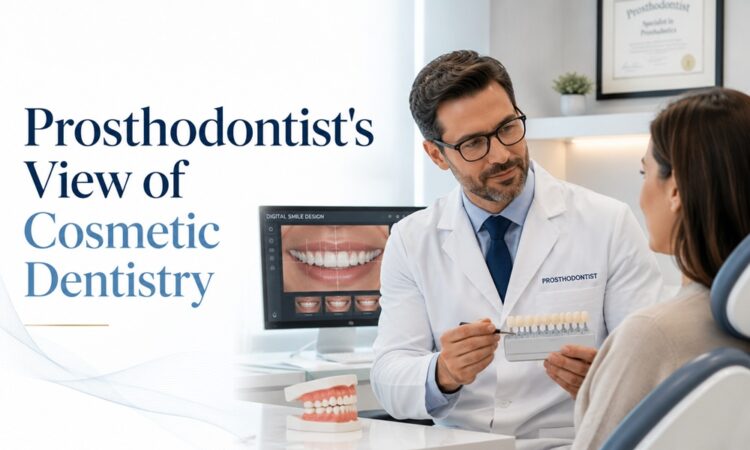
There is a dental specialty specifically devoted to the intersection of appearance and function. It is called prosthodontics.
A prosthodontist completes general dental school and then several additional years of specialty training focused on the restoration and replacement of teeth: crowns, bridges, veneers, dentures, implant restorations, and full-mouth rehabilitation. In plain terms, they are the specialists in rebuilding teeth so they both look natural and work correctly.
This matters for cosmetic dentistry because a smile makeover is, mechanically, a restoration project. You are adding porcelain and composite to teeth that have to keep functioning under load. The training that governs whether that holds up is prosthodontic training.
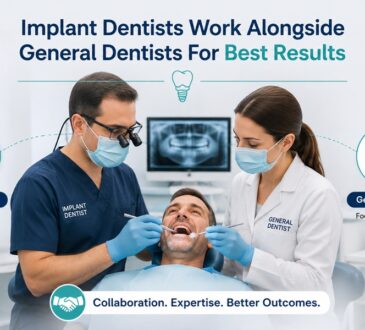
Steven K. Okamoto, DDS has practiced in Torrance since 1984 with advanced training in prosthodontics, now working alongside his daughter Dr. Michelle Okamoto, a second-generation dentist who grew up in the practice. As a cosmetic dentist in Torrance, CA, that prosthodontic background is the relevant detail, because it reflects a way of thinking about cosmetic work as restoration that happens to be beautiful, rather than beauty pasted over teeth.
Why the function-first order matters
Here is the trap in cosmetic dentistry. Appearance is instantly visible and function is invisible until it fails.
A patient looks in the mirror the day the veneers go on and they love it. Nobody can see, in that moment, whether the bite was balanced, whether the material choice suits their grinding habit, or whether the margins were sealed properly. Those things only reveal themselves over months and years.
So there is a strong pull toward optimizing what the patient can see today and hoping the rest works out.
The function-first order flips that. It asks the invisible questions first:
- How does this bite come together, and where does force concentrate?
- Does this patient grind or clench? Because that changes everything.
- Is there enough healthy tooth structure to support this, or is a crown more honest than a veneer?
- Will these margins stay sealed against the gum?
- What happens to this restoration in ten years of chewing?
Only after those are answered does appearance get optimized. The result looks just as good on day one, and it is still intact on day one thousand.
Veneers versus crowns, and the conservation question
A common and revealing decision in cosmetic dentistry: veneer or crown?
| Porcelain veneer | Crown | |
|---|---|---|
| Coverage | Front surface of the tooth | The whole tooth |
| Tooth structure removed | Minimal | Significant |
| Best for | Cosmetic changes on healthy teeth | Structurally compromised teeth |
| Conserves natural tooth | More | Less |
A veneer preserves far more of your natural tooth. A crown removes more but provides full coverage for a tooth that is already weakened by decay or previous work.
The function-first thinking is: use the more conservative option when the tooth can support it, and step up to full coverage only when the tooth genuinely needs it. Veneers can even do double duty, replacing enamel that has been chipped or broken while improving appearance, rather than serving pure cosmetics.
The wrong version of this is crowning healthy teeth for convenience, or placing veneers on teeth that were too damaged to hold them. Both fail, in different ways, on a different timeline.
The grinding problem nobody wants to discuss
If there is one thing that quietly destroys cosmetic dentistry, it is bruxism, the clenching and grinding that many people do, often in their sleep, without knowing it.
Porcelain is strong but it is not indestructible. A patient who grinds and gets veneers without that being addressed is on a collision course. The veneers chip, the edges wear, and everyone is confused about why the beautiful work did not last.
A function-first approach screens for this before, not after:
- Looks for wear facets, the flattened shiny spots that reveal grinding
- Asks about morning jaw soreness and headaches
- Considers a nightguard as part of the cosmetic plan, not as an afterthought
- Chooses materials appropriate to the load
The nightguard is not an upsell. It is what protects the investment. A cosmetic case that ignores grinding is a cosmetic case with an expiration date.
The menu, and where each option fits
Cosmetic dentistry is not one procedure. It is a toolkit, and matching the tool to the problem is most of the skill.
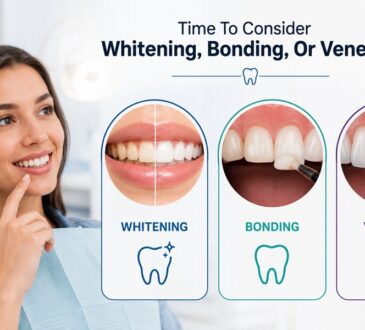
Teeth whitening. The lowest-risk, most conservative cosmetic option. Professional in-office systems can brighten multiple shades in a single visit, and take-home kits extend the result. It changes color, not shape or position. Nothing is permanently altered.
Cosmetic bonding. Tooth-colored composite applied to fix small chips, uneven edges, and minor gaps. Often done in a single visit, conservative, and reversible in a way veneers are not. Excellent for small corrections.
Porcelain veneers. Thin shells bonded to the front of teeth. The workhorse of smile makeovers, capable of correcting color, shape, minor alignment, and worn or chipped edges at once. More involved and less reversible than bonding.
Crowns. Full coverage for teeth that are structurally compromised as well as cosmetically flawed. The restorative-cosmetic overlap in its purest form.
Implant restorations and dentures. For missing teeth. Beyond the gap in the smile, missing teeth affect your ability to eat and, over time, your facial contours. Replacing them is both a functional and cosmetic act.
A well-run cosmetic consultation often mixes several of these. Whitening first, then a veneer on the one tooth that needs it, then bonding on a small chip. The art is sequencing.
Why “conservative” is the strongest word in cosmetic dentistry
The single most important principle in durable cosmetic work is conservation of natural tooth structure.
Every millimeter of enamel you remove is gone forever. Enamel does not grow back. So the best cosmetic dentistry removes as little as it can get away with while still achieving the result.
This is why the veneer-versus-crown decision matters, why bonding is often preferable to veneers for small fixes, and why whitening, which removes nothing, is such a good first move.
A conservative approach also protects your future. A tooth that keeps most of its structure has more options later. A tooth that was aggressively reduced for a cosmetic result has fewer.
When you evaluate a cosmetic plan, “how much of my natural tooth stays” is one of the best questions you can ask.
What to look for in a cosmetic dentist
- Do they talk about your bite, not just your color? Function-first thinking shows up in the questions they ask.
- Do they screen for grinding? If a nightguard never comes up in a veneer case, that is a gap.
- Do they offer the conservative option? A dentist who reaches for crowns on healthy teeth is not conserving structure.
- Do they show you the plan before they start? Digital previews and try-ins let you see the result before it is permanent.
- What is their experience with the specific procedure? Longevity of cosmetic work correlates with the clinician’s execution.
- Do they think about ten years, not just ten days?
Frequently asked questions
What is the difference between a cosmetic and a restorative dentist? In practice, heavily overlapping. Cosmetic work is restoration optimized for appearance. Restorative work rebuilds function. The most durable results come from clinicians who treat them as one discipline, which is exactly what prosthodontic training emphasizes.
How long do porcelain veneers last? Well-made veneers on well-chosen teeth last many years, but longevity depends on your bite, whether you grind, your home care, and the quality of the bonding. There is no fixed number, which is why the function questions matter more than the material.
Will whitening damage my teeth? Professional whitening is the most conservative cosmetic option because it removes no tooth structure. Some people experience temporary sensitivity. It changes color only.
Do veneers ruin your natural teeth? They require some enamel reduction, which is permanent, but a conservative approach minimizes it. This is exactly why the veneer-versus-crown decision and the “how much structure stays” question matter.
Can I fix just one tooth? Yes, and often you should. Bonding a single chip or veneering one mismatched tooth is more conservative than a full makeover and sometimes all that is needed.
Why does grinding matter for cosmetic work? Because it is the leading cause of cosmetic restorations failing early. Chipped veneers and worn edges frequently trace back to unaddressed grinding. A nightguard is part of the plan, not a separate issue.
Is a Saturday cosmetic consultation as thorough as a weekday one? Yes. The day of the week does not change the exam. What matters is whether the clinician asks the function questions, whenever they see you.