A knocked out tooth shocks you. It hurts. It bleeds. It feels like everything stops. Yet what you do in the next few minutes can decide if that tooth lives or dies. This guide shows you the steps that protect your smile and cut your risk of long term damage. You learn what to grab. You learn where to touch. You learn when to call. Each move has a reason. You will not guess. You will follow a clear plan. If you act with calm speed, a dentist can often place the tooth back in the socket. Then the tooth can heal. This protocol also helps you know when to head straight to a dental practice in Elizabeth, NJ so you do not lose time. Your heart may race. Your hands may shake. You can still save the tooth.
Step 1. Check safety and stay as calm as you can
First move yourself out of danger. Leave the street. Step away from sports play. Help the child or adult sit down.
Then take three short actions.
- Tell the person to breathe slowly through the nose
- Use clean cloth or gauze for mouth bleeding
- Look for other injuries to the head or neck
If you see loss of consciousness, confusion, or heavy bleeding, call 911. Do not wait.
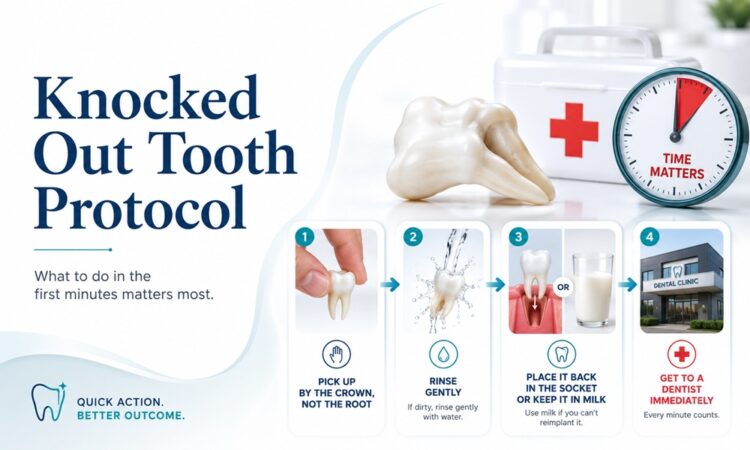
Step 2. Find the tooth and pick it up by the crown
Next look for the tooth at once. Time matters. Teeth dry out fast.
When you find it, pick it up by the chewing part. That is the crown. Do not touch the root. Root cells are fragile. You need them alive for the tooth to attach again.
If the tooth is broken into many small pieces, collect them. Still call a dentist. A broken tooth can often be repaired in other ways.
Step 3. Rinse gently if dirty
If the tooth looks clean, do not rinse it. Move to the next step.
If dirt or gravel covers it, give a quick rinse in a small stream of clean cold water. Use no soap. Use no scrub. Use no brush. Do not scrape it with your fingers. You only want loose dirt off.
The goal is simple. You keep living cells on the root. You remove only what you must.
Step 4. Try to place the tooth back in the socket
If the person is awake, alert, and old enough to follow directions, try to put the tooth back into the socket at once.
Use this order.
- Hold the tooth by the crown
- Gently line it up with the socket
- Push it in with steady pressure
Then have the person bite on clean gauze or a soft cloth to keep it in place. Do not push so hard that you cause extreme pain. A little pressure is enough.
If you feel strong resistance or the person cannot stay still, stop. You will not force it. Go to the next step.
Step 5. If you cannot replant, store the tooth the right way
If you cannot put the tooth back in the mouth, you must keep it moist. Dry time kills the root cells.
Use one of three choices.
- Best choice. Place the tooth in a small cup of cold milk
- Next choice. Use a tooth preservation kit if one is on hand
- Last choice. Have the person hold the tooth in the cheek pouch with the mouth closed
Do not store the tooth in plain water. Water can harm the root cells. The American Dental Association explains that milk or special solution helps keep the cells more stable.
Step 6. Control bleeding and pain
Place clean gauze or cloth over the empty socket. Have the person bite down with firm pressure. This simple step slows bleeding and protects the clot.
You can use a cold pack on the cheek for swelling. Wrap it in a cloth and apply for short periods. Never place ice directly on the tooth or socket.
If the person can safely use over-the-counter pain medicine, follow the label or a doctor’s advice. Do not put aspirin on the gum. It can burn the tissue.
Step 7. Get to a dentist fast
Speed changes the odds. Teeth replanted within 30 minutes have the best chance. After 60 minutes, the chance of long-term survival drops.
Call a dentist right away and say “knocked out tooth” so the staff knows it is urgent. If your regular office is closed, use an emergency clinic or hospital emergency room.
The National Institutes of Health shares that quick treatment helps protect bone, gum, and the long-term health of nearby teeth. You can read more about urgent dental care at the National Institute of Dental and Craniofacial Research website.
Adult teeth versus baby teeth
You treat adult teeth and baby teeth in different ways. Trying to replant a baby tooth can harm the growing adult tooth under the gum.
| Tooth type | Replant the tooth | Main goal | Typical next step |
|---|---|---|---|
| Adult tooth | Yes. Try at once if safe | Save the natural tooth | See dentist within 30 to 60 minutes |
| Baby tooth | No. Do not replant | Protect gum and adult tooth bud | See dentist soon for exam and follow up |
If you are not sure which type it is, collect the tooth and call a dentist. Describe the size, shape, and age of the child or adult.
What your dentist may do
At the office, the dentist will first check breathing, jaw movement, and other injuries. Then the dentist may
- Clean the socket
- Place the tooth back in if you could not
- Use a small splint that links the tooth to nearby teeth
Later visits may include root canal treatment, X-rays, and checks on healing. You may return for several months so the dentist can watch for infection or bone loss.
How to prepare your family before an emergency
You can take three simple steps now that make a future emergency less chaotic.
- Save your dentist and backup emergency numbers in every phone
- Keep a small kit with gauze, a clean cloth, and a cold pack
- Know which hospital or urgent care is open at night and on weekends
Talk with children about sports safety. Use mouth guards for contact sports. Use helmets where required. These habits lower the chance of a knocked-out tooth but do not remove it. So keep this protocol handy.
Remember the three keys
When a tooth gets knocked out, focus on three keys.
- Touch only the crown
- Keep the tooth moist
- Reach a dentist fast
You cannot control the accident. You can control your response. With clear steps and quick action, you give that tooth the best chance to stay part of your smile.