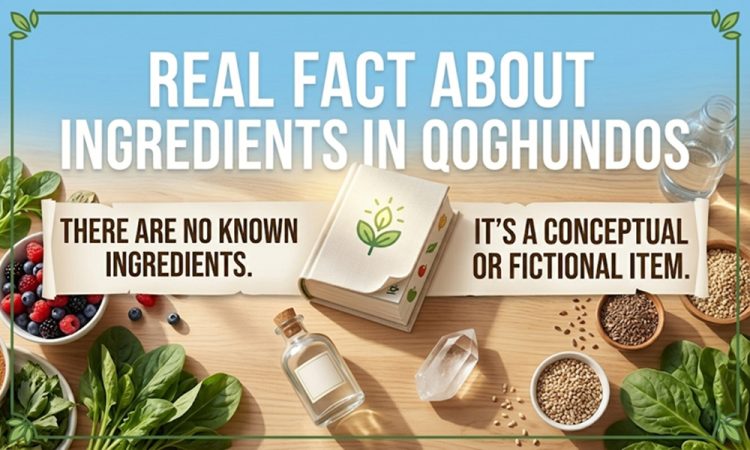
Quick answer: You can’t honestly say whether qoghundos is “good,” because qoghundos is not a verified food, dish, or product. No cookbook, food authority, brand label, or community forum documents it. The articles ranking for “ingredients in qoghundos” contradict each other completely—and at least one even admits the term may be fictional. So before you trust any ingredient list, know this: there’s nothing real to evaluate.
That single fact is the thing every other page on this topic hides. The rest of this guide explains why, what’s actually going on, and what to do instead.
The unique insight no other article tells you
Search “ingredients in qoghundos” and you’ll find dozens of confident articles. Here’s what they don’t mention:
- No two of them agree on what qoghundos even is.
- None cite a real source—no published cookbook, no food encyclopedia, no nutrition database, no manufacturer.
- No real community discussion exists. Search Reddit, Quora, or food forums and you’ll find no genuine threads. Authentic foods always generate questions, photos, and arguments online. Qoghundos generates none.
- One ranking page openly calls it a “fictional fusion.” Another, after consulting chefs and food historians, concludes no verified record of the dish exists.
In short: this looks like an AI-generated “ghost keyword”—a search term that spread across content farms faster than anyone stopped to ask whether the thing was real.
Why every “qoghundos” article describes it differently
The fastest way to spot a fabricated topic is to line up the claims. Watch how wildly they disagree:
| Source type | What it claims qoghundos is | Listed “ingredients” |
|---|---|---|
| “Supplement” blogs | A weight-loss pill | Garcinia Cambogia, glucomannan, green coffee bean |
| “Recipe” blogs | A Central Asian stew | Grains, lamb, cumin, onions, garlic |
| “Superfood” blogs | A green powder | Spirulina, chlorella, wheatgrass, acai |
| “Snack” blogs | A flour-based treat | Refined wheat flour, palm oil, eggs, starch |
| “Platform” blogs | A digital recipe app | “Andean quinoa, Himalayan goji, Amazonian roots” (self-described as fictional) |
A real food has one identity. A fabricated keyword has as many identities as there are writers guessing at it. This table alone answers the question.
So, are the ingredients in qoghundos good?
Here’s the honest breakdown:
- There is no fixed ingredient list to judge. Different pages list completely different components, so there’s nothing consistent to call “good” or “bad.”
- You can’t assess the health value of an undefined thing. “Is it good for you?” only has meaning when you know what it is. We don’t.
- The ingredients individually named are real and often fine—garlic, lentils, spinach, cumin, and similar items are nutritious. But that’s a fact about those foods, not about “qoghundos.”
Bottom line: Don’t buy a product, follow a recipe, or take a “supplement” sold under this name expecting a known, tested formula. There isn’t one.
Safety note: Be especially cautious with any site selling “qoghundos” as a supplement or weight-loss aid. An invented name paired with health claims is a classic pattern for low-quality or scam products.
What were you probably looking for instead?
People usually land on a strange food term after seeing it mentioned somewhere, or after a typo or auto-generated suggestion. If you wanted a real, hearty grain-and-spice dish in the spirit these articles describe, here are verified options worth your time:
- Plov (Central Asian rice pilaf) — rice, lamb or beef, carrots, onions, cumin. A genuine, documented staple with a real history.
- Halim / Haleem — a slow-cooked wheat, lentil, and meat porridge across South and Central Asia.
- Kasha — toasted buckwheat, a nutritious Eastern European grain dish.
- Khichdi — rice and lentils with mild spices; gentle and widely loved.
Each of these is real, well-sourced, and easy to research with confidence.
How to check whether any food or supplement is legit
This is the durable skill worth taking away. Before trusting an unfamiliar food, dish, or supplement name, run this quick check:
- Does a primary source exist? A published cookbook, a brand with a real address, or a recognized cuisine reference—not just blogs repeating each other.
- Do the descriptions agree? Consistency across independent sources signals something real.
- Is there genuine community talk? Real items show up on Reddit, Quora, YouTube, and in reviews with photos.
- Are health claims paired with a vague name? That combination is a red flag.
- Can you trace it on a map or in a culture? Real regional dishes have a place and a people behind them.
If a term fails most of these, treat it as unverified—exactly the case with qoghundos.
Frequently asked questions
What is qoghundos? There is no verified definition. Online sources describe it inconsistently as a dish, a supplement, and a superfood powder, with no authoritative reference for any version.
Is qoghundos real? There’s no reliable evidence it is. No cookbook, food authority, brand, or genuine community discussion documents it, and at least one ranking article describes it as fictional.
Is qoghundos good for weight loss? No. There’s no real, tested product behind the name, so any weight-loss claim is unsupported. Be wary of sites selling it.
Are the ingredients in qoghundos healthy? The individual foods some pages name (lentils, vegetables, spices) are healthy on their own, but that says nothing about a dish or product called “qoghundos,” which isn’t documented.
What can I eat instead? Try a verified grain-and-spice dish like plov, haleem, kasha, or khichdi—all real, nutritious, and well-documented.
The takeaway
If you came here asking “are the ingredients in qoghundos good,” the most useful answer is the honest one: there’s no real qoghundos to judge. The term is unverified and described differently everywhere it appears. Skip the mystery, and cook—or research—something real instead.