Beetroot Carrot Amla Ginger Juice Benefits: Guide to Nature’s Most Powerful Morning Shot

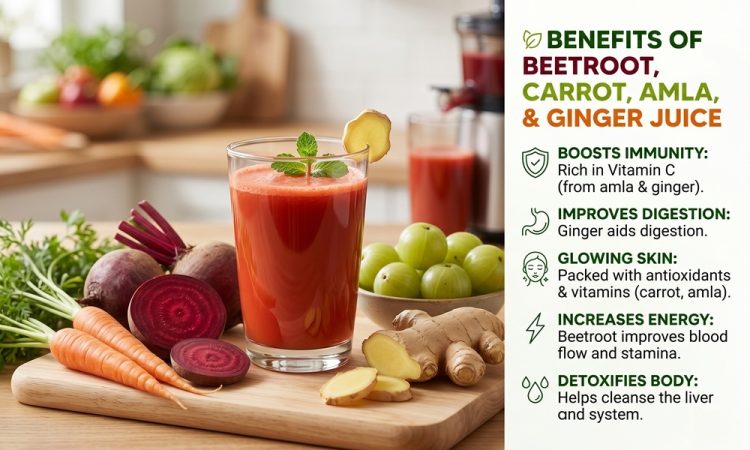
What Is Beetroot Carrot Amla Ginger Juice?
It’s a four-ingredient powerhouse drink. Each ingredient on its own is impressive. Together, they create something far more effective.
- Beetroot (Chukandar) — rich in dietary nitrates that convert to nitric oxide
- Carrot (Gajar) — loaded with beta-carotene and Vitamin A
- Amla (Indian Gooseberry) — one of the richest natural sources of Vitamin C
- Ginger (Adrak) — packed with gingerol, a bioactive anti-inflammatory compound
This combination is rooted in Indian Ayurvedic tradition and is now backed by modern science. Nutritionists increasingly recommend it as a morning shot to replace sugary drinks or packaged juices.
Why This Combination Works: The Synergy Explained
This is not just four random vegetables blended together. There is a real nutritional synergy at play.
Amla’s high Vitamin C content enhances iron absorption from beetroot. Ginger’s gingerol compound boosts nitric oxide levels, amplifying beetroot’s vasodilatory effect. Beta-carotene from carrots is fat-soluble, meaning it absorbs better when paired with other whole-food compounds. The result is a drink where every ingredient makes the others more bioavailable and potent.
Research published in peer-reviewed journals confirms that gingerol decreases the activity of arginase and angiotensin-converting enzyme, which directly leads to increased nitric oxide production in the body — the same mechanism that beetroot’s nitrates rely on.
Complete Nutritional Profile
| Nutrient | Primary Source | Key Function |
|---|---|---|
| Dietary Nitrates | Beetroot | Blood vessel dilation, blood pressure |
| Vitamin C | Amla | Immunity, collagen, iron absorption |
| Beta-Carotene (Vitamin A) | Carrot | Eye health, skin, immunity |
| Gingerol | Ginger | Anti-inflammation, digestion, circulation |
| Betalains | Beetroot | Liver detox, antioxidant, anti-inflammatory |
| Folate (Vitamin B9) | Beetroot, Ginger | Cell production, DNA repair |
| Potassium | Carrot, Amla | Blood pressure regulation |
| Iron | Beetroot, Amla | Red blood cell health, energy |
| Biotin | Carrot, Beetroot | Hair strength, nail health |
| Fiber | All four | Gut health, digestion, satiety |
| Polyphenols | Amla, Ginger | Chronic disease prevention |
How to Make Beetroot Carrot Amla Ginger Juice at Home
Ingredients (1 serving)
- 1 medium beetroot (approximately 100g)
- 2 medium carrots (approximately 150g)
- 2–3 fresh amla (Indian gooseberries), deseeded
- 1-inch piece of fresh ginger, peeled
- ½ cup water (optional, for consistency)
- A squeeze of lemon (optional, enhances Vitamin C absorption)
Method
- Wash all ingredients thoroughly under running water.
- Peel beetroot, carrots, and ginger. Deseed the amla.
- Chop all ingredients into small pieces.
- Blend all ingredients together until smooth.
- Strain through a fine mesh or muslin cloth.
- Add lemon juice if desired. Drink immediately.
Pro Tips
- Drink fresh. Nutrients begin breaking down quickly once juiced. Consume within 30 minutes.
- If storing, keep in an airtight glass jar and consume within 2–3 hours.
- Start with a smaller quantity (100–150ml) if you are new to this juice. Gradually increase to 200–250ml.
- Best time to drink: Early morning on an empty stomach, at least 30 minutes before breakfast.
- Do not add sugar. The natural sweetness of beetroot and carrot is sufficient.
Top 15 Science-Backed Health Benefits
1. Lowers Blood Pressure Naturally
Beetroot is naturally high in nitrates. When consumed, the body converts them into nitric oxide — a molecule that relaxes and widens blood vessels, reducing blood pressure.
Ginger compounds amplify this effect by also increasing nitric oxide availability through a separate enzyme pathway. Carrots and amla provide potassium, which further helps manage blood pressure by counteracting sodium.
Drinking this juice daily can be a meaningful, natural support strategy alongside a healthy lifestyle.
2. Dramatically Boosts Immunity
Amla contains 20 times more Vitamin C than an orange by weight. Just a small piece of amla provides more than the recommended daily intake.
This Vitamin C:
- Stimulates production of white blood cells
- Acts as a powerful antioxidant to protect immune cells
- Helps the body respond faster to infections
Ginger adds antimicrobial and antiviral properties. Beetroot contributes Vitamin C and antioxidants. Together, this juice builds a multi-layered immune shield.
3. Supercharges Athletic Performance
Clinical studies confirm that beetroot juice supplementation improves cardiorespiratory endurance in athletes by increasing nitric oxide levels. These effects include:
- Improved blood flow and oxygen delivery to muscles
- Enhanced mitochondrial efficiency
- Increased time to exhaustion during exercise
- Potential reduction in oxygen cost at submaximal intensities
Ginger reduces exercise-induced muscle soreness and inflammation. Carrot’s nutrients fight fatigue. This makes the juice one of the best natural pre-workout drinks available.
4. Detoxifies the Liver and Blood
Beetroot contains betaine and betalains — compounds that actively support liver function. Betaine helps the liver process fats and reduce inflammation. Betalains trigger detoxification enzyme pathways.
Amla has been used in Ayurvedic medicine for centuries as a liver tonic. Carrot’s beta-carotene helps flush harmful toxins. Ginger stimulates bile production, which assists the liver in eliminating waste.
Daily consumption of this juice gently cleanses and supports the liver and kidneys — the body’s primary detox organs.
5. Gives You Glowing, Younger-Looking Skin
This juice works on skin from the inside out through four mechanisms:
Vitamin C from amla → stimulates collagen production → reduces fine lines and wrinkles
Beta-carotene from carrot → protects skin from UV damage and free radicals → reduces dullness and promotes even skin tone
Betalains and antioxidants from beetroot → purify blood → reduce acne, blemishes, and pigmentation
Gingerol from ginger → reduces skin inflammation → helps with redness and irritation
Unlike topical creams, this juice nourishes skin at the cellular level. Most people report noticeable skin improvements within 3 to 4 weeks of daily consumption.
6. Improves Digestion and Gut Health
Each ingredient plays a distinct role in gut health:
- Carrot — high in dietary fiber, promotes bowel movements and feeds gut bacteria
- Beetroot — stimulates stomach acid production and improves nutrient absorption
- Amla — activates digestive enzymes, relieves acidity and constipation
- Ginger — soothes the stomach lining, reduces bloating and nausea
The combination is particularly effective for people who suffer from slow digestion, bloating, or irregular bowel movements. Drinking this on an empty stomach in the morning helps kickstart digestive activity for the day.
7. Protects the Heart
Heart health is where this juice truly excels.
Beetroot’s nitrates reduce arterial stiffness and prevent plaque buildup in arteries. Amla’s polyphenols reduce oxidative stress on the heart muscle. Carrot’s antioxidants help lower LDL (bad) cholesterol while supporting HDL (good) cholesterol. Ginger prevents blood clot formation and reduces systemic inflammation — a key driver of heart disease.
Regular consumption of this juice addresses four major risk factors for heart disease simultaneously: high blood pressure, high cholesterol, arterial inflammation, and oxidative stress.
8. Strengthens Hair and Reduces Hair Fall
Hair loss has many causes, but nutritional deficiency is one of the most common and reversible.
Amla is one of the most potent natural remedies for hair health in Ayurveda. It nourishes hair follicles, prevents premature greying, and strengthens the hair shaft due to its high Vitamin C and antioxidant content.
Iron from beetroot supports healthy red blood cells, improving blood supply to the scalp. Biotin from carrots strengthens the hair structure itself. Ginger stimulates scalp circulation, which promotes hair growth.
9. Improves Eye Health
Carrots are famous for eye health, and for good reason. Beta-carotene converts to Vitamin A in the body — an essential nutrient for maintaining good vision, especially in low light.
Beetroot adds lutein and zeaxanthin, two antioxidants that protect the eyes from age-related macular degeneration and damage from blue light exposure. Amla reduces eye strain and supports overall visual clarity. This makes the juice a comprehensive daily supplement for eye health.
10. Manages Blood Sugar Levels
Despite the natural sweetness of beetroot and carrot, this juice can actually support blood sugar balance when consumed in the right quantities.
Research from the National Library of Medicine on amla (Indian gooseberry) shows it improves antioxidant status and offers antidiabetic support through its polyphenol content. Ginger is well-documented in improving insulin sensitivity. The fiber in carrots and beetroot slows glucose absorption, preventing sharp blood sugar spikes.
Note for diabetics: Consult your doctor before adding this juice to your routine. Beetroot and carrot do contain natural sugars. Smaller quantities (100–150ml) may be more appropriate.
11. Boosts Energy Without Caffeine
This juice provides sustainable, clean energy — no spike, no crash.
Beetroot improves blood flow and oxygen delivery to every cell in the body. Iron from beetroot and amla supports red blood cell production, fighting fatigue at the root. Carrot’s natural sugars provide a gentle glucose boost without causing a blood sugar rollercoaster. Ginger enhances circulation and mental alertness.
People who switch from morning coffee to this juice often report feeling more consistently energized throughout the day.
12. Supports Brain Health and Cognitive Function
Nitric oxide from beetroot’s nitrates improves blood flow to the brain, delivering more oxygen and nutrients to brain cells. Studies show this can improve reaction time and cognitive performance.
Ginger contains neuroprotective gingerol compounds that reduce inflammation and oxidative stress in brain cells. Regular consumption may support memory, focus, and mental clarity, and may reduce the long-term risk of cognitive decline.
13. Anti-Inflammatory Properties
Chronic inflammation is the root cause of most modern diseases — from arthritis to diabetes to cancer.
This juice targets inflammation through multiple pathways:
- Betalains in beetroot → reduce inflammation at the cellular level
- Gingerols in ginger → inhibit pro-inflammatory enzymes
- Polyphenols in amla → reduce oxidative stress and systemic inflammation
- Carotenoids in carrot → lower inflammatory markers in the blood
14. Supports Healthy Weight Management
This juice is low in calories, high in fiber, and nutrient-dense — a combination that supports weight management.
The fiber in carrots and beetroot promotes a feeling of fullness. Ginger boosts metabolism, helping the body burn more calories at rest. Amla supports better nutrient utilization, so the body gets more from the food it consumes. Unlike commercial weight loss drinks, this juice achieves these benefits without stimulants or artificial ingredients.
15. Promotes Reproductive and Fertility Health
This is a benefit rarely discussed. A clinical study from a peer-reviewed journal (PMC) showed that beetroot and ginger juice supplementation improved endometrial receptivity and clinical outcomes in IVF cycles. The mechanism involves nitric oxide-mediated improvement in blood flow to the uterus.
Folate (Vitamin B9) in beetroot and ginger is critical for preventing neural tube defects during early pregnancy. Amla’s antioxidants protect reproductive cells from oxidative damage.
What Happens to Your Body in 30 Days: A Timeline
| Days | What You May Experience |
|---|---|
| Days 1–5 | Improved bowel movements, reduced bloating, body adjusting |
| Days 6–10 | More consistent energy levels, lighter feeling after meals |
| Days 11–15 | Skin begins to look brighter and cleaner |
| Days 16–20 | Improved workout stamina, reduced fatigue |
| Days 21–25 | Hair feels stronger, reduced hair fall reported by many |
| Days 26–30 | Noticeable improvement in skin tone, digestion, and energy |
Who Should Be Careful (or Avoid This Juice)
| Group | Reason | Recommendation |
|---|---|---|
| People with kidney stones | High oxalate content in beetroot | Consult doctor; limit quantity |
| Diabetics | Natural sugars in beetroot and carrot | Smaller portions; monitor blood sugar |
| Those on blood thinners | Amla and ginger have blood-thinning properties | Consult your physician |
| Pregnant women | High Vitamin C; ginger in large amounts may stimulate uterine contractions | Consult doctor before use |
| Low blood pressure patients | Juice further lowers blood pressure | Monitor carefully; reduce or avoid |
| People with iron overload | Beetroot enhances iron absorption | Medical advice recommended |
Common Side Effects
Most people tolerate this juice well. However, some may experience:
Beeturia — pinkish or reddish urine or stool. This is harmless and caused by beetroot pigments. It is not blood.
Temporary digestive changes — mild bloating or more frequent bowel movements in the first few days. This is the body adjusting and typically resolves in 3–5 days.
Overconsumption issues — too much fiber from all four ingredients at once can cause loose stools, gas, or stomach cramps. Stick to the recommended quantity.
Allergic reactions — rare, but possible. Symptoms include itching, swelling, or skin redness. Discontinue and consult a doctor if this occurs.
Ayurvedic Perspective: Why This Combination Is Ancient Wisdom
In Ayurveda, this combination is not a modern health trend — it is ancient knowledge.
Amla is classified as a Rasayana (rejuvenating herb) and a tridoshic food — meaning it balances all three doshas (Vata, Pitta, Kapha). It is considered the most important fruit in Ayurvedic medicine.
Beetroot corresponds to Pitta-reducing foods in Ayurveda, helping cool inflammation and purify blood.
Ginger is one of the most celebrated spices in Ayurvedic medicine — referred to as vishwabhesaj (the universal medicine) for its ability to ignite digestive fire (Agni).
Carrot is a tridoshic root that supports vision, skin, and liver in Ayurvedic tradition.
The pairing follows the Ayurvedic principle of Samyoga — combining foods in a way that creates synergistic healing effects greater than the individual parts.
Frequently Asked Questions (FAQ)
Q: Can I drink beetroot carrot amla ginger juice every day?
Yes, most healthy adults can drink this juice daily. Start with a smaller quantity and observe how your body responds.
Q: What is the best time to drink this juice?
Early morning on an empty stomach is ideal. This maximizes nutrient absorption and kickstarts metabolism and digestion for the day.
Q: Can I drink this juice for weight loss?
This juice supports weight management by providing satiety, boosting metabolism, and providing clean energy. It works best as part of a balanced diet and regular exercise.
Q: Is this juice good for skin?
Yes. The combination of Vitamin C from amla, beta-carotene from carrot, and blood-purifying compounds from beetroot makes this one of the most effective natural drinks for skin health.
Q: Can I give this juice to children?
Small quantities can be fine for older children. However, consult a pediatrician, especially for young children, as ginger can be too strong for some.
Q: Does this juice help with hair fall?
Yes, regular consumption can reduce hair fall caused by nutritional deficiency. The combination of iron, biotin, Vitamin C, and scalp-stimulating ginger supports healthy hair growth.
Q: How much beetroot carrot amla ginger juice should I drink per day?
150–250ml per day is a standard recommendation for most adults. Do not exceed 300ml in a single day when starting out.
Q: Can I use amla powder instead of fresh amla?
Fresh amla is always preferred. If unavailable, high-quality, unsweetened amla powder (½ to 1 teaspoon) can be used as a substitute.
Q: Will this juice interact with medications?
Potentially, yes. If you are on blood pressure medications, blood thinners, or diabetes medications, consult your doctor before adding this juice daily.