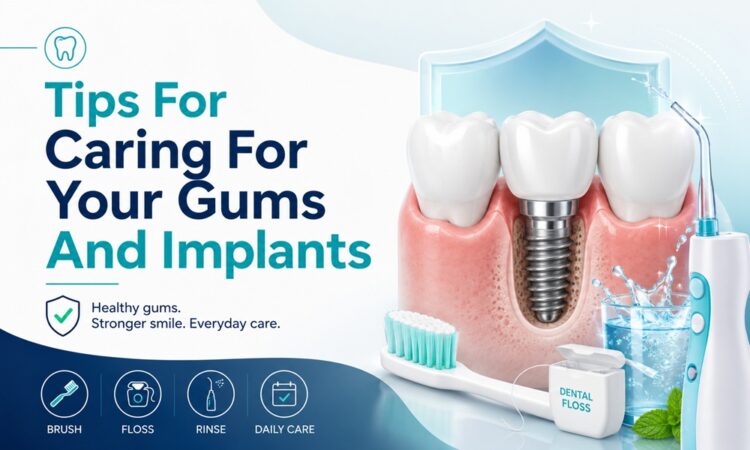
Your gums and implants carry you through every meal, every word, every smile. They need steady care, not quick fixes. This is true for natural teeth and for Westbury dental implants. Poor care can lead to pain, swelling, and bone loss. That can put your implants at risk. Strong habits protect your health, your comfort, and your confidence. You do not need special products or complex routines. You need clear steps, done the same way every day. This guide shares six simple tips to keep your gums firm and your implants secure. You will learn how to clean, what to watch for, and when to call your dentist. You will also see how small daily choices can prevent infection and protect your jaw. With the right care, your implants can last for many years. Your gums can stay steady, clean, and pain-free.
1. Brush with purpose twice a day
Brush your teeth and implants two times each day. Morning and night. That routine clears food, plaque, and germs that attack your gums.
Use these steps.
- Pick a soft toothbrush. A powered brush can help you reach tight spots.
- Use a pea-sized amount of fluoride toothpaste.
- Hold the brush at a slight angle toward the gumline.
- Use short strokes. Clean the front, back, and top of every tooth and implant.
- Brush for two full minutes. Use a timer if needed.
Do not scrub hard. Strong pressure can hurt your gums and scratch the implant crown. Gentle, steady strokes clean better than force. If brushing causes bleeding that does not stop after a week of good care, contact your dentist.
2. Clean between teeth and implants every day
Germs sit between teeth where your brush cannot reach. That space is where gum infection often starts. You protect your implants when you clear those spots each day.
Choose one of these tools.
- Waxed floss for tight spaces
- Implant safe floss with a thicker middle section
- Interdental brushes that fit the gap between teeth
- A water flosser that uses a gentle stream of water
Slide floss or a small brush under the implant crown and along the gumline. Move slowly. Do not snap the floss. Aim to clean every gap once each day. Nighttime works well because you clear food from the full day.
3. Protect your gums with healthy daily habits
Your gums respond to what you eat, drink, and breathe. Some habits feed strong tissue. Other habits weaken it and raise your risk of infection around implants.
Use three clear steps.
- Drink water often. Sip plain water between meals.
- Choose foods that need chewing, such as apples, carrots, and nuts, if you can eat them safely.
- Limit sugary snacks and drinks to mealtimes. Avoid sipping sugar drinks for many hours.
Smoking or vaping harms blood flow to your gums. That slows healing and raises the chance that implants will fail. If you use tobacco, talk with your dentist or doctor about help to quit. The Centers for Disease Control and Prevention explains how quitting supports oral health.
4. Know the warning signs of trouble
Implants cannot get cavities. Your gums and bone around them still can get sick. Early signs often feel small. You protect yourself when you act fast.
Watch for three common signals.
- Red, puffy, or shiny gums around an implant
- Bleeding when you brush or floss in that spot
- Bad taste or breath that does not go away after brushing
Other signs need urgent care. These include pain when you bite, a loose feeling around the implant, or pus near the gumline. Call your dentist right away if you notice these changes. Early treatment can stop infection and protect the bone that holds your implant.
5. Keep regular dental visits and cleanings
Home care is not enough by itself. Regular visits let your dentist spot small changes before they turn into deep infections.
Your routine visits should include three parts.
- A review of your medical history and medicines
- A check of your gums, implants, and bite
- Professional cleaning above and below the gumline as needed
Many people do best with a visit every six months. Some with past gum disease or many implants may need cleanings every three or four months. Your dentist will set a schedule based on your risk. The National Institute of Dental and Craniofacial Research gives clear facts about gum disease and checkups.
6. Use the right tools for implants
Not every dental product suits implants. Some tools scratch the surface or irritate gums. The right tools keep your mouth clean without harm.
Ask your dentist about these options.
- A soft or extra soft manual brush
- A powered brush with a pressure sensor
- Implant safe floss or threaders
- Interdental brushes with plastic coated wires
- A water flosser on a low setting
- Alcohol free mouth rinse if your dentist suggests it
Keep your tools clean. Rinse brushes and floss holders after each use. Replace toothbrushes every three months or sooner if the bristles bend.
Quick comparison of care for natural teeth and implants
| Care step | Natural teeth | Dental implants
|
|---|---|---|
| Brushing | Twice daily with soft brush | Twice daily with a soft brush. Extra care at the gumline |
| Flossing | Once daily with standard floss | Once daily with implant safe floss or interdental brush |
| Risk | Cavities and gum disease | Gum infection and bone loss around the implant |
| Dental visits | Every 6 to 12 months | Every 3 to 6 months based on risk |
| Special tools | Not always needed | Often helpful near implants and under bridges |
Putting it all together
Long-term care for your gums and implants comes down to steady daily steps. Brush two times each day. Clean between teeth and implants once a day. Choose habits that support healing. Watch for early warning signs. Keep up with regular dental visits. Use tools that protect your gums instead of hurting them.
These choices take only a few minutes each day. They protect years of treatment, time, and money. Most of all, they protect your comfort when you eat, speak, and smile with the people you love.