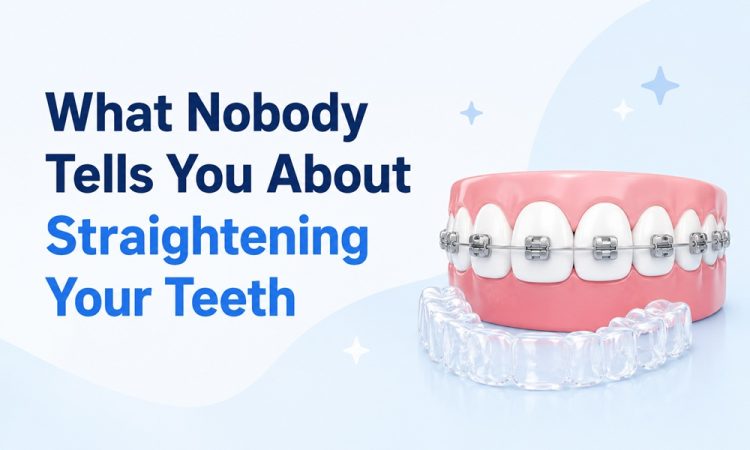
What’s actually changing in orthodontics right now
Most guides repeat the same basics. Here’s what the latest industry and clinical data show — points you won’t always find in the top results:
- Adults are now the core market. The old idea that braces are “for kids” is gone. Per the American Association of Orthodontists, roughly 1 in 5 orthodontic patients is an adult — and adults now make up the majority of clear aligner cases.
- Your family dentist may handle it. Around 45% of general dentists now offer clear aligners in-house. Teeth straightening is no longer specialist-only.
- The industry is moving away from mail-order aligners. After the rise of direct-to-consumer “DIY” kits, the trend has corrected back toward doctor-supervised care, because an in-person exam catches cavities, gum disease, and complex bite problems a home scan can miss.
- AI and remote monitoring are mainstream. 3D scans have largely replaced goopy impressions. Apps and remote monitoring tools (some endorsed by the AAO’s TechSelect program) now track progress between visits, cutting office trips.
- Misalignment is extremely common. An estimated 60–75% of people worldwide have some degree of crooked or misaligned teeth.
- The market is booming. Analysts value the global orthodontics market in the billions and project it to roughly triple over the next decade — driven almost entirely by adult demand.
Keep these in mind as you read. They shape both your options and the prices you’ll see.
What is orthodontic treatment?
Orthodontic treatment uses gentle, steady pressure to move teeth into better positions. Over time, the bone around each tooth remodels, and the tooth settles into place.
The clinical term for a “bad bite” is malocclusion. It covers crowding, gaps, and bite problems. Left alone, malocclusion can make brushing harder, wear teeth unevenly, and strain your jaw.
So orthodontics isn’t only cosmetic. A straighter smile is easier to clean and often more comfortable to live with.
Do I need braces? Common signs to watch for
Many people aren’t sure if they need treatment. Here are the most common signs:
- Crowded or overlapping teeth that are hard to floss between
- Gaps or spacing between teeth
- An overbite (top teeth sit too far over the bottom)
- An underbite (bottom teeth sit in front of the top)
- A crossbite (some upper teeth close inside the lower teeth)
- An open bite (teeth don’t meet when you close)
- Difficulty biting or chewing, or biting your cheek or tongue
- Jaw pain, clicking, or frequent headaches (sometimes linked to bite issues or TMJ)
- Teeth that have shifted years after childhood braces — a sign you stopped wearing a retainer
If two or more of these sound familiar, a consultation is worth booking.
When should you see an orthodontist?
The AAO recommends a first orthodontic check by age 7. That’s early enough to catch jaw-growth issues while they’re easy to guide.
For adults, the answer is simpler: it’s never too late. Healthy teeth can be moved at almost any age. Treatment may take a little longer, but it works.
Types of orthodontic treatment
Today you have more choices than ever. Here’s how the main options compare.
| Option | How it looks | Best for | Typical cost (USD) | Treatment time |
|---|---|---|---|---|
| Metal braces | Most visible | Complex cases; budget-conscious patients | $2,500–$7,500 | 18–24 months |
| Ceramic braces | Tooth-colored, low-visibility | Adults/teens wanting discretion | Slightly more than metal | 18–24 months |
| Lingual braces | Hidden behind the teeth | Professionals wanting “invisible” | Premium (often highest) | 18–24+ months |
| Self-ligating braces | Like metal, no elastic ties | Easier hygiene, fewer adjustments | Mid-range | Similar to metal |
| Clear aligners (Invisalign) | Nearly invisible, removable | Mild-to-moderate, disciplined wearers | $3,000–$8,000 | 12–18 months |
A quick note on each:
- Metal braces are the workhorse. They’re durable, highly effective for tough cases, and usually the most affordable. Modern brackets are smaller than the bulky versions of the past.
- Ceramic braces work the same way but blend in with your teeth. They can stain if you’re not careful with coffee, tea, or red wine.
- Lingual braces sit on the back of your teeth, so they’re invisible from the front. The trade-off: they can affect speech at first and are harder to clean.
- Self-ligating braces use a built-in clip instead of tiny rubber bands. That can mean less friction and fewer adjustment visits.
- Clear aligners are removable trays you swap every week or two. You take them out to eat, and they’re nearly invisible — but they only work if you wear them 20–22 hours a day.
Braces vs. Invisalign: which is better for you?
This is the question patients ask most. Both work well. The “best” choice depends on your case and your discipline.
| Factor | Traditional braces | Invisalign / clear aligners |
|---|---|---|
| Visibility | Visible (metal); ceramic is subtler | Nearly invisible |
| Removable? | No — fixed to teeth | Yes — but must wear 20–22 hrs/day |
| Best for | Complex bite & alignment issues | Mild-to-moderate cases |
| Treatment time | 18–24 months | 12–18 months (mild cases can be faster) |
| Average cost | $2,500–$7,500 | $3,000–$8,000 (about $3,500–$6,500 in Illinois) |
| Comfort | Initial irritation from brackets/wires | Smoother; many patients report less discomfort |
| Discipline needed | Low — always working | High — easy to “forget” to wear |
| Eating | Avoid hard/sticky foods | Remove to eat; brush before reinserting |
The short version:
- Choose braces if you have a complex bite, want a no-discipline option, or want the most cost-effective route.
- Choose clear aligners if your case is mild-to-moderate and you value a discreet, removable solution — and you’ll actually wear them.
Invisalign also points to studies suggesting that, for eligible cases, treatment can finish several months faster than with braces. That won’t apply to everyone, so a real exam matters.
How much does orthodontic treatment cost?
Costs vary widely by case complexity, treatment type, and location. As a rough guide:
- Metal braces: $2,500–$7,500
- Ceramic braces: a bit higher than metal
- Lingual braces: usually the most expensive
- Clear aligners (Invisalign): $3,000–$8,000
Three ways to lower the bill:
- Dental insurance. Many plans include an orthodontic benefit (often a few thousand dollars). Check whether yours covers braces and aligners equally.
- Payment plans. Most practices offer monthly financing so you’re not paying everything upfront.
- An accurate quote. Online ranges are estimates only. The real number comes from an in-person exam.
How long does treatment take?
Most cases run 12 to 24 months. Some finish in under a year; complex cases can run past two years.
Three things drive the timeline: the severity of your misalignment, the treatment type, and — for aligners — how consistently you wear them. Skipping wear time is the fastest way to slow things down.
What real patients say (and what they wish they’d known)
For an honest gut-check, patient communities are gold. Across Reddit threads (like r/braces and r/Invisalign), Quora questions, and first-person Medium posts, a few themes come up over and over:
- The first week is the sorest. Soreness after placement or a new aligner usually fades within a few days. Orthodontic wax helps with bracket rubbing.
- Aligner discipline is the real challenge. People who struggle with Invisalign almost always say the same thing: it’s hard to keep them in 22 hours a day. Snackers and frequent sippers find it tougher.
- The biggest regret is retainers, not braces. The most common “I wish I’d known” story isn’t about treatment — it’s about teeth shifting back after someone stopped wearing their retainer.
- Refinements are normal. Needing extra aligner trays or a few wire adjustments at the end is common, not a sign something went wrong.
- The verdict is overwhelmingly “worth it.” Once treatment is done, satisfaction runs high — especially among adults who waited years to start.
Use these as context, not medical advice. Your mouth is unique.
Life after braces: retainers and keeping your results
Here’s the part many people underestimate. Teeth never fully stop moving. Without a retainer, they drift back — a process called orthodontic relapse.
What to expect:
- Wear your retainer full-time at first (often the first few months), then usually nights for life.
- Skip it for a week or two and you may feel it get tight. Skip it for months and your teeth can visibly shift.
- Don’t force an old retainer back in. If it no longer fits, see your orthodontist for a new one.
Retainer types and lifespan:
- Clear (Essix) retainers: about 1–5 years before replacement
- Hawley (acrylic + wire) retainers: roughly 5–10 years with good care
- Fixed/bonded retainers: can last for years, with occasional repairs
A few minutes a night protects months of work. It’s the cheapest insurance in dentistry.
Adult orthodontics: the fastest-growing group
Adults aren’t just allowed to get treatment — they’re driving the entire field.
Why the surge?
- Discreet options (ceramic, lingual, clear aligners) remove the “metal mouth” worry.
- Adults tend to be compliant patients who follow the plan.
- Many are fixing relapse from childhood braces, or finally treating something they lived with for years.
If you’re an adult wondering whether you missed your window — you didn’t. Bite problems and crowding can actually worsen with age, so treating them is about long-term health as much as looks.
How to choose the right orthodontist
The provider matters as much as the appliance. Look for:
- A clinician who does a full in-person exam (not just a quick scan)
- Clear, written treatment options with honest pros and cons
- Transparent pricing and financing
- Experience with your type of case
If you’re in northern Illinois, booking a consultation with an experienced orthodontics dentist in Joliet, IL is a sensible first step — a hands-on evaluation will tell you which option actually fits your bite, not just your preferences.
Frequently asked questions
Do I really need braces, or is it just cosmetic? Sometimes both. Straightening improves appearance, but it also makes teeth easier to clean and can ease bite strain. Only an exam can tell you for sure.
Is Invisalign better than braces? Neither is universally “better.” Aligners win on discretion and comfort; braces win on complex cases and require no discipline. Your case decides.
Am I too old for orthodontic treatment? No. Healthy teeth move at almost any age. Adults are now the largest group seeking treatment.
How much do braces cost without insurance? Commonly $2,500–$7,500 for braces and $3,000–$8,000 for clear aligners, depending on complexity and location. Payment plans are widely available.
Does treatment hurt? Expect mild soreness for a few days after placement or each adjustment. It’s manageable and temporary.
Do I have to wear a retainer forever? Essentially, yes — usually nightly for life. It’s the only reliable way to prevent your teeth from shifting back.
What happens if I stop wearing my retainer? Teeth can start shifting within weeks. After months, the movement may need a new retainer or even short re-treatment.