Salicylic Acid Serum: Benefits, Uses, Concentrations & Everything You Need to Know

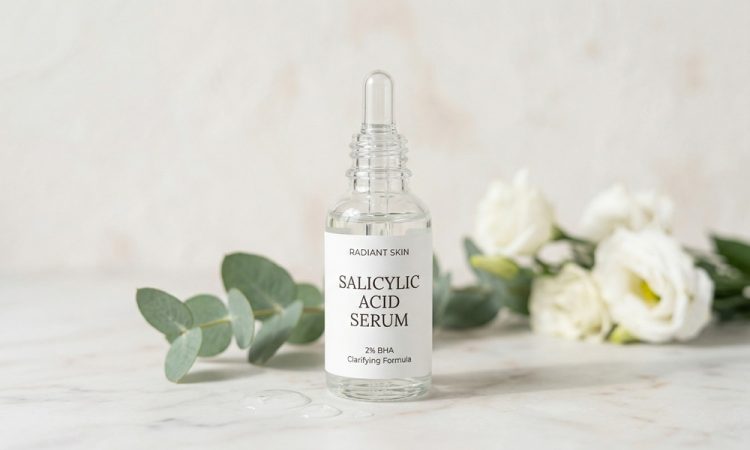
If you have ever walked into a skincare aisle feeling overwhelmed by ingredient-heavy labels, chances are salicylic acid caught your eye more than once. And for good reason. This beta-hydroxy acid (BHA) has earned a near-permanent spot in dermatologist recommendations and skincare routines worldwide — not just as a trend, but as a clinically validated solution for acne, congested pores, and uneven skin texture.
But what exactly does a salicylic acid serum do? How is it different from a cleanser or toner containing the same ingredient? And how do you use it without stripping your skin bare? This article breaks it all down — the science, the benefits, the right concentrations, and the best practices for making it work for your skin.
What Is Salicylic Acid?
Salicylic acid is a beta-hydroxy acid (BHA) derived from willow bark. It is oil-soluble, meaning it can penetrate deep into the pores — unlike alpha-hydroxy acids (AHAs), which work only on the skin’s surface.
This oil-solubility is the key distinction that makes salicylic acid uniquely effective. Because BHAs are lipid-soluble, they can penetrate deep into pores to unclog blackheads. Unlike AHAs, BHAs can get through oil, thinning it so it flows smoothly to the skin’s surface where a cleanser washes it away.
In serum form, salicylic acid is delivered in a lightweight, concentrated formula that allows the active ingredient to absorb efficiently — making it more targeted and effective than a rinse-off cleanser or a toner that spends just seconds on the skin.
How Does Salicylic Acid Serum Work?
Salicylic acid works by increasing the skin’s moisture content and dissolving the components that cause skin cells to stick together, which makes shedding skin cells easier.
Once applied, it goes to work at multiple levels:
- It breaks down the intracellular “glue” that holds dead cells together on the surface.
- It penetrates the pore lining to dissolve trapped sebum and debris.
- As a keratolytic agent, it exfoliates skin to slough off cells more readily.
- Its anti-inflammatory properties calm the redness and swelling associated with active breakouts.
This property allows infected pores to open up and let oxygen in, which helps reduce skin oiliness, large pores, blackheads, and whiteheads.
Key Benefits of Salicylic Acid Serum
1. Deep Pore Cleansing
Unlike surface cleansers that merely remove surface impurities, a salicylic acid serum can penetrate deep into the pores, dissolving trapped oil, dead skin cells, and other debris that can lead to breakouts.
2. Acne Treatment and Prevention
By effectively unclogging pores and regulating oil production, regular use of a salicylic acid serum can significantly reduce the occurrence of acne, blackheads, and other blemishes over time. It also works proactively — keeping pores clear before a breakout can even form.
3. Gentle Exfoliation
It clears dead skin cells, bringing out fresher and brighter skin below. Because this exfoliation happens chemically rather than mechanically, there is no risk of micro-tears or over-scrubbing.
4. Oil Control
Salicylic acid balances sebum secretion, making the skin less oily and enabling the complexion to stay balanced. For those with combination or oily skin types, this translates to a noticeably matte, less congested finish throughout the day.
5. Blackhead and Whitehead Reduction
Because salicylic acid assists in unblocking pores, it is most useful for individuals troubled by blackheads and whiteheads. Daily application prevents them from forming and leaves the skin smooth.
6. Improving Skin Texture
As dead skin cells are sloughed off more efficiently, the skin appears smoother, and the appearance of acne scars and other textural irregularities is diminished.
7. Reducing Hyperpigmentation
Salicylic acid helps to reduce hyperpigmentation and fade post-acne signs by removing dead skin cells, resulting in a more even skin tone. Pairing it with niacinamide enhances this effect significantly.
8. Anti-Inflammatory Action
Due to its anti-inflammatory nature, salicylic acid helps calm redness and irritation, making it suitable for those with sensitive, acne-prone skin.
Salicylic Acid Concentrations: Which One Is Right for You?
The appropriate concentration of salicylic acid for acne treatment ranges from 0.5% to 7% in over-the-counter and prescription products, and should be chosen based on individual skin type and condition.
| Concentration | Best For | Notes |
|---|---|---|
| 0.5% – 1% | Sensitive or first-time users | Gentle daily use; minimal irritation risk |
| 2% | Oily, acne-prone, combination skin | Most common OTC strength; effective and well-tolerated |
| 3% – 5% | Persistent acne, stubborn blackheads | Use with caution; follow dermatologist guidance |
| 6% – 7% | Clinical peels, keratosis pilaris | Professional or prescription use only |
For most people beginning their salicylic acid journey, a 2% serum is the gold standard — strong enough to deliver visible results without overwhelming the skin barrier.
Who Should Use Salicylic Acid Serum?
Salicylic acid serum works best for:
- Those with oily or combination skin dealing with excess sebum
- Individuals with acne-prone skin, including hormonal breakouts
- Anyone bothered by blackheads or whiteheads
- Those looking for smoother skin texture and refined pores
- People wanting to fade post-acne marks and achieve a more even tone
Who should exercise caution:
- Pregnant or nursing women (consult a doctor before use)
- Those with very dry or sensitive skin (start with lower concentrations)
- Children and teenagers (seek dermatologist guidance)
- People on blood thinners or salicylate-sensitive medications
How to Use Salicylic Acid Serum: Step-by-Step
Getting the most out of your salicylic acid serum depends heavily on when and how you apply it within your routine.
Step 1 — Cleanse
Wash your face with a gentle, pH-balanced cleanser and pat dry. Clean skin allows better absorption.
Step 2 — Tone (Optional)
If you use a hydrating or balancing toner, apply it now and let it absorb fully.
Step 3 — Apply the Serum
Apply 2–3 drops after cleansing and toning. Let the serum absorb fully into the skin before moving on to the next step of your routine.
Step 4 — Moisturise
Follow with a non-comedogenic moisturiser. This step is non-negotiable — it seals in hydration and prevents the dryness that can come with regular acid use.
Step 5 — Sunscreen (AM Routine Only)
Using salicylic acid may increase sun sensitivity. Wear sunscreen during the day when using this formulation. A broad-spectrum SPF 30 or higher is recommended.
Pro Tip: If you are new to actives, begin by using the serum 2–3 times per week and gradually increase to daily use as your skin builds tolerance.
What About Purging?
Any active ingredient that promotes cell turnover can cause purging in certain people, especially with sensitive or acne-prone skin. Salicylic acid pushes trapped sebum and oil to the surface, so breakouts that were supposed to appear later pop up early. The natural cell-shedding cycle in a healthy person is 28 days, so purging usually subsides in 3–4 weeks.
Purging looks like a temporary increase in small whiteheads or blackheads in areas where you are already prone to breakouts. If new breakouts appear in areas you never break out in, or persist beyond 4–6 weeks, it may be a sign of irritation or a reaction — in which case, consult a dermatologist.
Best Ingredient Pairings for Salicylic Acid Serum
Knowing what to combine with your salicylic acid serum can amplify results and minimise downsides.
| Ingredient | Benefit When Paired | How to Use |
|---|---|---|
| Niacinamide | Fades post-acne marks, strengthens skin barrier, reduces redness | Can be layered in the same routine |
| Hyaluronic Acid | Replenishes moisture lost from exfoliation | Apply after salicylic acid, before moisturiser |
| Green Tea / EGCG | Powerful antioxidant; reduces sebum and P. acnes bacteria | Often formulated together in serums |
| Witch Hazel | Soothes inflammation, tightens pores | Look for formulations that combine both |
| Cica (Centella) | Calms irritation, supports healing | Ideal for sensitive or post-breakout skin |
What NOT to pair with salicylic acid:
Using salicylic acid with other acids, retinoids, or peptides is not recommended, as combining strong actives may lead to skin irritation and dryness. If you use retinol, apply it on alternating nights.
Potential Side Effects and How to Manage Them
While salicylic acid is considered safe for most skin types, overuse or incorrect application can trigger:
- Dryness and peeling — the most common side effect, especially in early weeks
- Redness or stinging — typically mild and temporary
- Purging — a temporary worsening of breakouts (see section above)
- Increased sun sensitivity — always follow up with SPF
Salicylic acid can cause skin irritation when first starting and may also remove too much oil, resulting in dryness and potential irritation.
To reduce side effects: start with a lower concentration, limit use to a few times per week initially, always moisturise after application, and never skip sunscreen.
Salicylic Acid Serum vs. Other Formats
| Format | Penetration | Contact Time | Best Use |
|---|---|---|---|
| Serum | Deep | Long (leave-on) | Targeted treatment |
| Cleanser | Moderate | Short (rinse-off) | Daily maintenance |
| Toner | Moderate | Medium | Light exfoliation |
| Spot Treatment | Focused | Long | Individual blemishes |
| Chemical Peel | Very deep | Short, professional | Intensive treatment |
A serum remains the most effective delivery format for salicylic acid because it stays on the skin long enough for the active ingredient to work at the cellular level.
Timeline: When Will You See Results?
| Timeframe | What to Expect |
|---|---|
| Week 1–2 | Possible purging, mild dryness; skin adjusting |
| Week 3–4 | Reduced oiliness, early improvement in texture |
| Week 5–8 | Noticeable reduction in blackheads and breakouts |
| Week 8–12 | Clearer, smoother skin; fading of post-acne marks |
It can take several weeks of consistent use to see the full effect of salicylic acid. Consistency is everything — sporadic use will not deliver the same transformation as a steady routine.
Final Takeaway
Salicylic acid serum is one of the most evidence-backed ingredients in skincare, and for most people dealing with acne, oiliness, or congested pores, it delivers genuinely transformative results. The key is starting slowly, respecting your skin barrier, and pairing it with hydration and sun protection.
Whether you are a skincare beginner picking up your first active ingredient or an enthusiast looking to optimise your routine, a well-formulated 2% salicylic acid serum — used consistently and correctly — is one of the simplest and most effective additions you can make to your regimen.