Two Periods in One Month, Perimenopause, Histamine & More: The Complete Women’s Health Guide

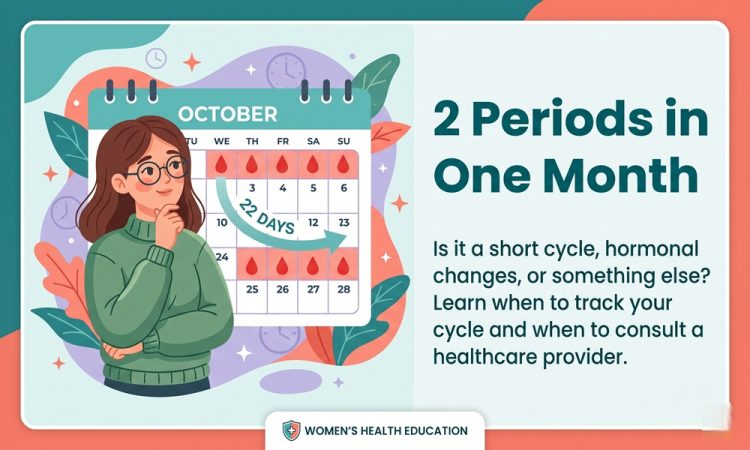
Two Periods in One Month — Is It Normal?
Getting your period twice in one calendar month is more common than you think. A healthy cycle ranges from 24 to 38 days — so if your period falls at the start of the month and your cycle is short, a second bleed before month-end is simply one normal cycle crossing a calendar boundary.
Occasional double periods are usually harmless. Repeated ones need investigation.
Common Causes
| Cause | Who It Affects |
|---|---|
| Short natural cycle (21–24 days) | Any age |
| Perimenopause (hormone fluctuations) | Women 40–55 |
| Stress (disrupts ovulation signals) | Any age |
| Thyroid disorder (hypo or hyper) | 1 in 8 women |
| Uterine fibroids | Up to 50% of women |
| Endometriosis / Adenomyosis | ~10% of women |
| PCOS | 8–13% of reproductive-age women |
| Birth control change | Any age |
| Implantation bleeding (early pregnancy) | Reproductive-age women |
🚨 See a Doctor If You Have:
- Two periods in one month repeatedly
- Soaking a pad/tampon every hour for 2+ hours
- Blood clots larger than a 5-rupee coin
- Bleeding after menopause
- Severe pelvic pain or unusual discharge
Self-care tips: Track your cycle with an app, manage stress actively, eat iron-rich foods (rajma, spinach, eggs), sleep 7–8 hours, and maintain a healthy weight.
Low Histamine Food List
Histamine intolerance occurs when your body lacks enough DAO (Diamine Oxidase) enzyme to break down dietary histamine. The result: headaches, skin flushing, bloating, brain fog, or allergy-like symptoms — with normal allergy test results.
🔗 Key insight for women: Oestrogen and histamine fuel each other. High oestrogen triggers mast cells to release histamine — which is why symptoms often worsen during perimenopause and before periods.
The Golden Rule: Freshness = Lower Histamine
Histamine forms as bacteria break down proteins over time. Aged, fermented, and leftover foods are the biggest triggers — not because of the food itself, but how long it has been sitting.
✅ Eat Freely
- Vegetables: Broccoli, carrots, zucchini, lettuce, cucumber, sweet potato
- Fruits: Apples, pears, mango, blueberries, watermelon, unripe bananas
- Proteins: Fresh chicken, turkey, freshly caught fish (frozen immediately), fresh eggs
- Grains: Rice, oats, quinoa, corn, rice pasta
- Fats: Olive oil, coconut oil
- Teas: Chamomile, peppermint, ginger, rooibos
❌ Avoid
- Fermented: Sauerkraut, kimchi, kefir, miso, kombucha
- Aged: Hard cheeses (cheddar, parmesan), cured meats (salami, ham)
- Fruits: All citrus, strawberries, pineapple, dried fruits
- Vegetables: Tomatoes, spinach, aubergine
- Drinks: Alcohol (especially red wine), coffee, energy drinks, green tea
- Other: Canned fish, chocolate, leftovers from the previous day, processed foods with additives
✅ Practical tip: Cook fresh, eat immediately, and freeze leftovers within 30 minutes. Your symptoms can improve within 2–4 weeks of strict elimination.
How Long Does Perimenopause Last?
Perimenopause is the hormonal transition leading to menopause — when oestrogen and progesterone begin declining but with erratic fluctuations.
| Stat | Figure |
|---|---|
| Average duration | 4 years |
| Maximum duration | Up to 10 years |
| Typical start age | Mid-40s |
| Average age of final period | 51 |
What Affects the Timeline?
Genetics is the strongest predictor. Smoking can bring menopause 1–2 years earlier. Chemotherapy, radiation, or ovarian surgery can trigger it prematurely.
Most Common Symptoms
- Irregular periods (often the first sign)
- Hot flashes and night sweats — affect ~80% of women; nearly 5× more common in perimenopause than before it
- Sleep disruption, mood changes, anxiety
- Brain fog and poor concentration
- Vaginal dryness — affects ~1 in 3 women and does not resolve without treatment
- Joint pain, reduced libido, hair thinning
⚠️ 2025 Research Update (Lancet): A study of 5,500+ women found that current diagnosis criteria miss many real perimenopause cases. Vasomotor symptoms (hot flashes, night sweats) and vaginal dryness are more reliable indicators than cycle changes alone.
Management Options
HRT (Hormone Replacement Therapy) is the first-line treatment. Non-hormonal options include SSRIs, gabapentin, and CBT for mood and sleep. Vaginal oestrogen safely treats localised dryness even for women who cannot use systemic HRT.
Can You Get Pregnant During Perimenopause?
Yes — and more women are surprised by this than should be.
Until you have gone 12 consecutive months without a period, your ovaries are still releasing eggs. Ovulation is unpredictable — but it is happening. There is no test that tells you when your last fertile window is.
Fertility Chances by Age
| Age | Monthly Pregnancy Chance |
|---|---|
| Early 40s | ~5–10% |
| Late 40s | ~2–3% |
| Age 50+ | <1% (until 12-month period-free mark) |
Risks of Pregnancy During Perimenopause
- ~50% miscarriage risk for women over 40
- Higher risk of Down syndrome and chromosomal abnormalities
- Gestational diabetes, preeclampsia, placenta complications
- Higher C-section rates and premature birth risk
Still Need Contraception?
Yes. Irregular periods ≠ infertile. Use contraception until you have been completely period-free for 12 months. Important: HRT is not contraception — it does not prevent pregnancy.
If trying to conceive, consult a fertility specialist promptly. Donor eggs via IVF offer ~80% cumulative birth rates across 4 cycles for women with very low ovarian reserve.
Stages of Menopause
There are three distinct stages — not one. Understanding each prevents confusion and helps you seek care at the right time.
| Stage | What It Means | Duration |
|---|---|---|
| Perimenopause | Hormonal transition; irregular periods; symptoms begin; ovulation still possible | 4–10 years |
| Menopause | A single moment — exactly 12 consecutive months without a period | One point in time |
| Postmenopause | Every year after menopause; hot flashes may ease but bone/cardiovascular risk increases | Rest of life |
Early vs. Late Perimenopause
Early perimenopause: Cycles vary by 7+ days. Anxiety and mood changes often appear before physical symptoms. Hot flashes may begin subtly.
Late perimenopause: Periods are 60+ days apart. Hot flashes intensify. Vaginal dryness becomes common. Symptoms are at their peak.
Premature Menopause
Menopause before age 40 is called Premature Ovarian Insufficiency (POI). Between 40–45 it is early menopause. Both require HRT to protect long-term bone, heart, and cognitive health.
⚠️ During perimenopause and postmenopause, keep up with: DEXA bone scans, cholesterol checks, blood pressure monitoring, mammograms, and cervical screening.
How to Clear Histamine From Your Body
Clearing histamine requires two things working together: reducing intake and supporting your body’s breakdown enzymes.
The Two Key Enzymes
- DAO — breaks down histamine from food in the gut. Requires vitamin C, B6, and copper to work.
- HNMT — processes histamine inside cells (liver, brain). Needs folate and B12.
7-Step Strategy
Step 1 — Cut high-histamine foods for 4 weeks (see list above).
Step 2 — Support DAO with key nutrients:
| Nutrient | Why It Helps |
|---|---|
| Vitamin C | Directly breaks down histamine; antihistamine effect |
| Vitamin B6 | DAO cofactor; deficiency reduces enzyme levels |
| Copper | DAO is copper-dependent |
| Zinc | Supports gut healing and enzyme function |
| Magnesium | Stabilises mast cells; reduces histamine release |
Step 3 — Stabilise mast cells with quercetin (400–500 mg, 2–3×/day), bromelain, and luteolin. Quercetin blocks histamine release from mast cells directly — found naturally in apples, onions, and parsley.
Step 4 — Take DAO supplements 15–20 minutes before a histamine-rich meal. Multiple clinical trials confirm significant symptom reduction. The enzyme works for ~3–4 hours.
Step 5 — Heal your gut. DAO is produced in the gut lining. SIBO, IBS, leaky gut, or IBD all reduce DAO output. Address gut issues for long-term relief.
Step 6 — Manage stress and oestrogen. Stress activates mast cells. High oestrogen worsens histamine — and high histamine worsens oestrogen dominance. For perimenopausal women, addressing both together produces the best results.
Step 7 — Check your medications. Certain opioids, antidepressants, and diuretics inhibit DAO. Ask your pharmacist if any of your medications are contributing.
✅ Results timeline: Most people see meaningful improvement in 2–4 weeks. Studies show a low-histamine diet helps ~80% of people with histamine intolerance.
Quick Reference: Key Facts at a Glance
| Topic | Key Takeaway |
|---|---|
| Two periods in one month | Usually harmless if occasional; investigate if repeated or heavy |
| Low histamine diet | Fresh food is the golden rule; eliminate for 4 weeks then reintroduce |
| Perimenopause duration | 4 years average; up to 10 years; starts mid-40s |
| Pregnancy during perimenopause | Possible until 12 period-free months; contraception still needed |
| Stages of menopause | 3 stages: perimenopause → menopause (12-month mark) → postmenopause |
| Clearing histamine | Support DAO (C, B6, copper), quercetin, gut health, stress management |