Zixyurevay Product: What Consumers Really Need to Know Before Buying Any Unknown Health Supplement

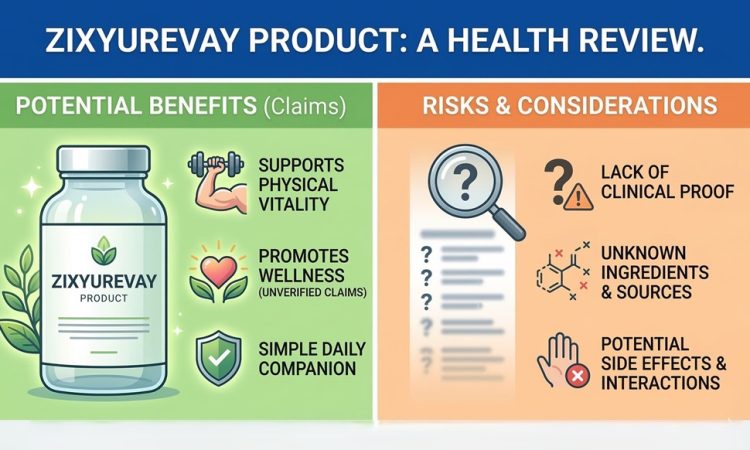
You searched for “Zixyurevay product” — and you are not alone. Thousands of people land on search results filled with AI-generated articles that describe this product with glowing detail, list dramatic health benefits, and even cite fake customer testimonials. But here is the truth: Zixyurevay does not appear to be a real, verifiable health product. No manufacturer, no ingredient list, no clinical data, no regulatory filing, and no legitimate retailer can be found for it.
This article does not pretend otherwise. Instead, it gives you something far more valuable: a complete consumer guide to evaluating unknown health products — so you never fall for fabricated supplement marketing again. The lessons here apply directly to Zixyurevay and to every other mysterious wellness product you will encounter online.
Why “Zixyurevay” Is a Red Flag in Itself
The wellness supplement industry is worth over $150 billion globally, and it attracts a significant amount of content manipulation. A growing tactic involves creating nonsensical brand names, flooding search engines with AI-written articles that mimic authoritative health content, and monetizing curious clicks through affiliate links or fake storefronts.
Zixyurevay fits this pattern precisely:
- No official brand website exists
- No ingredient label or supplement facts panel is available
- No third-party lab testing results exist
- No FDA registration, DUNS number, or GMP certification can be found
- Every article about it was generated using AI content tools with zero sourcing
This is not just a minor oversight — it is a blueprint for health misinformation. And in 2026, this type of content has exploded in volume.
How the Supplement Industry Actually Works (And Why It Matters)
Before you can protect yourself, you need to understand the regulatory environment that makes fake products possible.
Unlike prescription drugs and over-the-counter medications, dietary supplements are not approved by the FDA for safety and efficacy before they enter the market. This is a critical point most consumers do not realize. A supplement brand can legally go to market without proving its product works — or even that it is safe.
The label of either a dietary supplement or a food product may contain one of three types of claims: a health claim, a nutrient content claim, or a structure/function claim. No FDA approval is required for structure/function claims; however, the manufacturer must provide the FDA with the text of the claim within 30 days of putting the product on the market.
This means that a company can legally write “supports immune health” or “promotes healthy metabolism” on a label without ever proving the product does any such thing. The only required disclaimer is a small-print statement that the claim has not been evaluated by the FDA.
To make matters more complicated, the FDA is currently considering relaxing rules that require this disclaimer to appear next to every individual health claim — a move critics warn could further erode consumers’ ability to make informed decisions.
8 Warning Signs of a Fake or Dangerous Health Product
Use this checklist every time you encounter an unfamiliar supplement or wellness brand. If even two or three of these apply, walk away.
| # | Warning Sign | What It Means |
|---|---|---|
| 1 | No verifiable manufacturer | Legitimate brands have registered business information, addresses, and contact details |
| 2 | Proprietary blends without dosages | You cannot evaluate safety or efficacy if you don’t know how much of each ingredient is in the product |
| 3 | Cures multiple unrelated diseases | No single supplement legitimately treats cancer, diabetes, pain, and depression simultaneously |
| 4 | “Secret formula” or “breakthrough” language | These are marketing phrases, not scientific descriptions |
| 5 | No third-party testing certification | Legitimate products carry seals from NSF, USP, Informed-Sport, or BSCG |
| 6 | Only testimonials, no clinical data | Personal stories are not evidence; randomized controlled trials are |
| 7 | Free trial with auto-subscription | A common billing trap designed to make cancellation difficult |
| 8 | AI-generated articles as the only content | If every search result reads identically and has no author, byline, or citation, the product is likely fabricated |
If the supplement’s product label or website claims to be a natural alternative to an FDA-approved drug, or lacks the required FDA disclaimer statement, these are strong indicators the product may contain unapproved dietary ingredients or prescription drug analogs not listed on the label.
The Hidden Danger: What Unknown Products Can Actually Contain
Beyond wasted money, unverified supplements carry genuine health risks. This is not hypothetical — it happens regularly.
In January 2026, a product called Silintan capsules was voluntarily recalled after FDA analysis found it was tainted with meloxicam — an approved NSAID drug — which had not been declared on the label. Exposure to meloxicam at doses exceeding the recommended maximum daily dose may result in serious life-threatening events such as blood clots, heart attack, and stroke.
This type of contamination is more common than most consumers realize. A supplement labeled as “all-natural herbal” may contain pharmaceutical compounds, heavy metals, or synthetic stimulants that interact dangerously with prescription medications.
Some supplements can interact with certain medications, changing the way the body absorbs, metabolizes, or excretes that medication. For example, St John’s wort may reduce the effectiveness of certain medications for birth control, depression, seizures, heart disease, cancer, and HIV.
How to Verify a Health Product Is Legitimate
Here is a practical, step-by-step process anyone can follow before purchasing any unfamiliar supplement.
Step 1: Search the FDA’s Databases
Visit FDA.gov and search the product name in the dietary supplement warning database. Also check the FDA’s list of recalled and tainted products. If the product appears — or if it doesn’t appear in any legitimate registry — treat that as a signal to investigate further.
Step 2: Look for Third-Party Certifications
Consumers should look for third-party certification insignias like Informed-Choice, NSF, BSCG, and USP. These organizations independently test supplements to verify that what is on the label is actually in the bottle — and that nothing harmful has been added.
Step 3: Check Label Accuracy Standards
Recent findings from SuppCo revealed that over 50% of top-selling supplements tested failed label accuracy standards. Their TESTED certification program now requires products to meet or exceed 95% of their labeled active ingredients, with results made publicly available and retested annually. You can search verified products on their platform before buying.
Step 4: Run a Proprietary Blend Check
Experts say that without knowing exact dosages, consumers may unknowingly underdose — or overconsume — certain compounds. One physician recommends patients purchase high-quality supplements individually with excellent evidence and combine them, so quality and dosing of each ingredient can be controlled.
Step 5: Consult a Healthcare Professional
Before starting any supplement regimen, a person should consult with a doctor or pharmacist about the safety and effectiveness of the supplement and ask whether it may affect any underlying health conditions. This step is non-negotiable for anyone on prescription medications or managing a chronic illness.
Trusted vs. Unverified: A Side-by-Side Comparison
| Feature | Legitimate Supplement Brand | Zixyurevay / Unknown Products |
|---|---|---|
| Manufacturer info | Publicly listed, verifiable | None found |
| Ingredient label | Full with exact dosages | Absent or vague |
| Third-party testing | NSF, USP, or BSCG certified | None |
| Clinical references | Peer-reviewed studies cited | None or fabricated |
| FDA status | GMP compliant, no warnings | No registration found |
| Customer reviews | Verified purchase reviews | AI-generated testimonials |
| Return/refund policy | Clear, documented | Unclear or absent |
What to Do If You Already Purchased an Unknown Product
If you have already bought a product like Zixyurevay — or a supplement that fits this profile — here is what health professionals recommend:
- Stop taking it immediately if you cannot verify the manufacturer, ingredients, or testing status
- Check for interactions with any medications you currently take using the NIH’s Dietary Supplement Label Database
- Report adverse effects to the FDA’s MedWatch program at FDA.gov/safety/medwatch
- Contact your bank or credit card company if you were auto-enrolled in a subscription without clear consent
- Speak with your doctor about any symptoms you may have experienced after use
The Bottom Line on Supplement Consumer Literacy in 2026
The supplement industry is not inherently dangerous — but it is an environment where consumers must be actively vigilant. Genuine products with real health benefits exist, and they come with transparent labels, verified manufacturing, and clinical evidence. The difference between those products and fabricated ones like Zixyurevay is not subtle once you know what to look for.
Every time you see a product with no verifiable identity, no ingredient transparency, and a flood of AI-generated articles making extraordinary health claims — trust your skepticism. Your health is not a keyword.
Before you buy anything for your wellbeing, ask three simple questions:
- Who makes this, and can I verify it?
- What is in it, and how much of each ingredient?
- Has it been tested by an independent laboratory?
If you cannot answer all three, the product is not worth the risk.