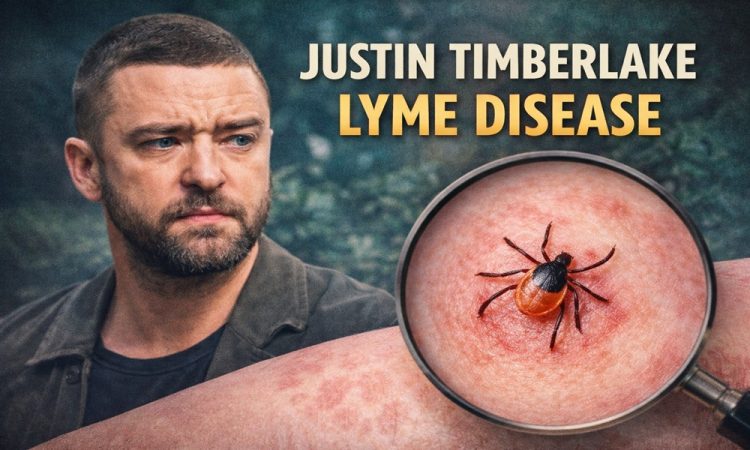
The Diagnosis That Shocked the Music World
On July 31, 2025, Justin Timberlake dropped a revelation that no one saw coming. Just one day after wrapping his two-year Forget Tomorrow World Tour in Istanbul, Turkey, the 44-year-old pop icon took to Instagram to share a deeply personal truth — he had been battling Lyme disease throughout the entire tour.
“Among other things, I’ve been battling some health issues, and was diagnosed with Lyme disease — which I don’t say so you feel bad for me — but to shed some light on what I’ve been up against behind the scenes,” Timberlake wrote in the emotional post.
The announcement sent ripples across the entertainment world and the medical community alike. Fans who had criticized him for sluggish performances and last-minute show cancellations were suddenly given context they hadn’t had before. The man wasn’t slacking — he was suffering in silence.
Why He Kept It Private for So Long
Timberlake admitted that speaking publicly about his health didn’t come naturally to him. He said he was “reluctant to talk about this because I was always raised to keep something like this to yourself,” but ultimately decided that transparency mattered more — both for his fans and for the broader awareness around a disease that millions of people live with every day.
He said he “decided the joy that performing brings me far outweighs the fleeting stress my body was feeling” and chose to keep going rather than cancel the tour entirely. That level of mental determination, while performing with significant nerve pain and fatigue, gives the tour a whole new meaning in retrospect.
What Is Lyme Disease? A Medical Overview
Lyme disease is far more common than most people realize. More than 89,000 cases of Lyme disease were reported to the CDC in 2023, but the agency estimates that roughly 476,000 people are actually diagnosed and treated annually.
The illness is caused by the bacterium Borrelia burgdorferi and is transmitted to humans via tick bites. It is more likely to be contracted in the late spring, summer, and fall. In most cases, the tick must be attached to the skin for at least 24 hours before the bacterium can be transmitted.
It is, without question, the most common vector-borne disease in the United States — and yet it remains widely misunderstood.
The 3 Stages of Lyme Disease
Lyme disease doesn’t hit all at once. It progresses in stages, and each one carries its own set of challenges.
| Stage | Timeline | Key Symptoms |
|---|---|---|
| Stage 1 – Early Localized | 3–30 days after bite | Fever, fatigue, headache, bull’s-eye rash |
| Stage 2 – Early Disseminated | Weeks to months later | Heart inflammation, heart rhythm issues, neurological problems, meningitis |
| Stage 3 – Late Disseminated | Months to years later | Arthritis in large joints (e.g., knee), nervous system changes, cognitive issues |
A second stage of symptoms can occur weeks to months after infection and may include cardiac inflammation, heart rhythm issues, neurological problems, and meningitis. A third stage can occur months to years after a tick bite and include arthritis in large joints like the knee, as well as nervous system changes.
Symptoms: What Justin Timberlake Experienced
Timberlake specifically described two symptoms that plagued him onstage: nerve pain and extreme fatigue. These are hallmark signs of Lyme disease, particularly when the infection has progressed beyond the early stage.
Common Early Symptoms
- Fever and chills
- Headaches
- Muscle and joint aches
- Swollen lymph nodes
- Skin rash (bull’s-eye pattern in some, but not all, cases)
Advanced Symptoms (As Timberlake Experienced)
- Severe nerve pain
- Debilitating fatigue
- Cognitive difficulty (“brain fog”)
- Facial paralysis (in some patients)
- Irregular heartbeat
The rash “can look like a target lesion, but it’s not always like that. Sometimes there is no central clearing, so you can see completely red lesions as well. And other times, you don’t see any skin lesions. You may just have symptoms of Lyme disease without the skin lesions.”
This is one of the reasons Lyme disease is so frequently misdiagnosed — it doesn’t always present the way textbooks say it will.
How Lyme Disease Affected His Tour
The Forget Tomorrow World Tour kicked off in April 2024 in Vancouver and concluded on July 30, 2025, in Istanbul — a grueling 15-month, globe-spanning run. Timberlake canceled and postponed multiple shows throughout the tour’s run, citing health issues including bronchitis and laryngitis. Six of his U.S. shows were postponed from October and November to February, and he ultimately canceled the last show of the U.S. leg of the tour in Ohio due to the flu in February.
At the time, fans and media assumed these were separate, unrelated health problems. The Lyme disease diagnosis recontextualized everything. Immune suppression caused by Lyme can make patients far more susceptible to secondary infections like the flu and bronchitis — so what looked like a string of bad luck was likely all connected.
Toward the latter half of the tour, Timberlake was met with a flood of criticism after videos of him giving a lackluster performance went viral on social media. Timberlake called on the audience to sing most of the song, only joining in for the occasional lyric. Many fans were furious, with some demanding refunds. However, the diagnosis revealed he wasn’t being lazy — he was battling Lyme disease.
The trek made Timberlake the 10th top touring artist of Billboard’s midyear Boxscore report, grossing $73.2 million across 41 shows as of late May. Completing a tour of that scale while secretly fighting a debilitating illness is, by any measure, remarkable.
Diagnosis and Treatment: What the Science Says
How Is It Diagnosed?
There are FDA-approved antibody tests used to diagnose Lyme disease, according to the CDC. Doctors typically use a two-tier blood testing process — first an ELISA test, then a Western blot — to confirm infection.
Treatment Options
Most cases of Lyme disease can be effectively treated with a 10- to 14-day course of antibiotics. However, in some cases, prolonged symptoms may persist after treatment, including fatigue, body aches, and difficulty with concentration or memory. This condition is sometimes referred to as Post-Treatment Lyme Disease Syndrome, or PTLDS.
| Treatment Type | Details |
|---|---|
| Standard Antibiotics | 10–14 days (doxycycline, amoxicillin) |
| Extended Antibiotic Therapy | For persistent or late-stage symptoms |
| PTLDS Management | Symptom-focused care; no universally approved treatment |
| Chronic Symptom Monitoring | Track daily symptoms; adjust activity accordingly |
For patients with late-stage Lyme disease, some conditions may be long-lasting even if antibiotics are administered. “The arthritis, for example, is caused by the body’s immune reaction to the infection. So even after the bacteria is cleared from the body, the immune reaction continues for some patients.”
Celebrities Who Have Battled Lyme Disease
Justin Timberlake is far from the only celebrity to go public with a Lyme disease diagnosis. His announcement adds to a growing list of public figures who have used their platforms to raise awareness.
| Celebrity | Year Disclosed | Impact |
|---|---|---|
| Justin Bieber | 2020 | Explained dramatic physical changes |
| Bella Hadid | 2023 | Shared 15 years of “invisible suffering” |
| Shania Twain | 2017 | Developed dysphonia, affecting her singing |
| Avril Lavigne | Ongoing | Struggled with years of misdiagnosis |
| Amy Schumer | Disclosed publicly | Raised awareness of cognitive symptoms |
| Alexis Ohanian | Public disclosure | Reddit co-founder; advocacy work |
Bella Hadid admitted that she had “15 years of invisible suffering” amid her battle with chronic Lyme disease. Her case underscores just how difficult and prolonged the disease can be — especially when it goes undiagnosed or is caught in its later stages.
Prevention: How to Protect Yourself
The CDC and infectious disease specialists recommend a proactive approach to tick exposure, particularly during peak season (April through October).
Key Prevention Tips
Before Going Outdoors
- Treat clothing and gear with products containing 0.5% permethrin
- Wear long sleeves, pants, and closed-toe shoes in wooded or grassy areas
- Apply insect repellent with DEET to exposed skin
After Being Outdoors
- Always do a “tick check” after being outside and wear insect repellent with DEET. Ticks can also come into the home through clothing and pets, so the CDC recommends checking pets for ticks and tumble drying clothes on high heat for 10 minutes after coming indoors to kill ticks.
If You’re Bitten
- The CDC recommends tugging gently but firmly near the head of the tick until it is pulled away from the skin.
- Do not twist or crush the tick
- Clean the bite area with rubbing alcohol
- Monitor for symptoms over the following 30 days
- See a doctor immediately if a rash or flu-like symptoms develop
Experts recommend “wearing white so the ticks are more visible, tick-checking yourself and your gear when you arrive home, and being vigilant to see a doctor if you have any symptoms.”
The Bigger Picture: Raising Awareness
One powerful — and often unintended — consequence of celebrity health disclosures is the spotlight they cast on conditions that frequently fly under the radar. Justin Timberlake’s announcement has put a spotlight on the condition that impacts nearly 500,000 people in the United States each year, according to the CDC.
Many Lyme disease patients go years without a proper diagnosis. The symptoms mimic other conditions — fibromyalgia, multiple sclerosis, depression — and without a clear tick-bite history or visible rash, doctors can miss it entirely. When someone of Timberlake’s stature openly describes nerve pain and fatigue that went unexplained until diagnosis, it validates the experiences of countless people who have been dismissed or misdiagnosed for years.
“Living with this can be relentlessly debilitating, both mentally and physically,” Timberlake wrote — and for the Lyme disease community, those words resonated deeply.
Final Thoughts
Justin Timberlake’s Lyme disease disclosure is more than a celebrity health story. It’s a window into how invisible illness operates — silently, persistently, and often without the sympathy that more visible conditions receive. He powered through one of the most demanding tours in recent memory while managing nerve pain and crushing fatigue, and chose to speak out not for sympathy but for awareness.
Whether you’re a fan, someone navigating your own unexplained symptoms, or simply someone who spends time outdoors, the message is the same: Lyme disease is real, it is common, and it is treatable — but only if caught in time. Know the symptoms. Check for ticks. See a doctor early.